Bitch, Please: Age Inappropriate
In the wake of the phrase “Body fascism” becoming an internet topic, I think we can pause and remember that none of this is new…
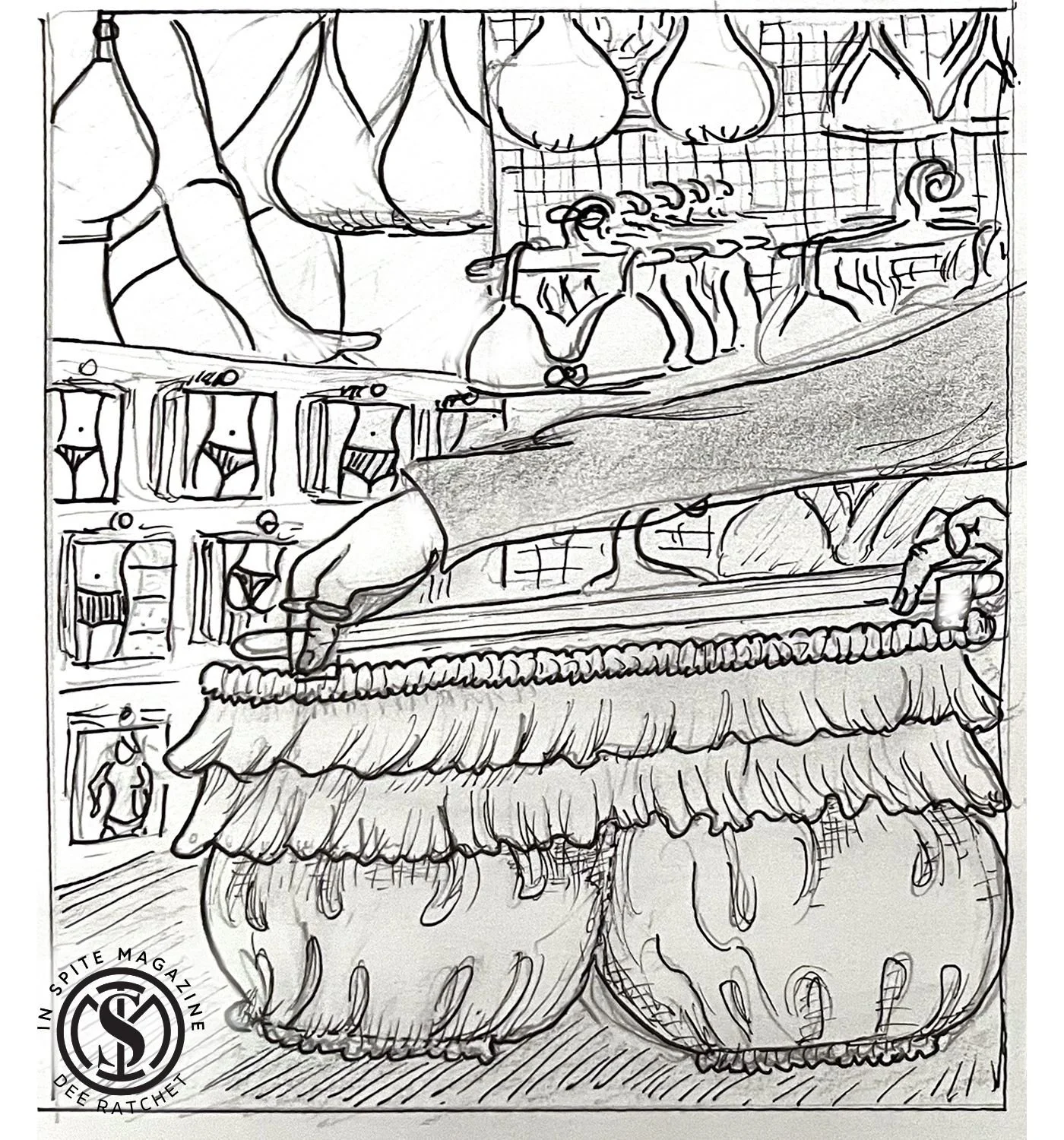
I was in a department store recently and I spotted aggressively frilly, cotton, toddler-style panties IN THE WOMEN’S lingerie section.
To help provide you with a tool to create the youthful illusion that you are subservient, controllable, coiffed, and precious. They looked menacingly uncomfortable, elastic around the legs to ensure a proper poofy bottom via cinched thighs, these hung right by the push-up bras rather contradictory, tits out, buns hidden under ruffles. Of course women of any age should wear whatever they want, that's not the point so much as WHO is pushing this aesthetic. The same dickheads that manhandled the display just around the corner…
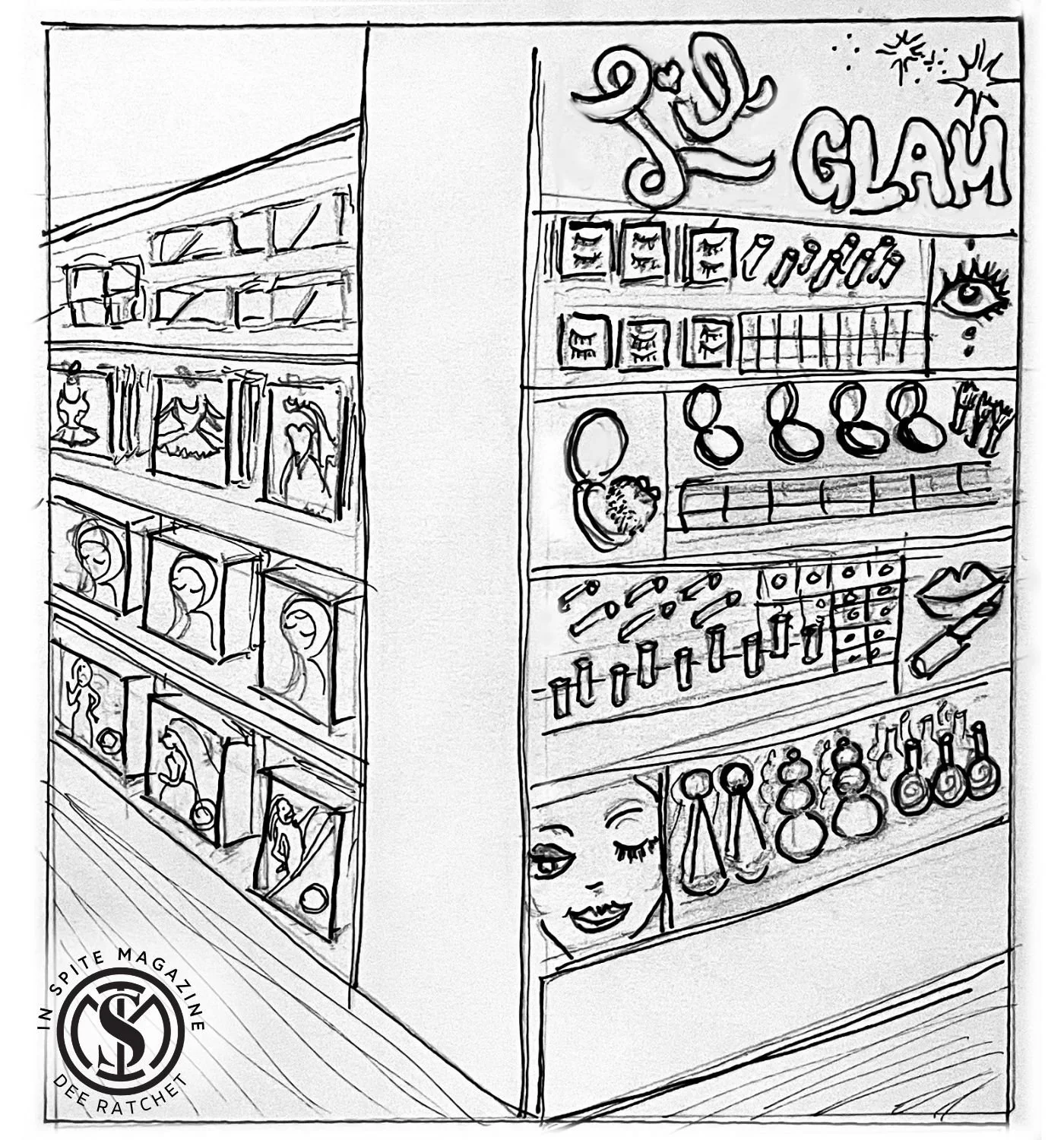
I hit the toy aisle, where children's toys should be, but in addition to the dinosaurs and hot wheels, available to youngsters there's now something else.
Right beside dolls, conveniently, there's now children's make-up…because they should get an early start on insecurity, lay the groundwork for the idea that dolled up is best even if you're young enough to still play with dolls. Go for it, kiddo! Your lips aren't ruby, and your lashes aren't reaching out like spider legs in the wind.
We advance, and then we fall back. So very far back. This isn't some ambient cultural weather system that just happens to women. Men built it, on purpose.
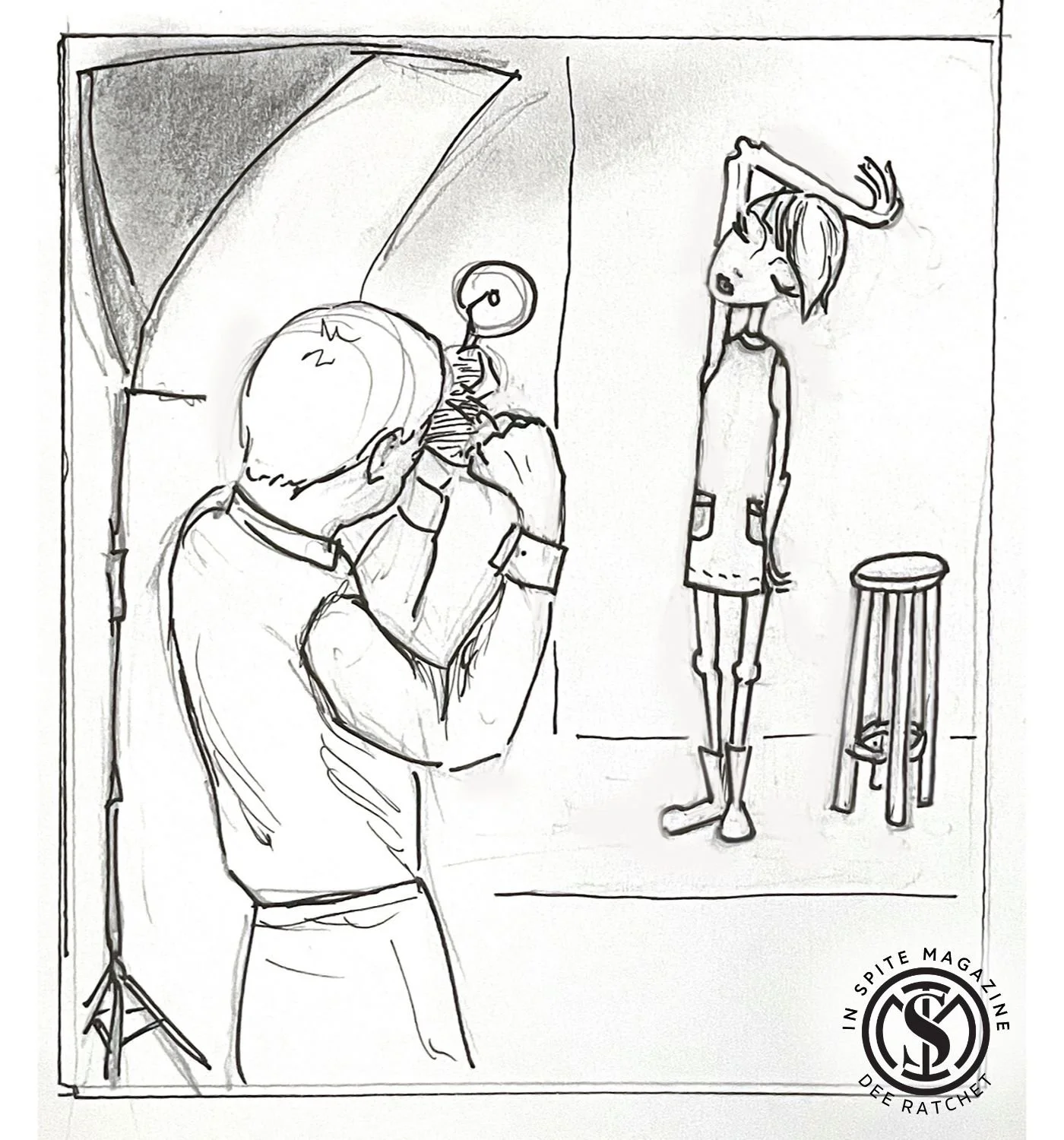
In the mid-1960s, Twiggy was it: sixteen years old, ninety-one pounds, crowned "the Face of '66," and installed that as the template every teenage girl was suddenly supposed to be measuring herself against. I believe it’s the first time "thin as a child" got marketed at scale as the adult feminine ideal, rather than just something girls grew out of.
By the'90s, photographers David Sims and Corinne Day started shooting a gaunt, hollow-eyed, strung-out-looking Kate Moss for Calvin Klein and British Vogue, and the industry had a name for it within a few years: heroin chic. Not thin by accident. Styled, lit, captioned to look like a body that had been destroyed by addiction, and nearly given up. Let’s call malnourished, gorgeous, it’s easy to control, the guys writing the checks love that. Then things shifted away in the 70s, when, for a beautiful moment, everyone was suddenly considered beautiful.
Two decades running Abercrombie & Fitch, and in 2006 Mike Jeffries outright told Salon exactly what he was doing, no sugar-coating it: they hired conventionally attractive people because that would attract good-looking people, and — his word — they were exclusionary. By October 2024, the man who spent his career deciding which bodies deserved to be seen in his clothes was indicted on sixteen federal counts of sex trafficking and international prostitution, and convicted of running an operation for years that lured young people in with fake modeling opportunities. Skinny, controllable young people.
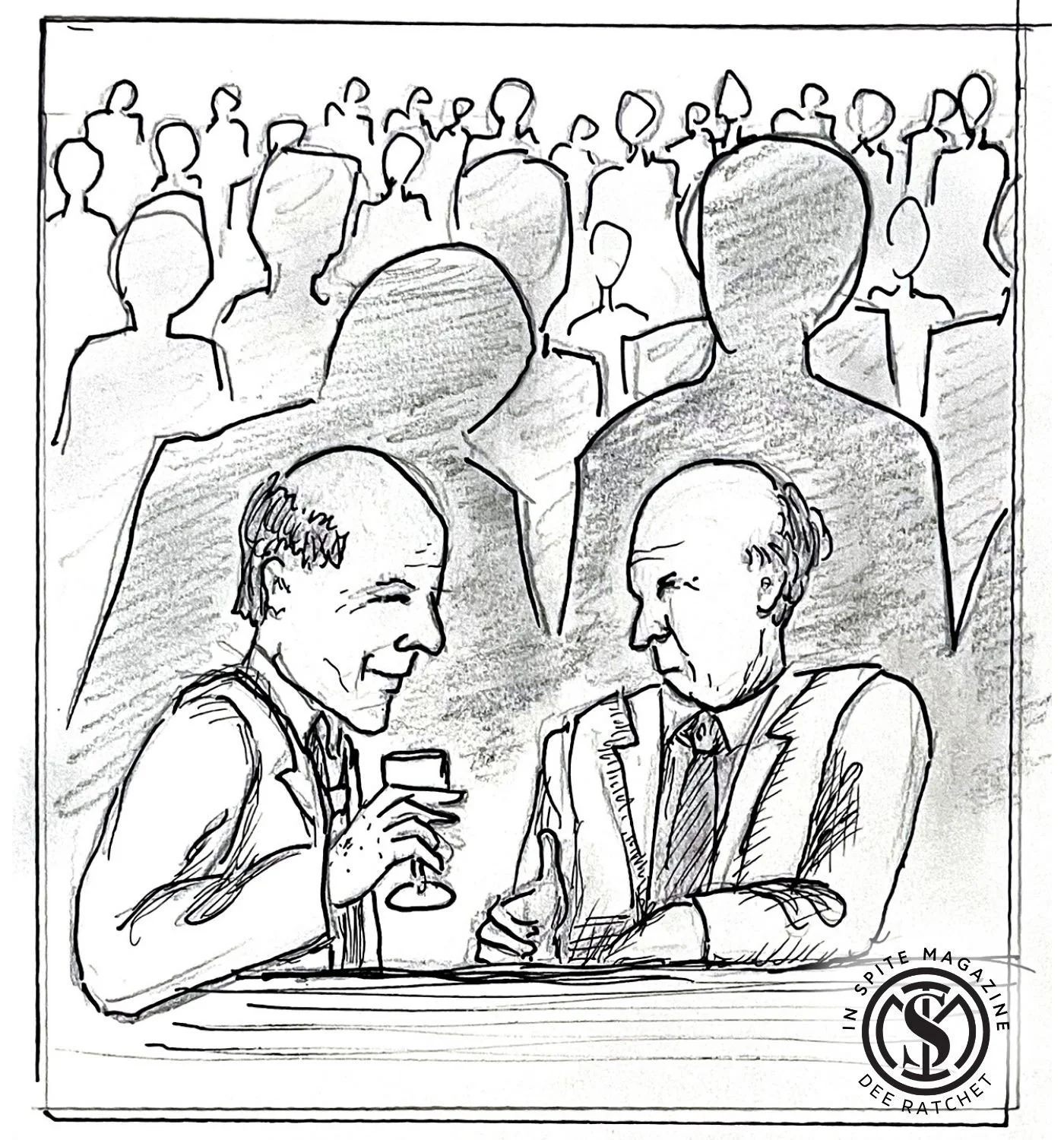
Which brings us to Les Wexner, who bought Victoria's Secret in 1982 and built it, along with Abercrombie, under one roof at L Brands.
Wexner didn't just know Jeffrey Epstein socially; he handed Epstein power of attorney over his entire fortune in 1991, and Epstein later admitted to skimming over $46 million off him before Wexner finally cut him loose in 2007. In the meantime, Epstein spent years posing as a Victoria's Secret talent recruiter, despite never actually working for the company, using that association to approach and traffic underage girls. In 2026, when the FBI released some Epstein files, Wexner was named among the co-conspirators. So: the same holding company was marketing thin as in to the young women they would scoop up and traffic.
This is an industry that taught generations of us our bodies were problems to be solved, and it wasn't run by mysterious entities. Powerful white men make specific decisions through access and control. They're not just setting “beauty standards.” They decide who gets to be valued, hired, celebrated, admired.
For a minute, we started being more accepting of women existing in different sizes, but those moments are always fleeting. Insecurity sells far more products. We can't have women thinking they're great as they are. There's no merchandising opportunity there, let's be honest. It's never a surprise when the “body acceptance” trend goes quiet in favor of the work you need to do to look different. Even skinny actresses go on GLP-1s, folks. It's never too early for preventive plastic surgery. Get that botox early, babies. Look and feel your best. Do it for you, you'll only regret it if you don't. There's a way to be valuable, and it's to show up pretty, which is only possible if you're thin. And there might not be such a thing as too thin. That’s the message that keeps you buying products.
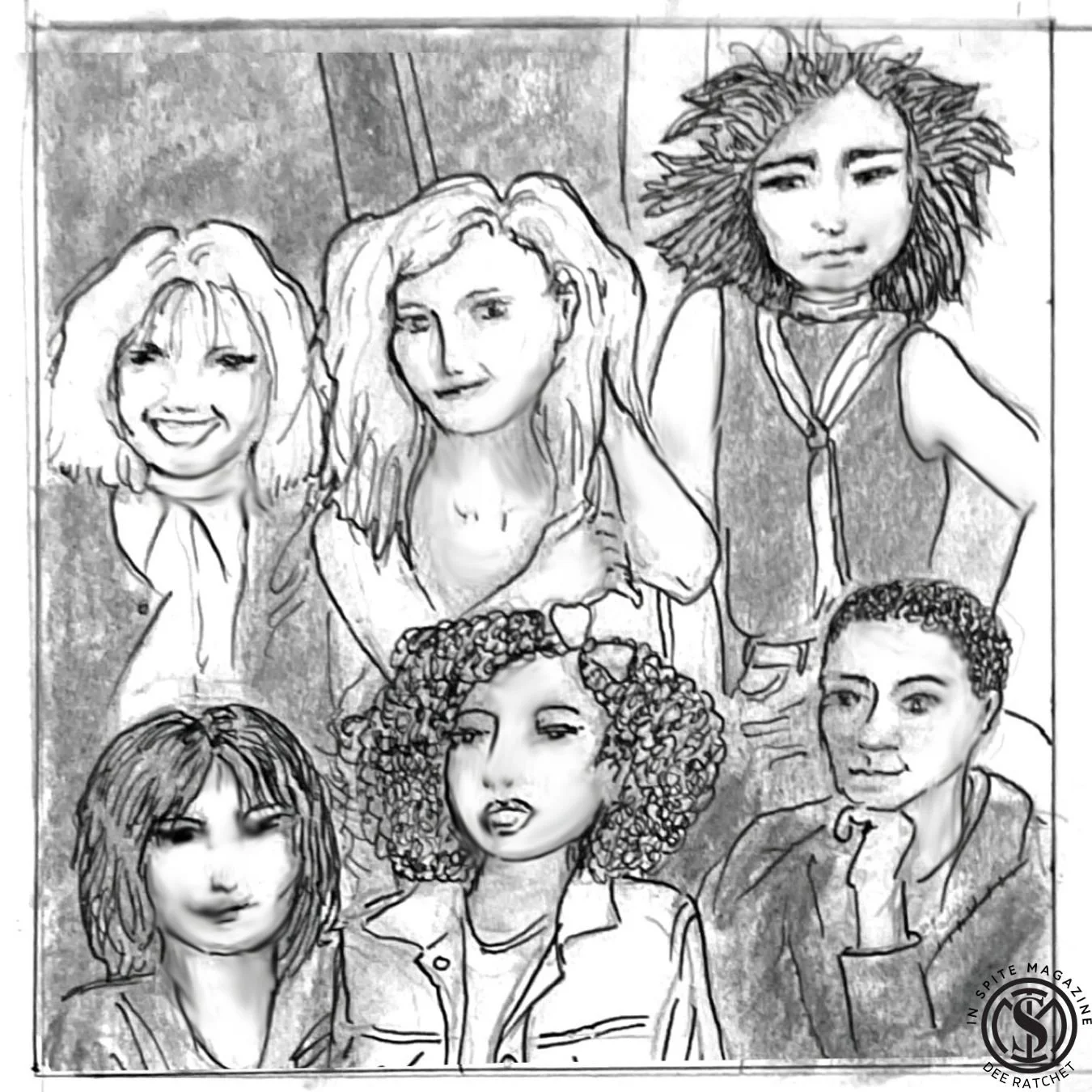
Despite having a very glamorous mother who enthusiastically supported and encouraged me to explore the mainstream world of beauty, for some odd reason I declined in favor of being myself: kind, smart, funny if at all possible, and definitely authentically weird. Thanks, punk! (Punk Icons Pictured: Ladies Tea)
The images of beauty trends didn't impact me much because that's a gift the punk community gives you. Just look like yourself. Honestly, the weirder the better. Or maybe, more accurately: The more authentic, the better.
That doesn’t resonate with every woman. Some are deeply and negatively impacted by these trends, and social media has turned the volume all the way up. The algorithm is happy to process your insecurities and make sure you're constantly aware of how you aren’t enough as you are.
If you do human things like eat or age, you're out.
You know you don't have to buy it.
There's nothing inherently wrong with makeup as an art. That's not the point. If an artsy kid wants to explore makeup, great, let a supportive parent navigate to the existing beauty aisle. Can we stop conflating toys with beauty products? Can the toy section be toys that develop children's imaginations? If we're going to start putting it all in the toy aisle, the manosphere is handily doing the work on men's insecurity, so is the next logical step Little Tykes aftershave for the pre-shaven?
Break away.
When anthropologists dig up fertility goddesses, those bitches are curvy, nourished, powerful. There have been times when we embraced beauty in different sizes. Those Dove commercials you don't see anymore were too radical. I haven't heard about thick thighs saving any lives recently because we're back to this place of weighing in women like reverse prize turkeys at a county fair, the one that weighs the least is valued the most because she's too weak to cluck back.

Bitch, Please is an ongoing series that is not just about being called a bitch. It is a cultural analysis explored through personal narratives.
Bitch Please: Little Hands, Big Mosh Pit | Bitch, Please: Ladies Tea | Bitch, Please: Etymology