
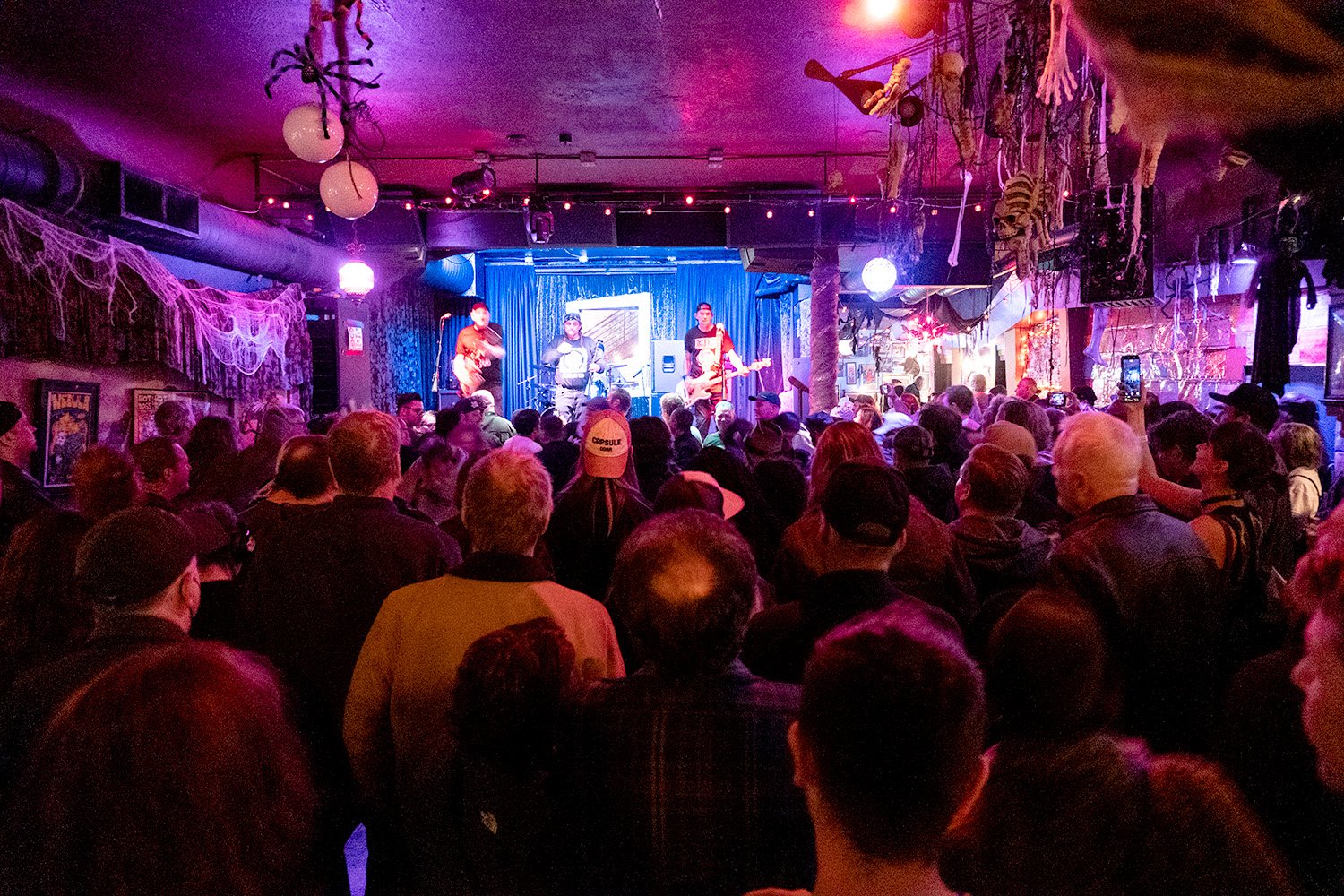
MDC performing for a full house at Bottom of the Hill, SF — Photos by Dee Ratchet
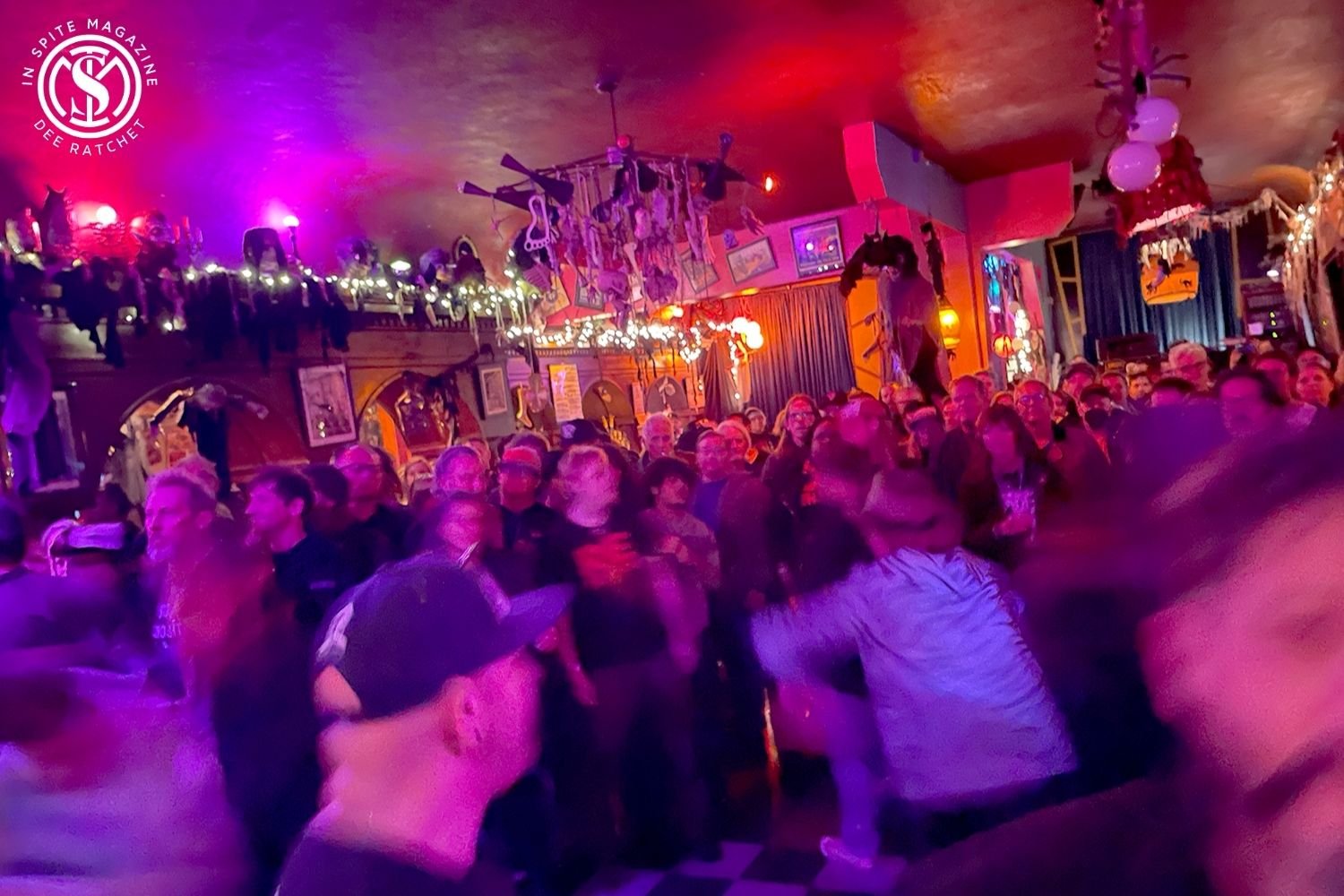
When you’re short and you want to get a shot of the mosh pit, so you hold the camera up and hope for the best…
I went to see Class of 77, Frightwig, and MDC at Bottom of the Hill knowing the show would kick ass. Along with the anticipation of seeing bands that scratch that punk itch (maybe I should get that looked at), there was a collective sense of relief and celebration following the news that the beloved venue would remain open. Rather than shuttering its doors, Bottom of the Hill had been successfully sold to someone committed to continuing its legacy. That's a pretty big deal for anyone who cares about live music, independent venues, and the places that give artists somewhere to be loud, authentic, and often political.
Add to that the recent blue wave and the possibility that some of the political anger we've been carrying around might have somewhere productive to go, and the ingredients were all there for a particularly satisfying night. These are bands that have never been shy about calling bullshit when they see it. I was looking forward to hearing them do what they do best: rail against a broken system, remind us that there's plenty worth fighting for, and maybe even sprinkle in a little hope about what happens when people actually stand up for what's right.
I was not disappointed.
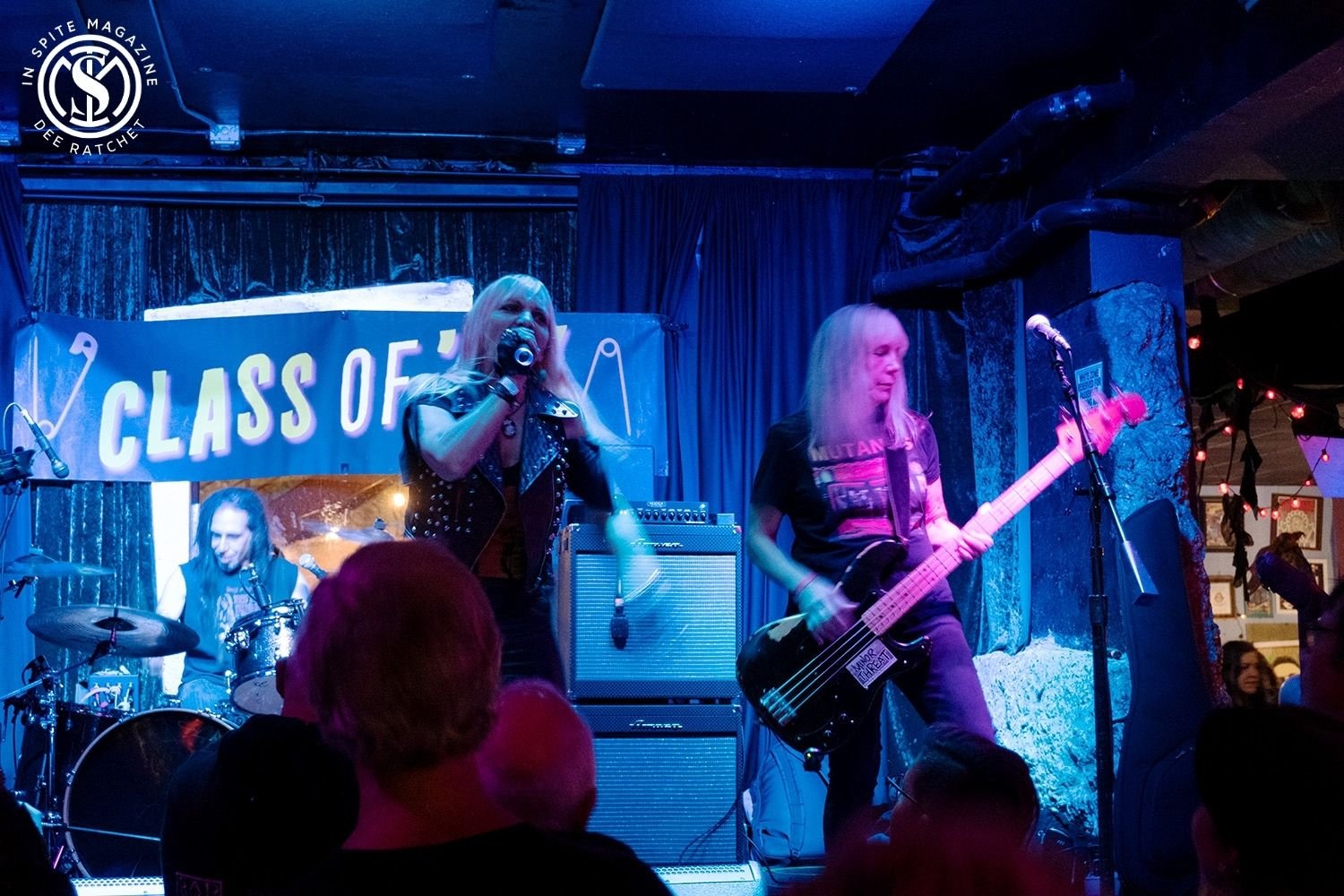
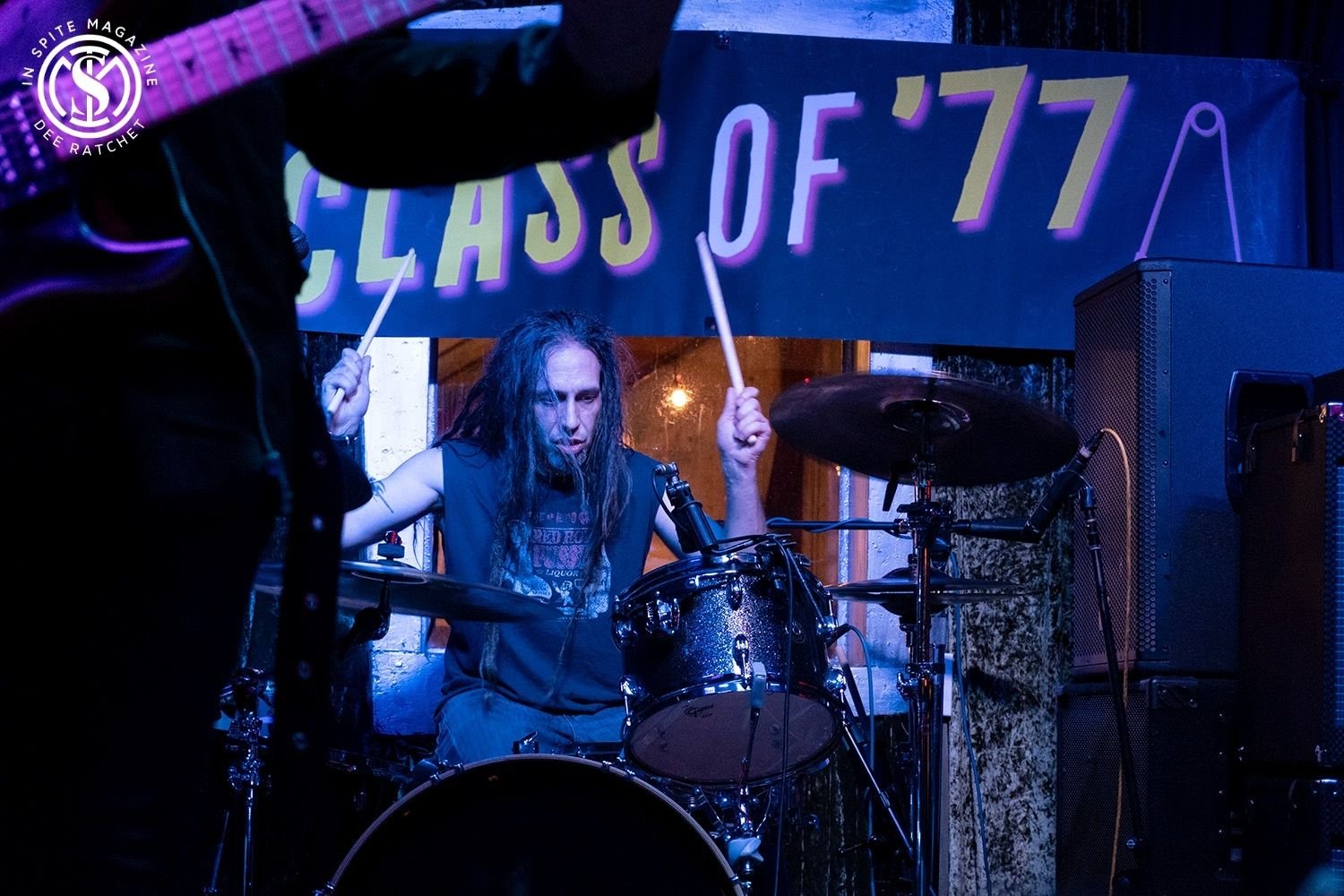
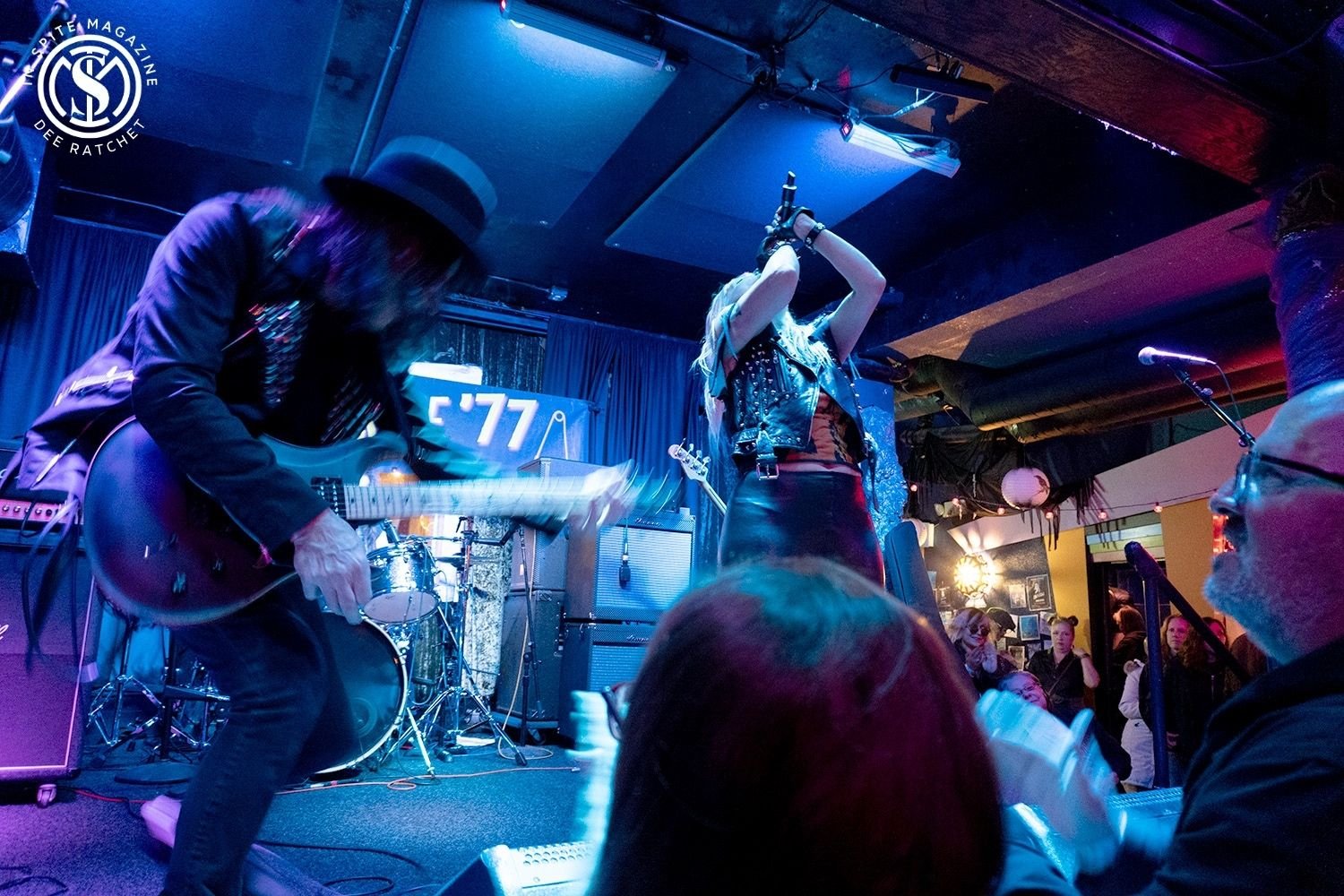
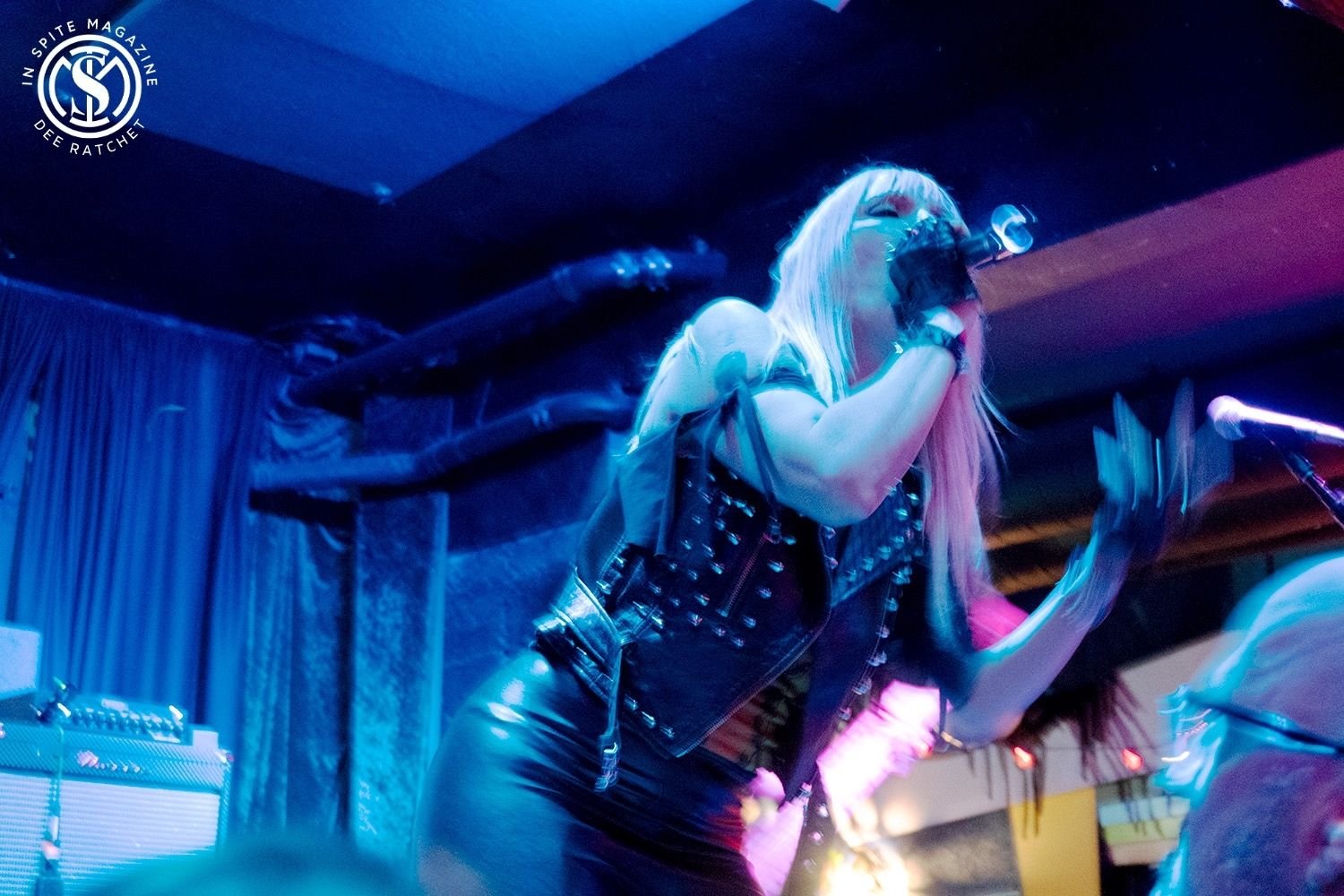
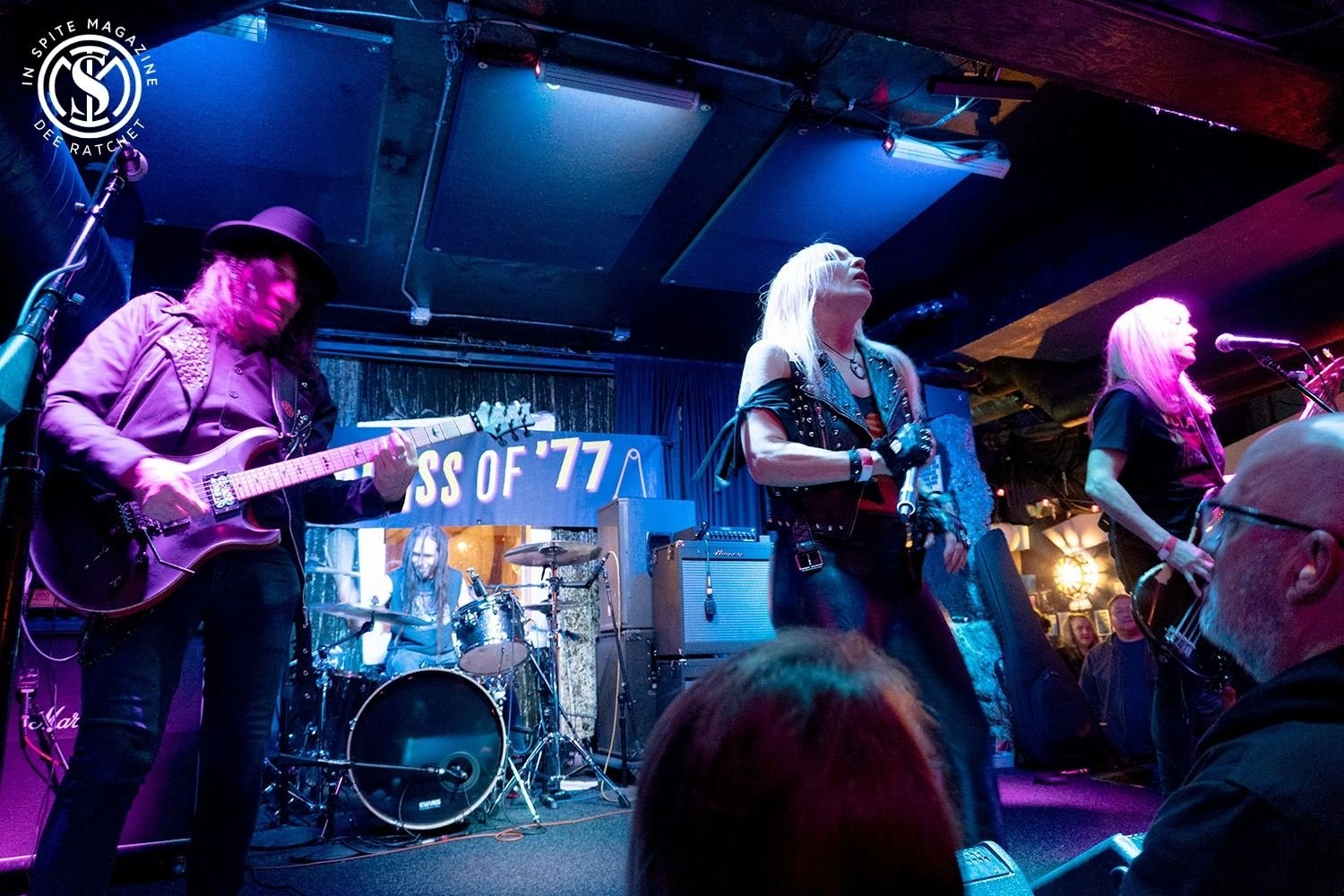
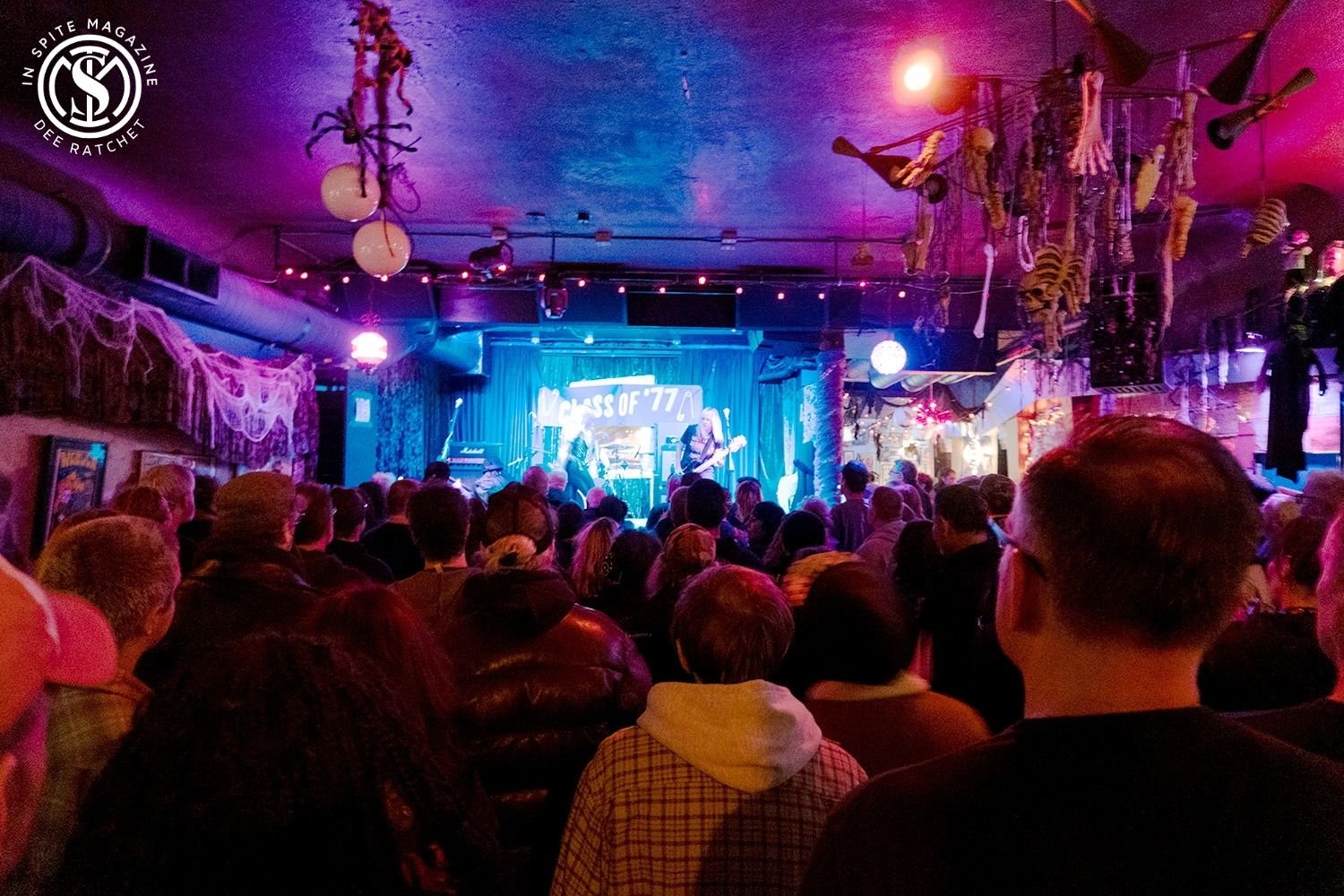
Class of 77 opened things up with a handful of fun covers. They looked the part, with a pleather-pants-wearing, pink-haired singer fronting a group of punk members, most of whom may, in fact, have graduated in 1977. The covers got things moving, and hearing "Neat, Neat, Neat" was particularly fun in light of the recent rescheduling of The Damned's Fillmore show. I sang along, danced around, and happily settled into the familiar sounds.
Then they shifted gears to originals, and that's where things got especially interesting. Their own songs had all the right ingredients of the old-school punk I love. They fit so seamlessly alongside the songs they'd been covering, I had a moment of wondering, wait, have I heard this before? They managed to capture the sound and spirit of the era without making it feel like a costume party or a nostalgia exercise. A solid opening set that got the room warmed up and ready for what was coming.
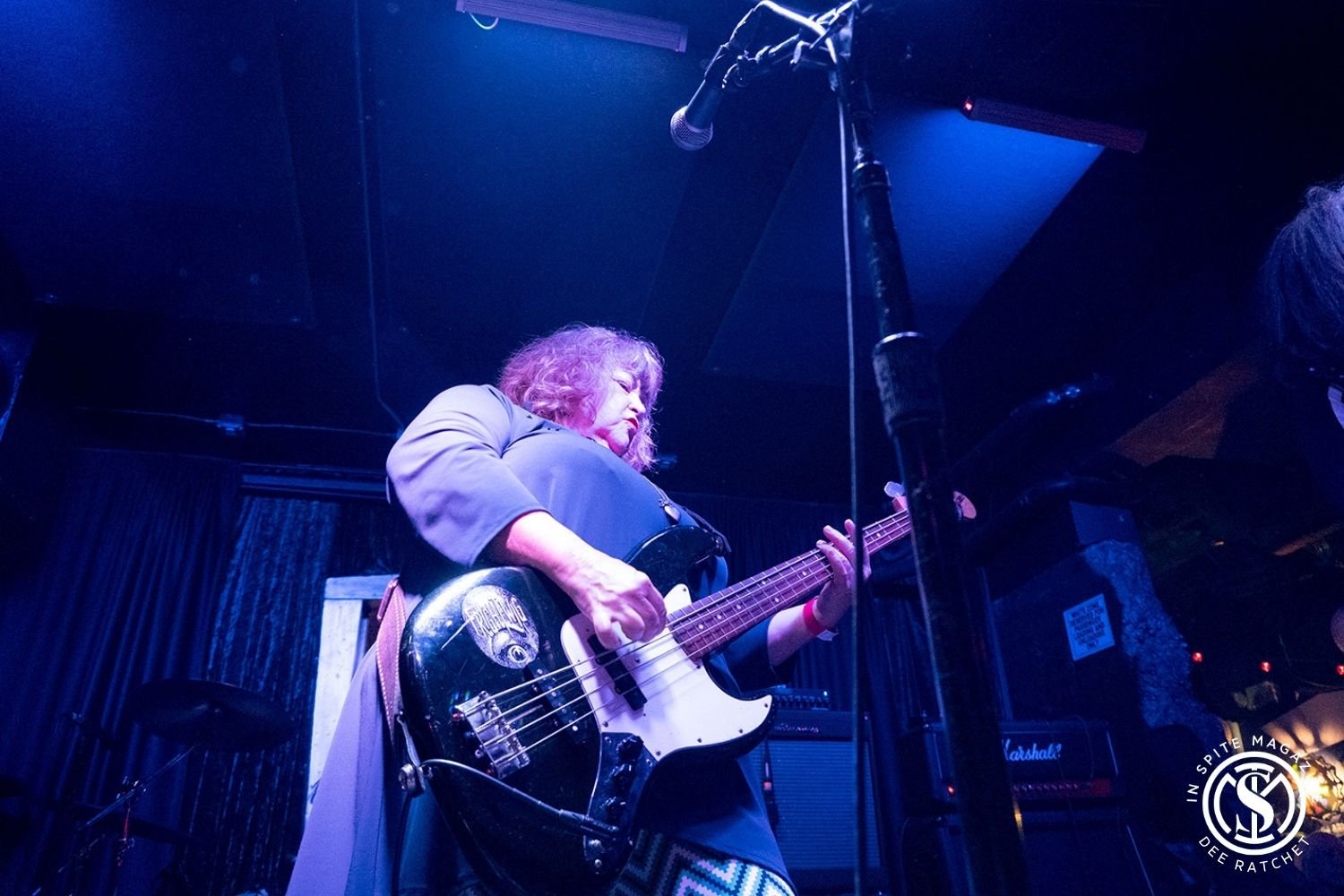
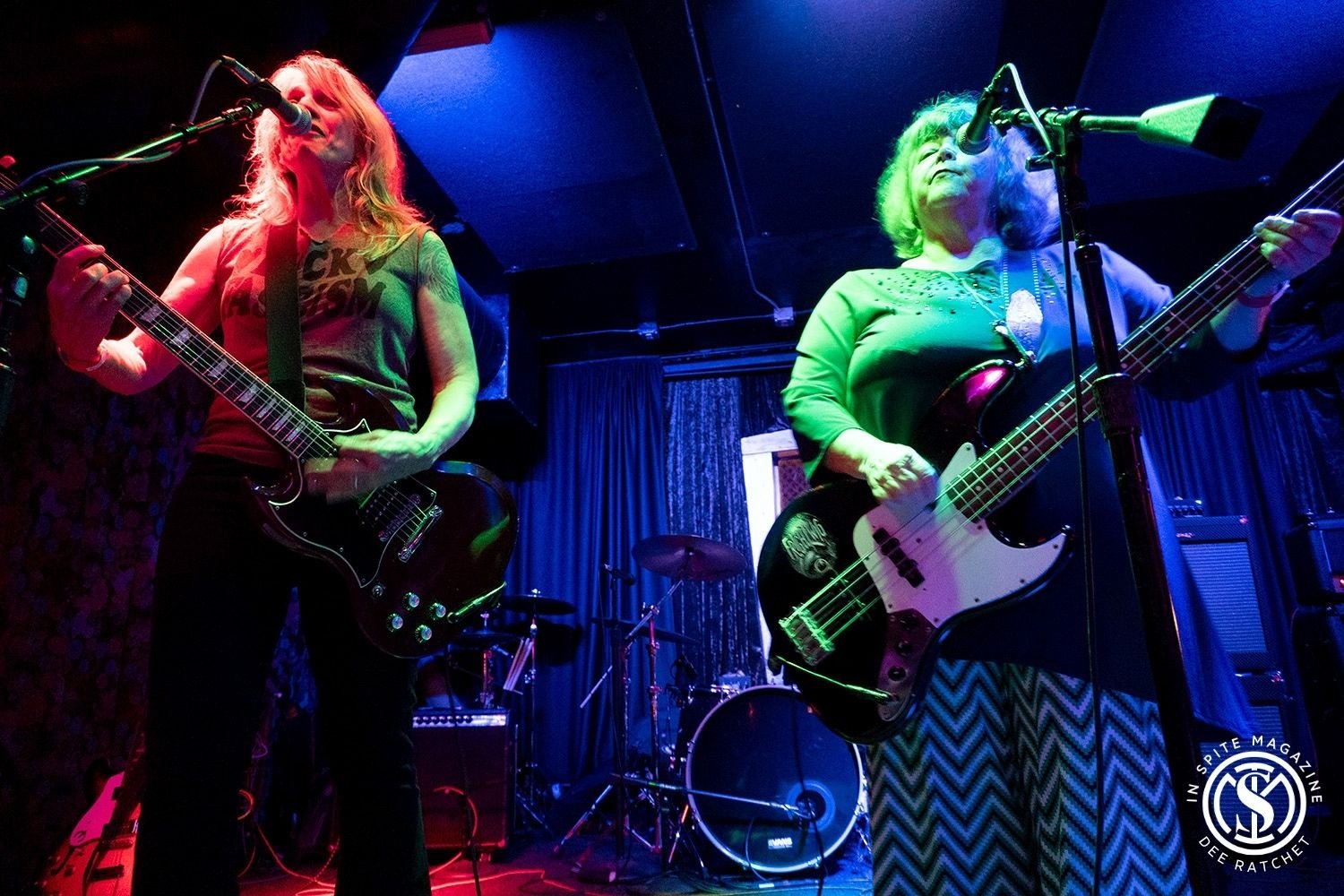
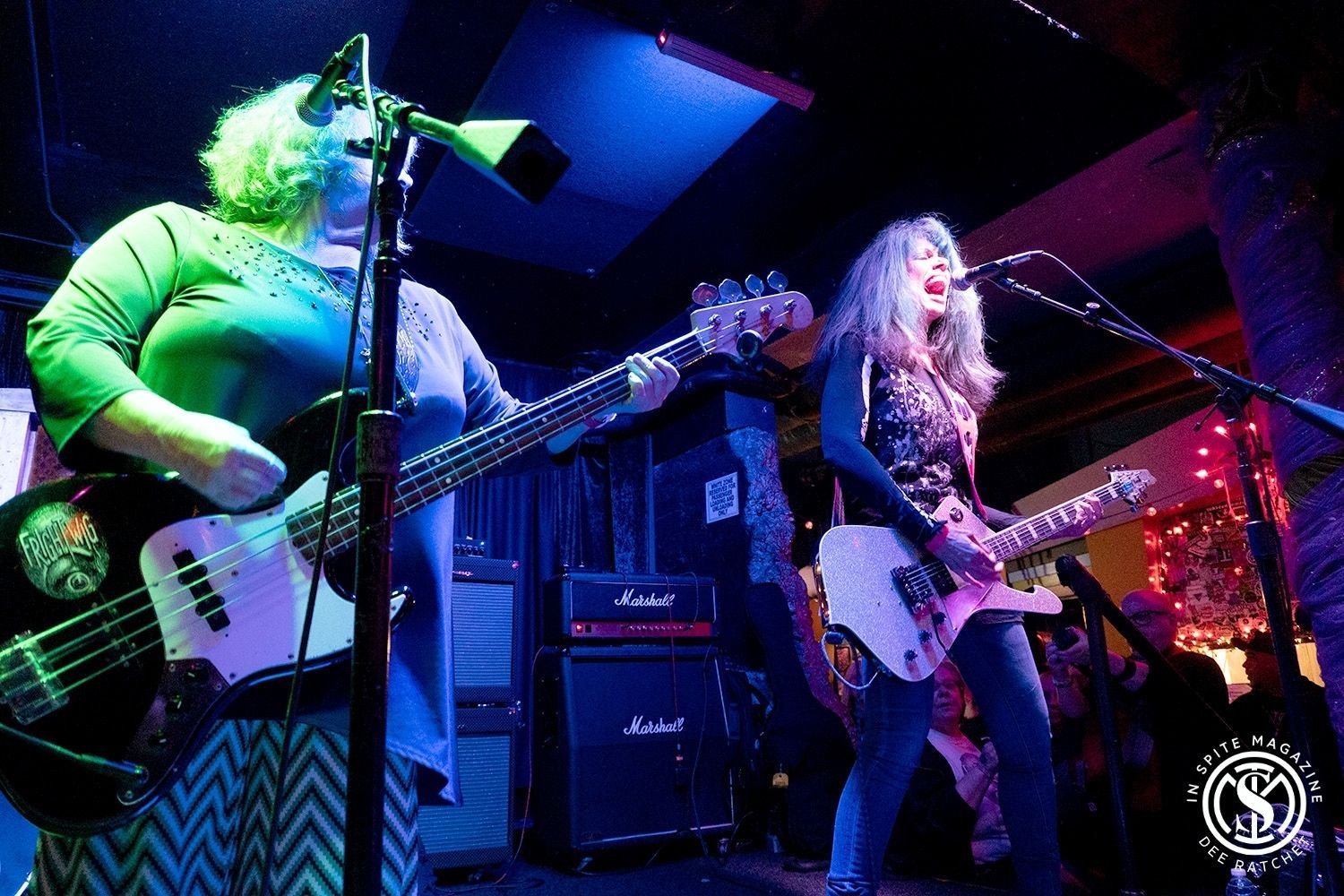
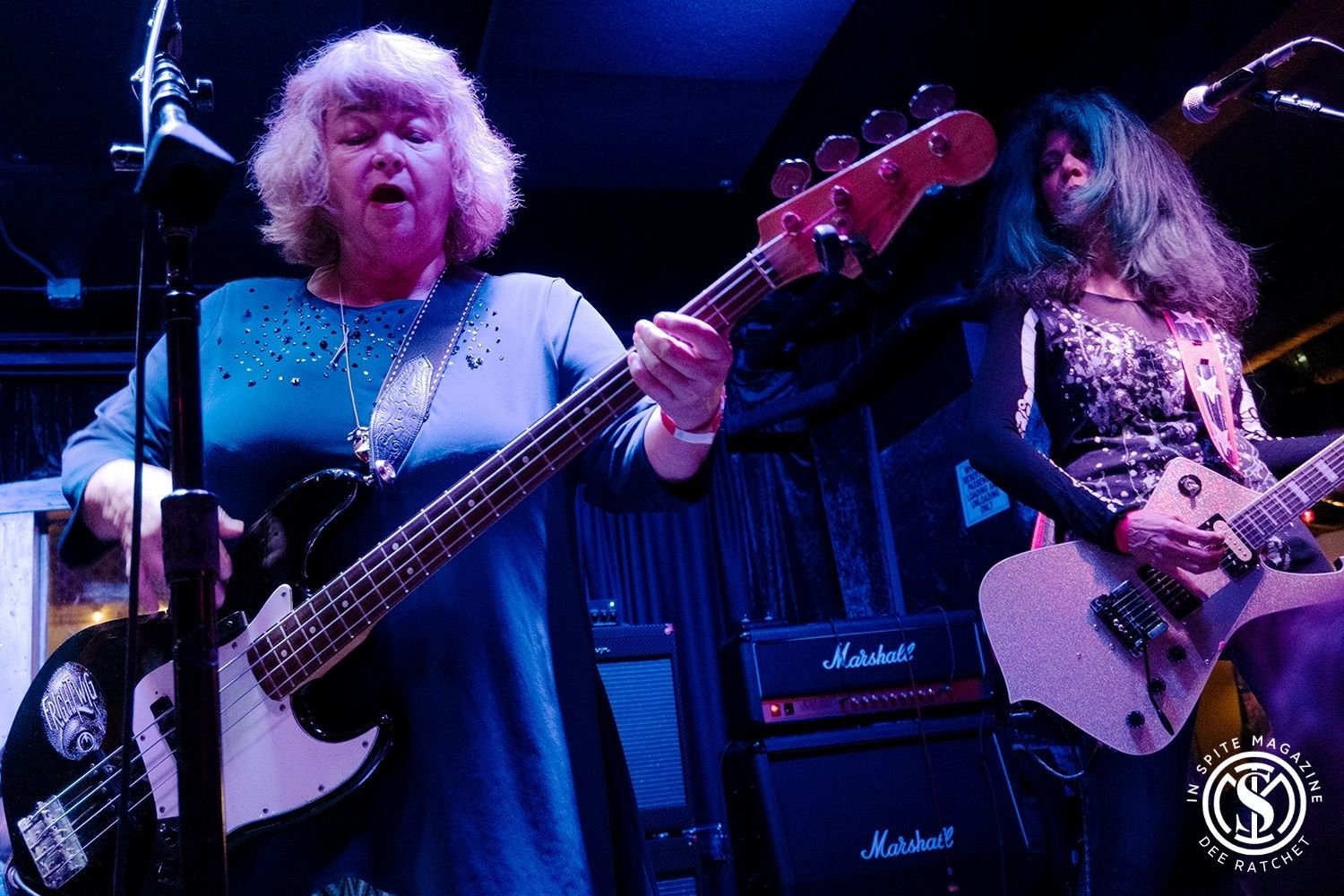
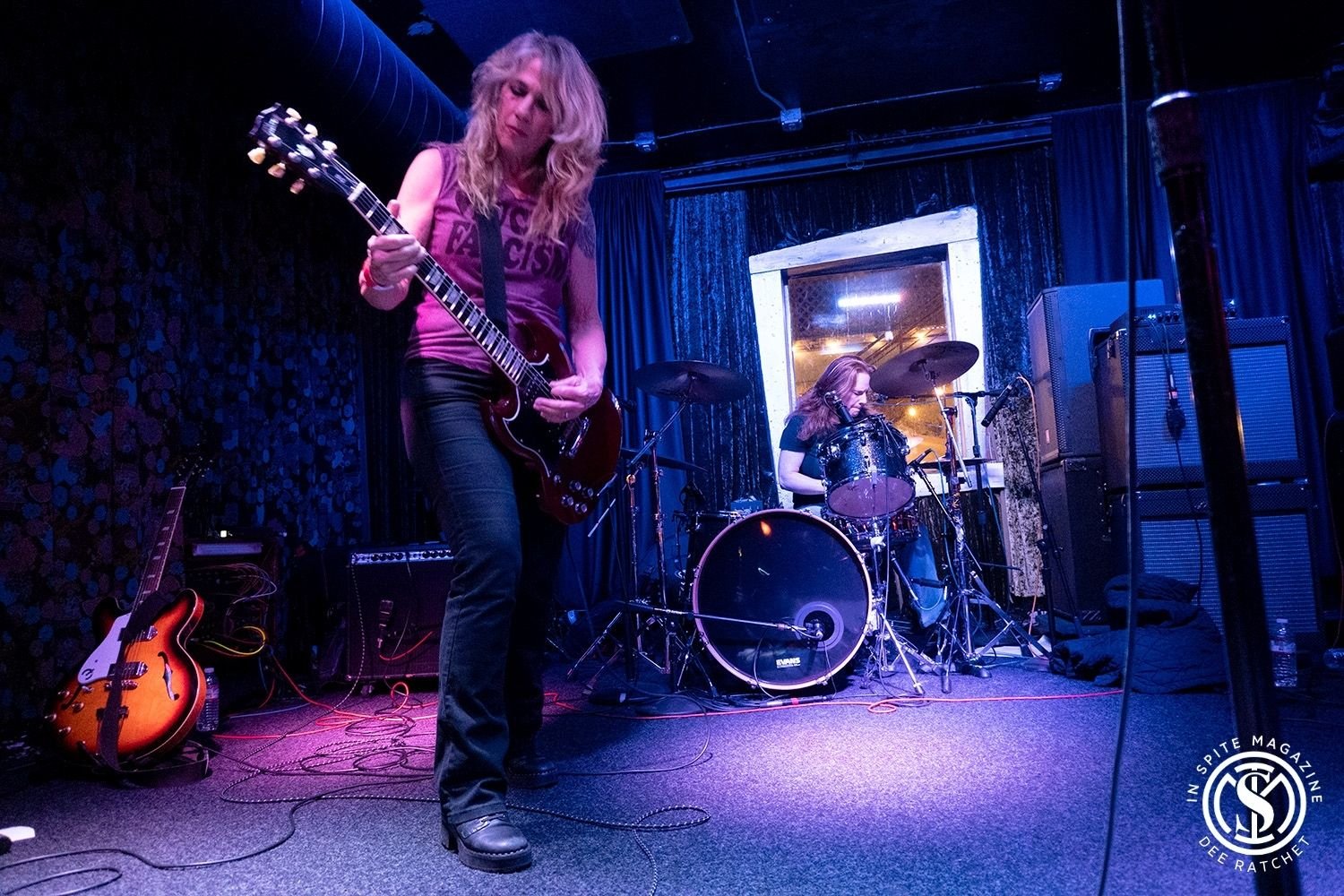
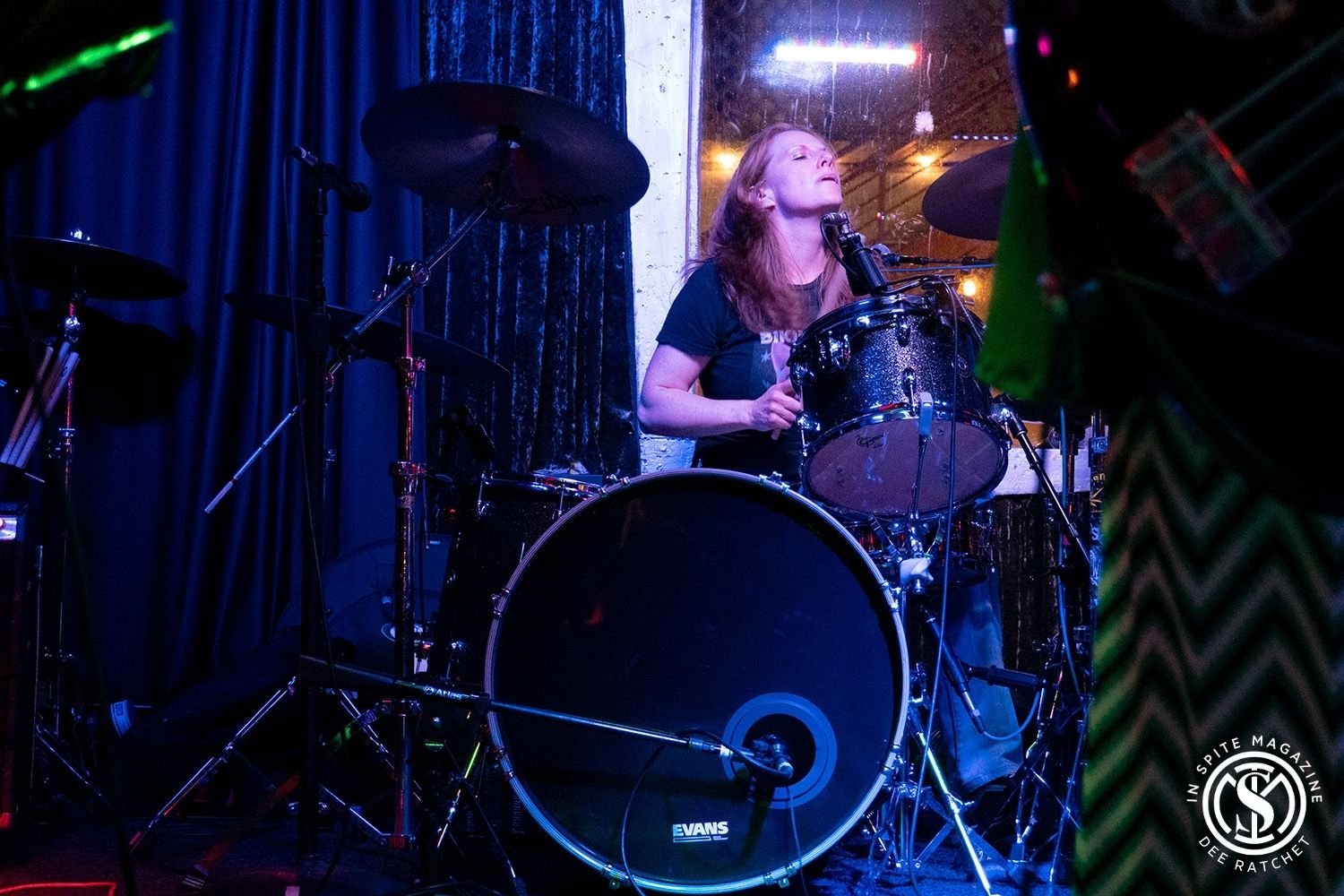
Then came Frightwig, the legends did not disappoint. It's always satisfying to watch a band of women who have been doing this long enough to have absolutely no interest in proving anything to anyone. Frightwig brings a combination of musical chops, irreverence, humor, and sheer force that is difficult to replicate. Deanna had a few "who cares?" moments when things didn't go quite as planned on a couple of songs, but that's part of the charm. The punk philosophy of imperfect is perfect prevailed, and they delivered a solid set of favorites with the kind of energy that makes you want to get closer to the stage.
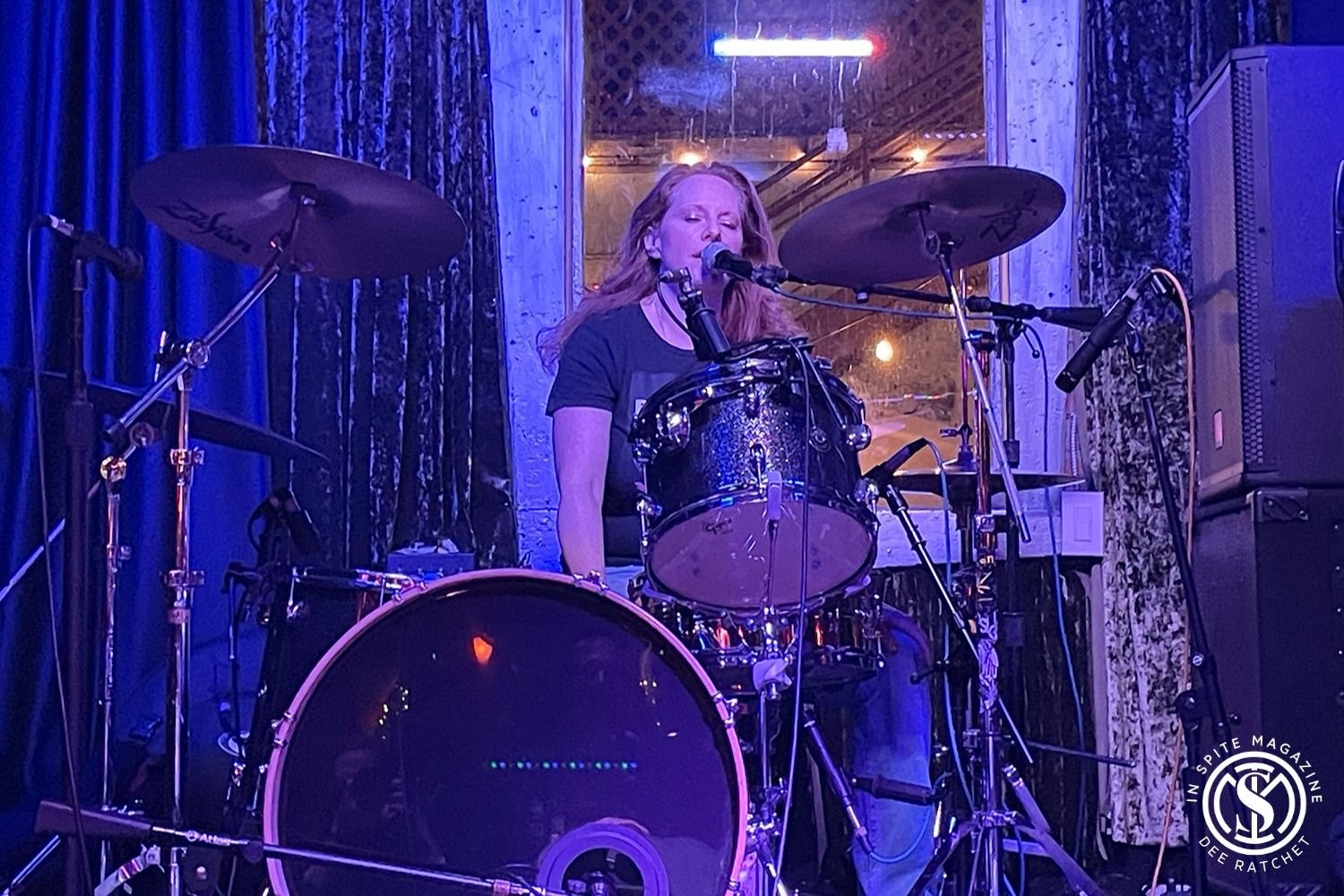
She can drum but the lady has some serious pipes too!
There was also a particularly beautiful moment when drummer Tina Fagnani, took on the ballad written by their original/former drummer, Cecilia Kuhn. Fagnani belted it out beautifully, movingly, and soulfully. It’s a beautiful song, and it carried a piece of the band’s history, and it felt like a tribute, but also a reminder that a band's life doesn't have to be frozen in one particular lineup or moment in time.
Mia d'Bruzzi delivered a handful of perfectly timed zingers, balancing rage, humor, and bad-assery with the ease of someone who has spent a lifetime honing the art. Her presence is strong, and there's a seasoned confidence in her performance that resonates well beyond the stage. Rebecca Sevrin's big blue hair rocks just as hard as her guitar shredding, and watching her tear into those songs is always a pleasure.
I love seeing Frightwig. The energy they bring to a stage will always touch my punk heart, and I’ll appreciate it every single time. Women being strong, intelligent, loud, funny, talented, and absolutely themselves. Not asking permission, not trying to fit anyone else's idea of what they should look or sound like. Just getting up there and doing it.
The band also made a point of acknowledging the significance of the evening and the long history connecting them to MDC. They hadn't shared a stage in years, but their history together goes way back, including their early performances together at the legendary venue, The Farm,multiply. in the late eighties (now reopened - same name, new location). Seeing them reunited on the same bill after all that time was a reminder of something that gets lost when we talk about punk as a particular era or a sound associated with a particular generation. Punk isn't something that expires. The themes of anti-authoritarianism, speaking out, challenging the status quo, and refusing to quietly accept what you're handed don't become less relevant with age. If anything, they get more layered. The experience accumulates, the perspective deepens, and the reasons to keep speaking up seem to multiply. tribute buttribute but
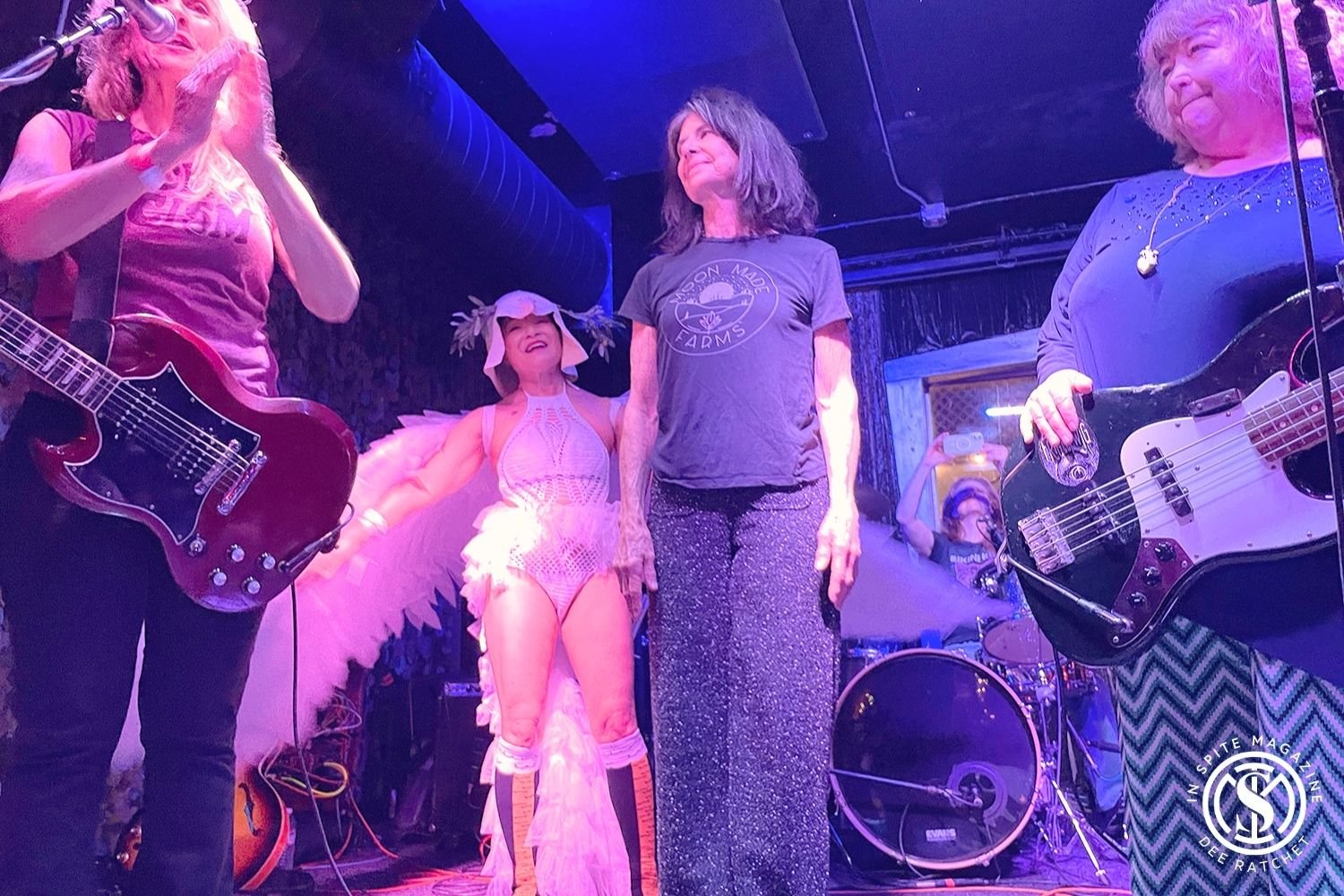
Ramona (center) must hear this all the time, but I can’t imagine it’s something that ever gets old.
Frightwig took the evening as an opportunity to bring up Ramona Downey, one of the outgoing owners of Bottom of the Hill, onto the stage to sing her praises. It was touching. The band made sure to acknowledge everything the venue has provided over the years and what it can continue to mean to young artists looking for a place to play. Deanna also pointed out that the show was all ages for a very intentional reason: nobody should be excluded.
That sentiment felt especially appropriate given the occasion. Independent music venues aren't just places to see bands. They're where people discover music, find their people, get inspired to start bands, and find their voice outside of the narrow little box they're expected to occupy. Making those spaces accessible to younger audiences matters. It's how scenes keep going. It's how the next generation gets to experience the kind of community that so many of us have been lucky enough to find through music.
I hope Ramona knows just how much she means to the artists who have played there and the people who have filled the room over the years (along with additional co-owners Kathleen Owen and Lynn Schwarz). Watching her share the stage with Frightwig, surrounded by that much genuine affection, gave the rest of us a chance to express some of our own appreciation. There were hugs, cheers, and a whole lot of love for a place that has clearly meant a great deal to a great many people. Knowing that the venue will continue under new ownership made the moment is a huge relief.
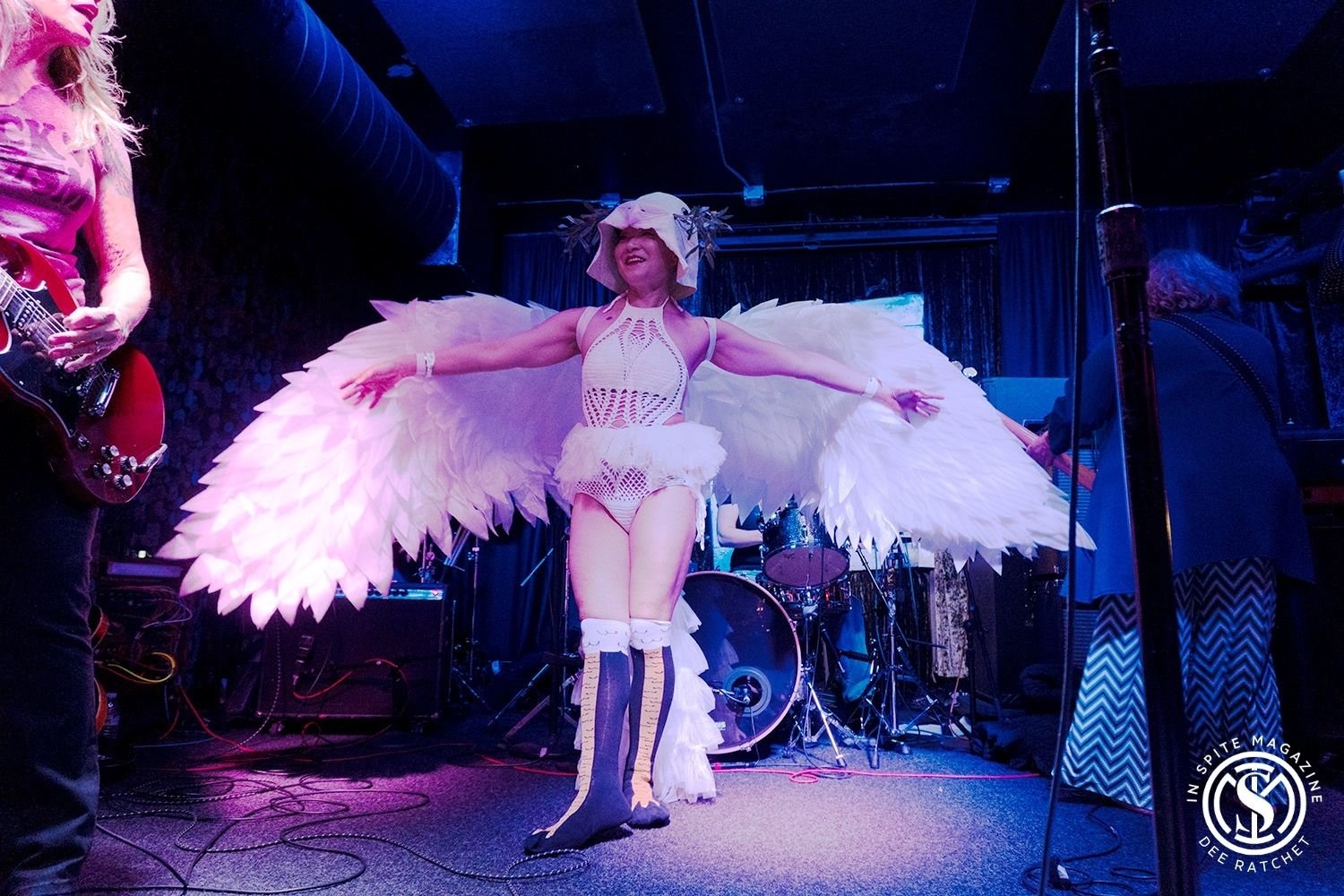
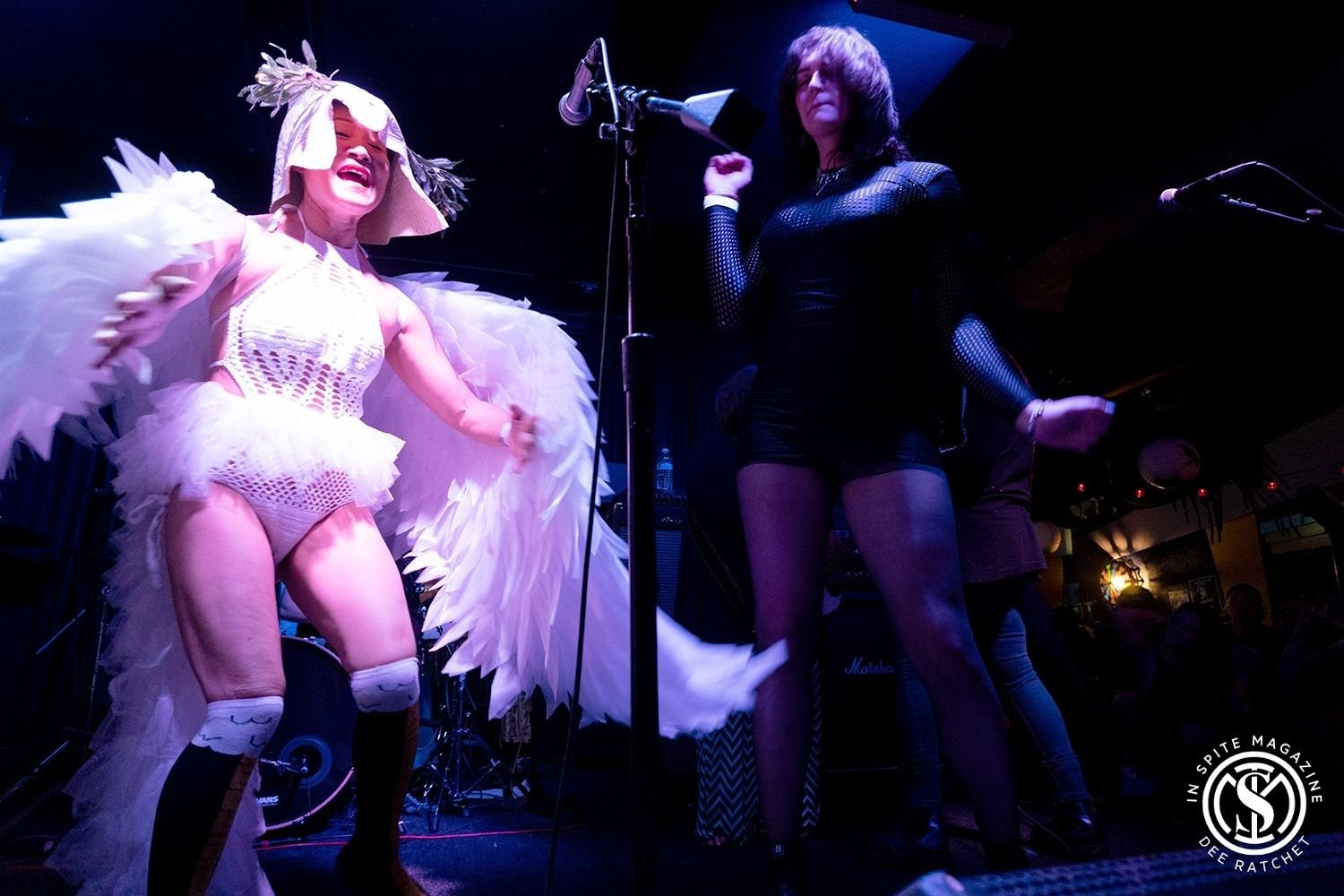
Frightwig also brought out a very familiar dancing dove of peace. I immediately recognized her from Mosswood Meltdown: photographer and filmmaker Barbara Liu, who somehow managed to make the small stage into enough of a dance floor to share with another go-go dancer and still spread her wings. It was a joyful addition to the set and a lovely visual punctuation mark to an evening that had already delivered plenty of reasons to feel good about the state of punk rock. A dancing dove of peace at a punk show? Absolutely. I'll take it.
Then MDC took the stage.

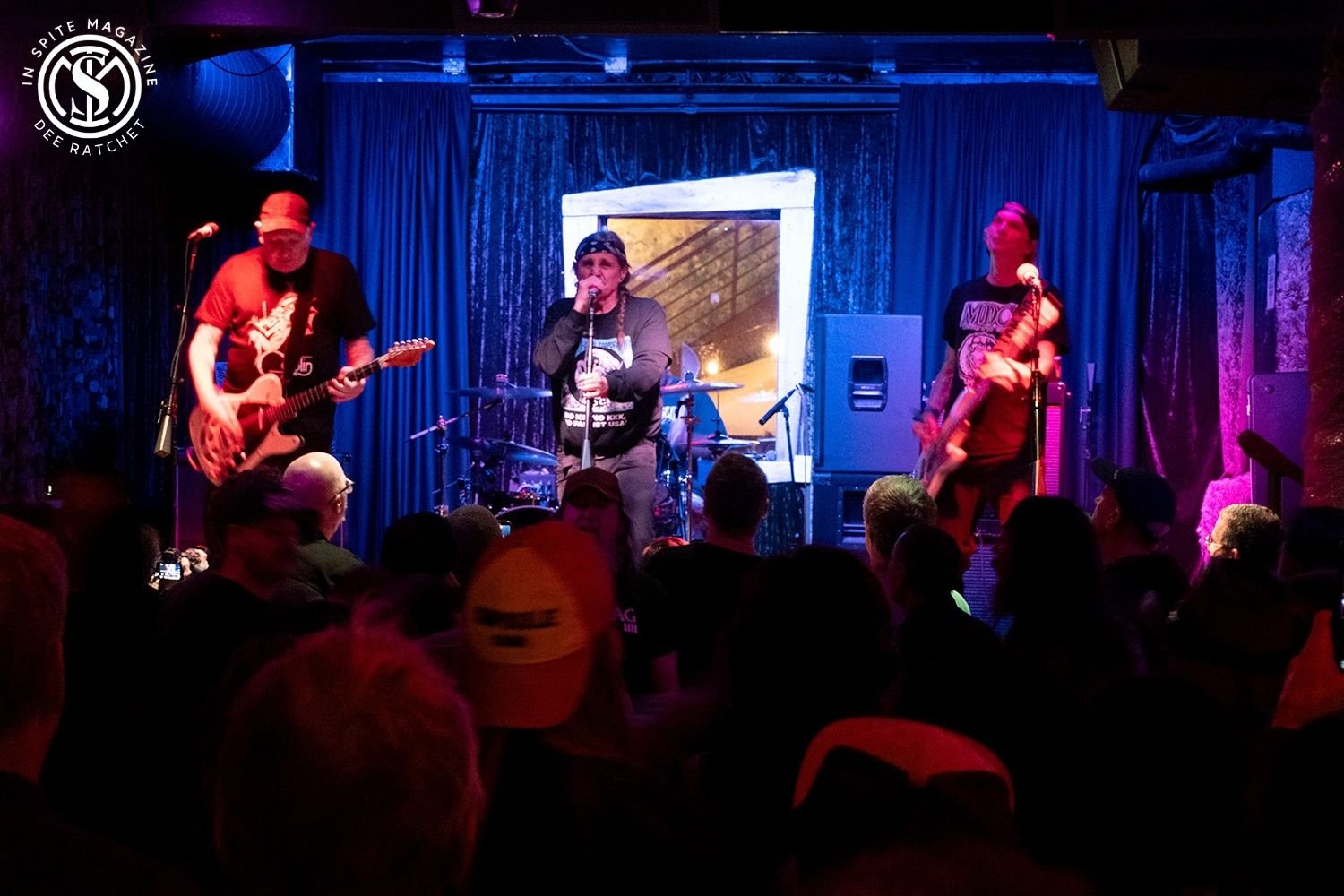
MDC, Dave Dictor, at Bottom of the Hill, SF — Photos by Dee Ratchet
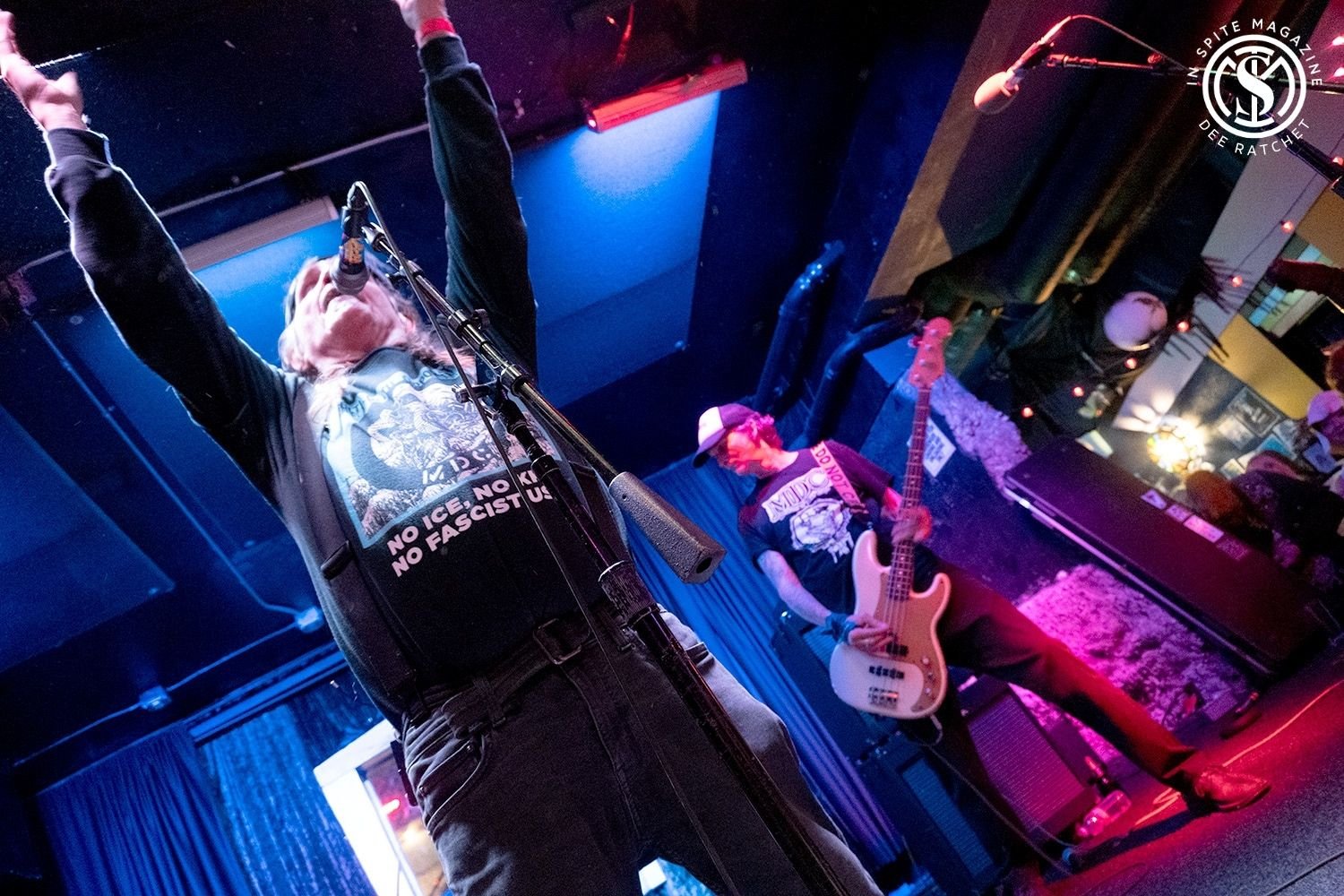
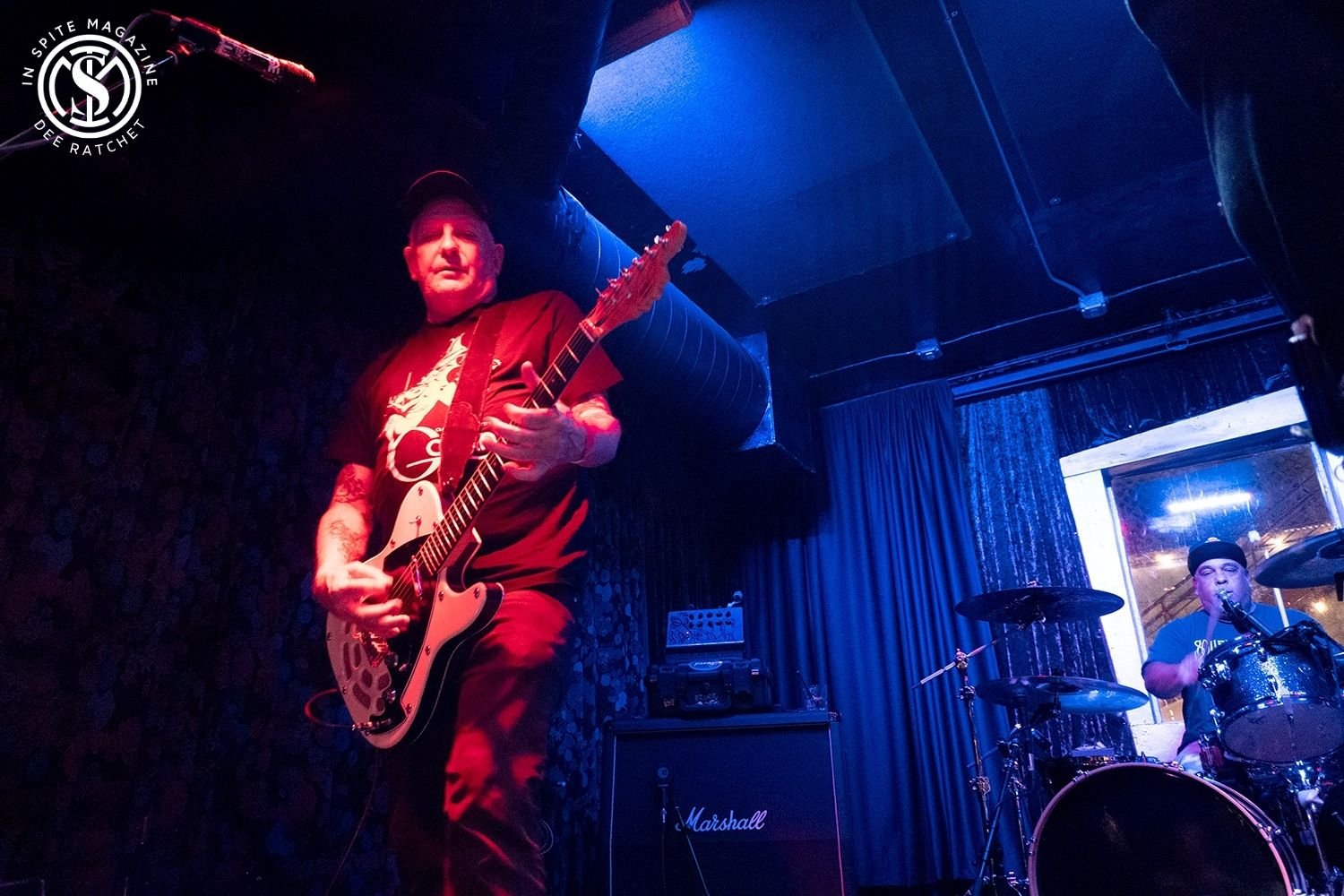
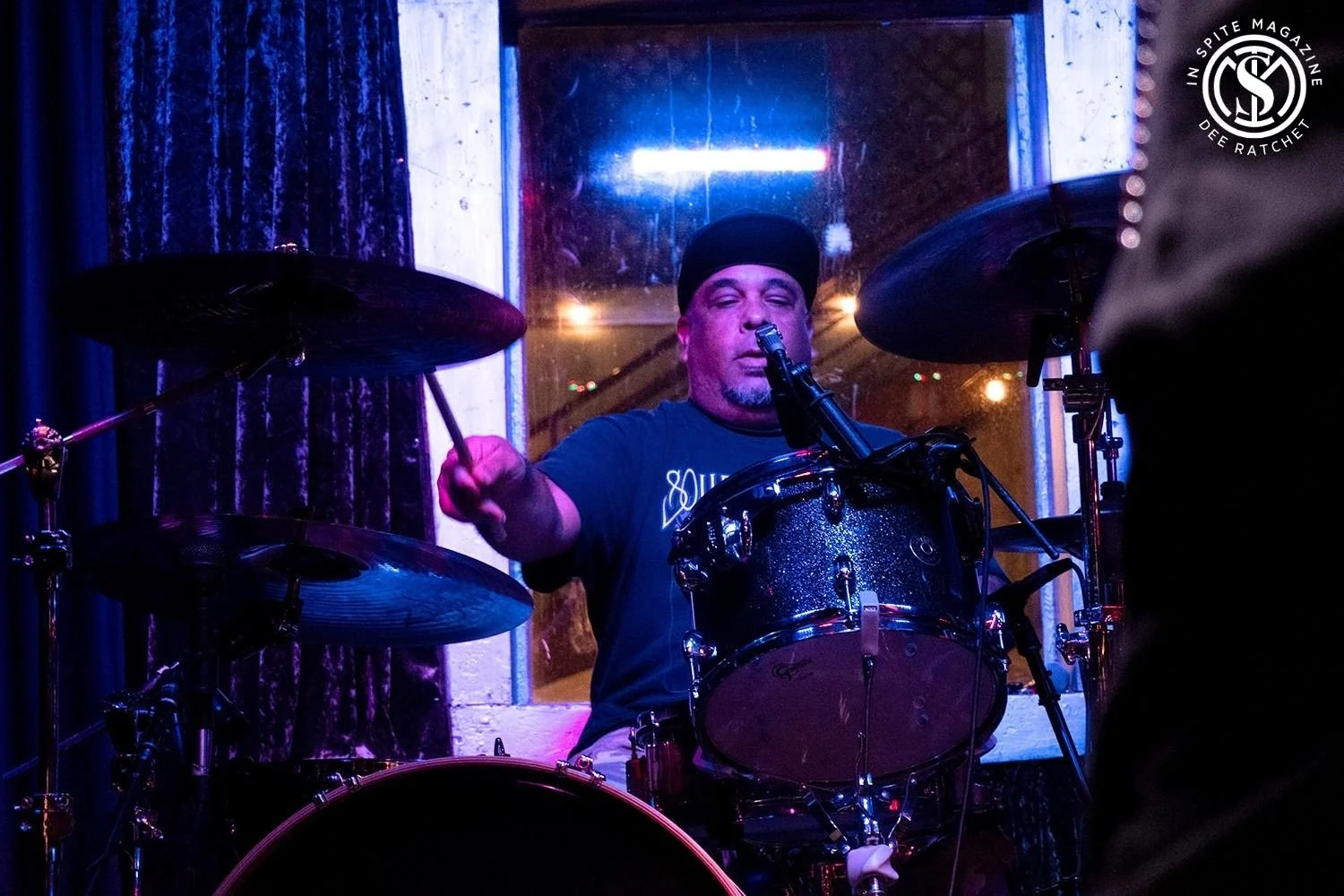
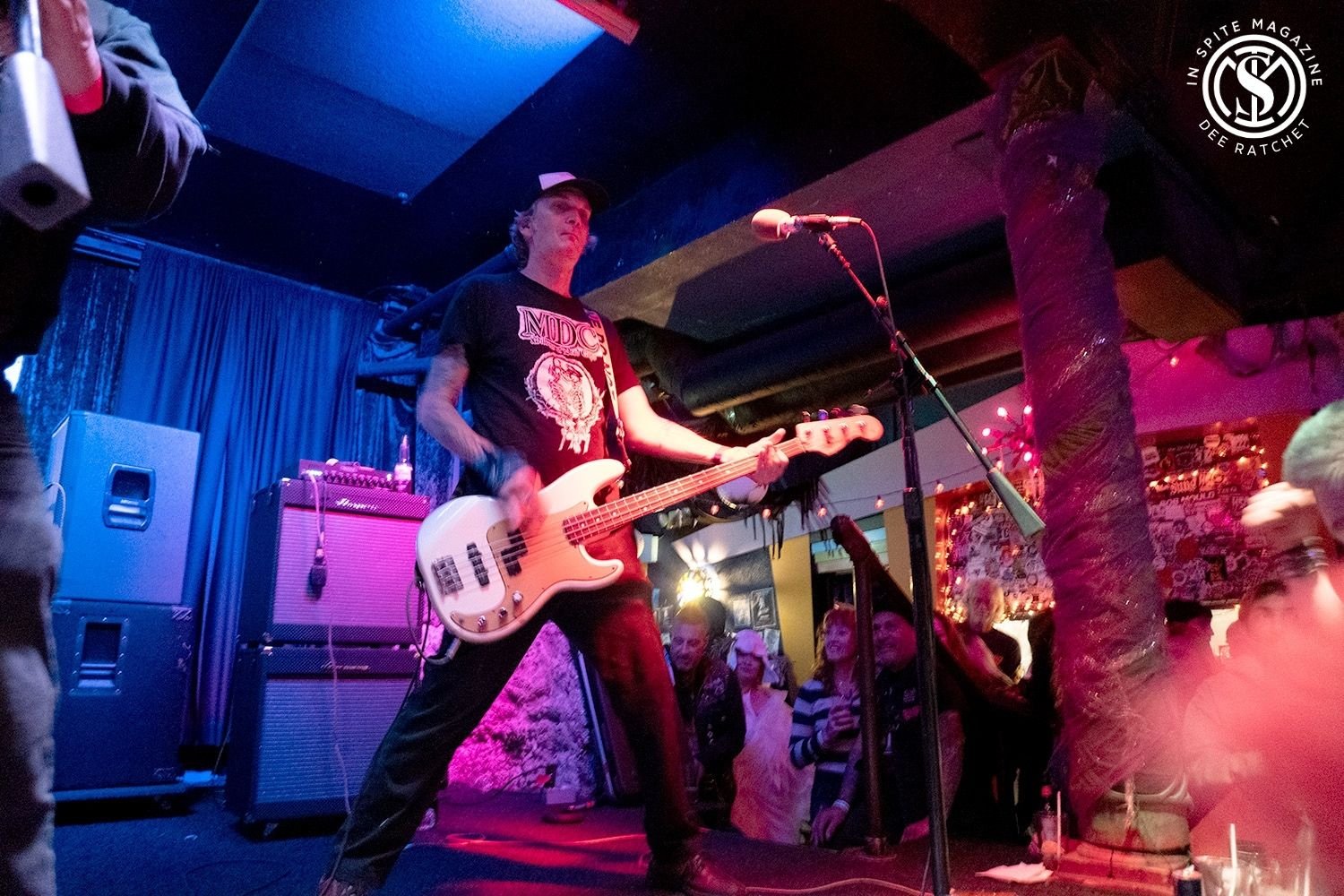
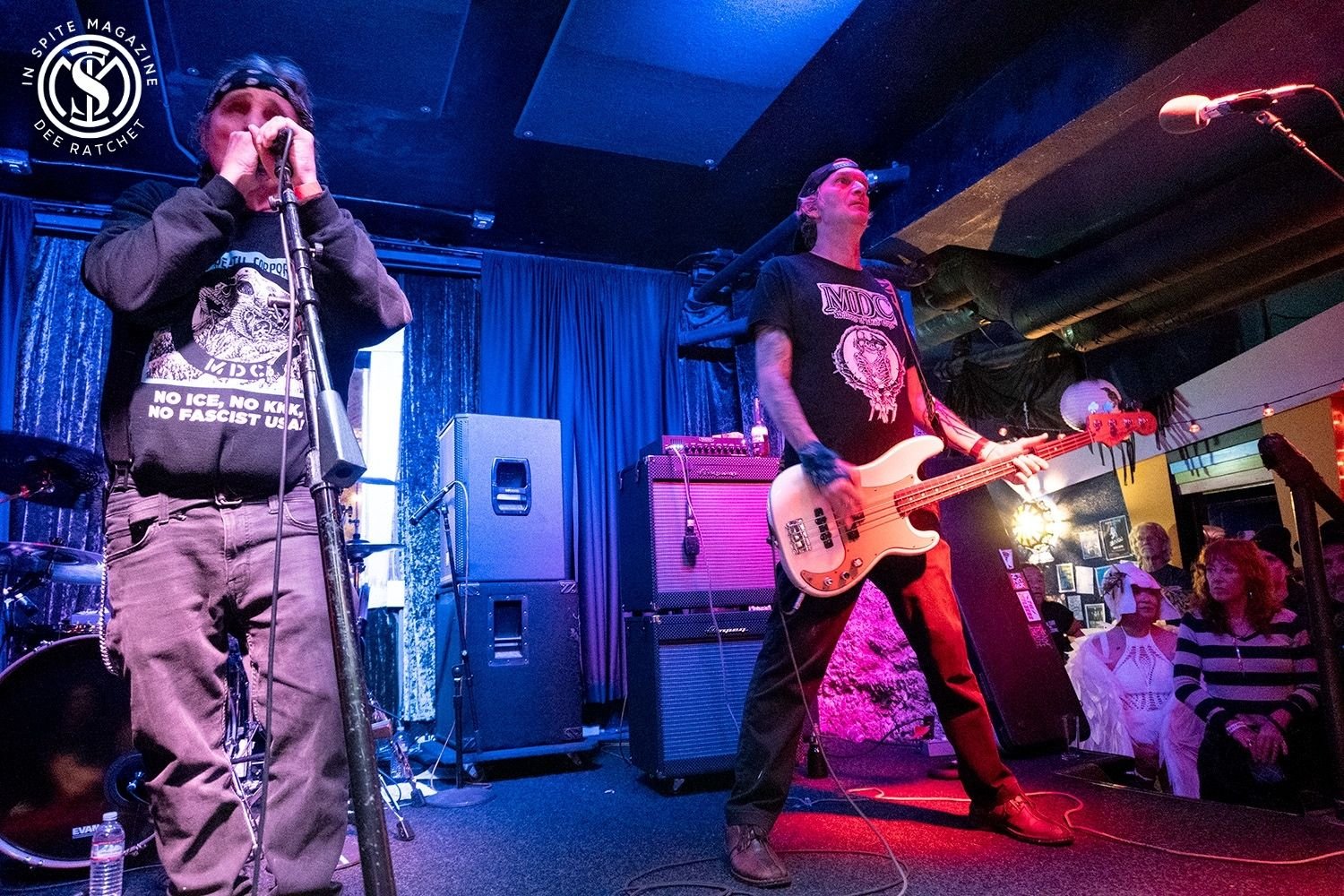
As mentioned, the venue was packed. Sardines have more room. Dave Dictor always outspoken, ushered us into things with his take on the state of the world, and the crowd was more than ready to GO. MDC delivered exactly what you want from an MDC set: biting, hard, fast, politically charged songs that hit with the force of a well-aimed punch and lend themselves beautifully to a raucous mosh pit.
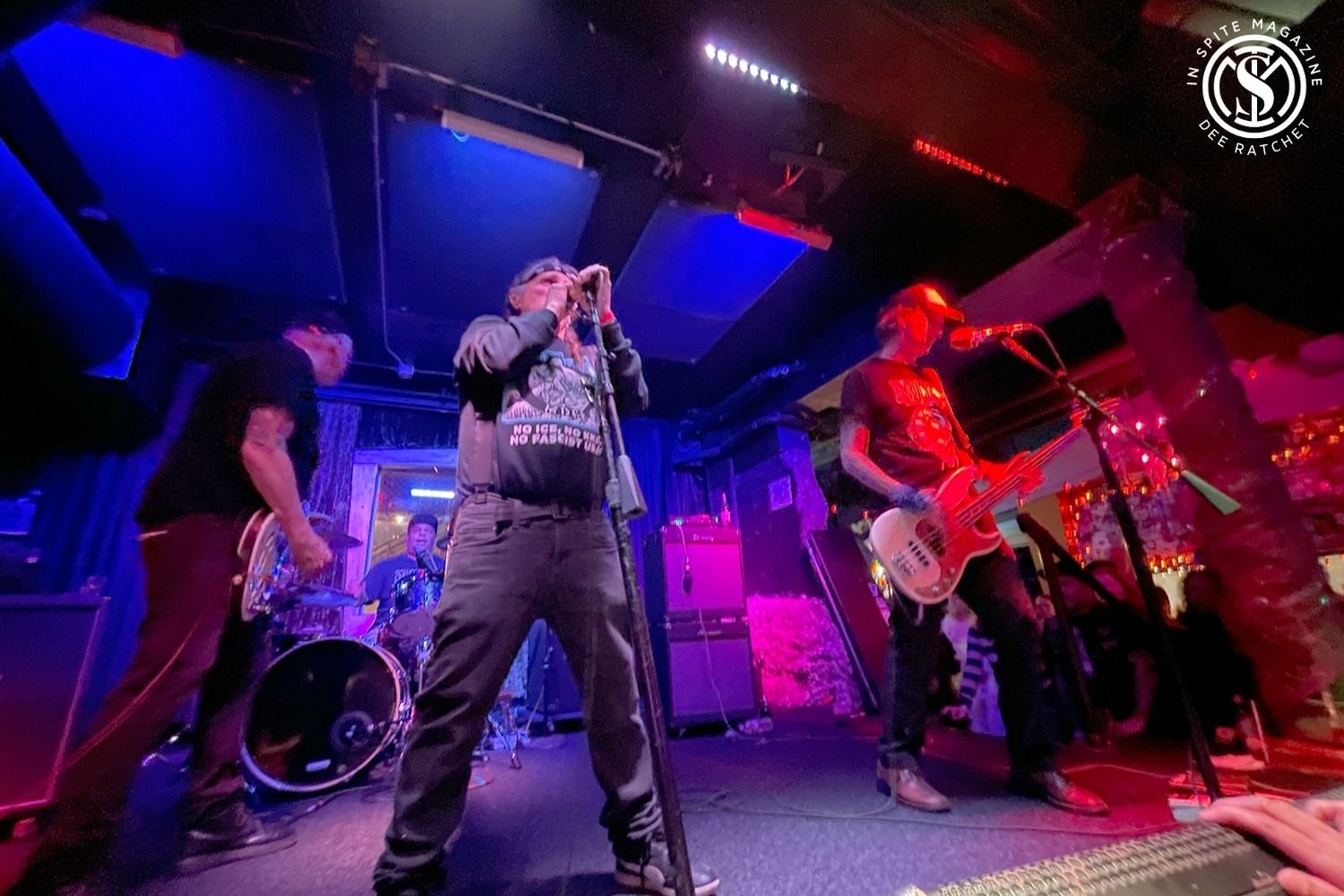
I was up near the stage, where getting rhythmically crushed every now and then was simply part of the experience. The people behind me weren't exactly providing a protective buffer, but I was there for all of it. That's what you sign up for. The physicality of a punk show is part of the release, and sometimes you just need to get thrown around a little while screaming along to songs that say everything you've been thinking.
MDC tore through the set with the kind of force you'd hope for, and the lyrics still hit. They mean what they say, and the audience knows it. The communal experience is one of the best things about a live punk show. All of us packed into a room, sweating, shouting, thrashing around, and collectively channeling a whole lot of frustration into something that feels almost medicinal. It's delicious anger, metabolized into a punk show. For a little while, we're all on exactly the same page.
Dictor also shared a bit about his family, mentioning that his daughter is dating a trans person and that, dammit, they should feel safe and have the right to exist. It was a personal moment that connected the political messages in the songs to the very real people and families affected by what's happening in the world. I imagine there were plenty of parents in the room who understood exactly where he was coming from. You want your kids, and the people they love, to be able to live their lives without having to justify their existence or worry about their safety. That's not a particularly complicated expectation, and it's worth getting loud about.
There was also some acknowledgment of the hope generated by the recent blue wave. After so much anger, frustration, and seemingly endless reasons to wonder whether anyone is paying attention, seeing people turn out and make their voices heard offered a little breathing room. Of course, hope isn't a substitute for action, and nobody in that room was suggesting the work is finished. If anything, the challenge now is making sure that energy doesn't get squandered. The voice of the people needs to remain as loud and clear outside the venue as it was inside it.
Really, that was the thread running through the whole night. Three bands and unique approaches, but a shared understanding that music can be more than entertainment. It can be a release, a gathering place, a reminder that you're not alone in what you believe, and a reason to keep showing up.
Bottom of the Hill is part of that story, too. The fact that a venue with such a long history can continue to provide a home for live music rather than disappear is something worth celebrating. We need these places. We need the small stages, the loud bands, the all-ages shows, the weird dancing, the merch tables, and the rooms where strangers become community because everyone knows the words to the same song.