“The Possibility of Being Crushingly Loud” – 1MU at Supersonic ‘26 Part 1
Photography by Joe Singh, Robert Barrett, and Sam Frank Wood. All rights reserved.
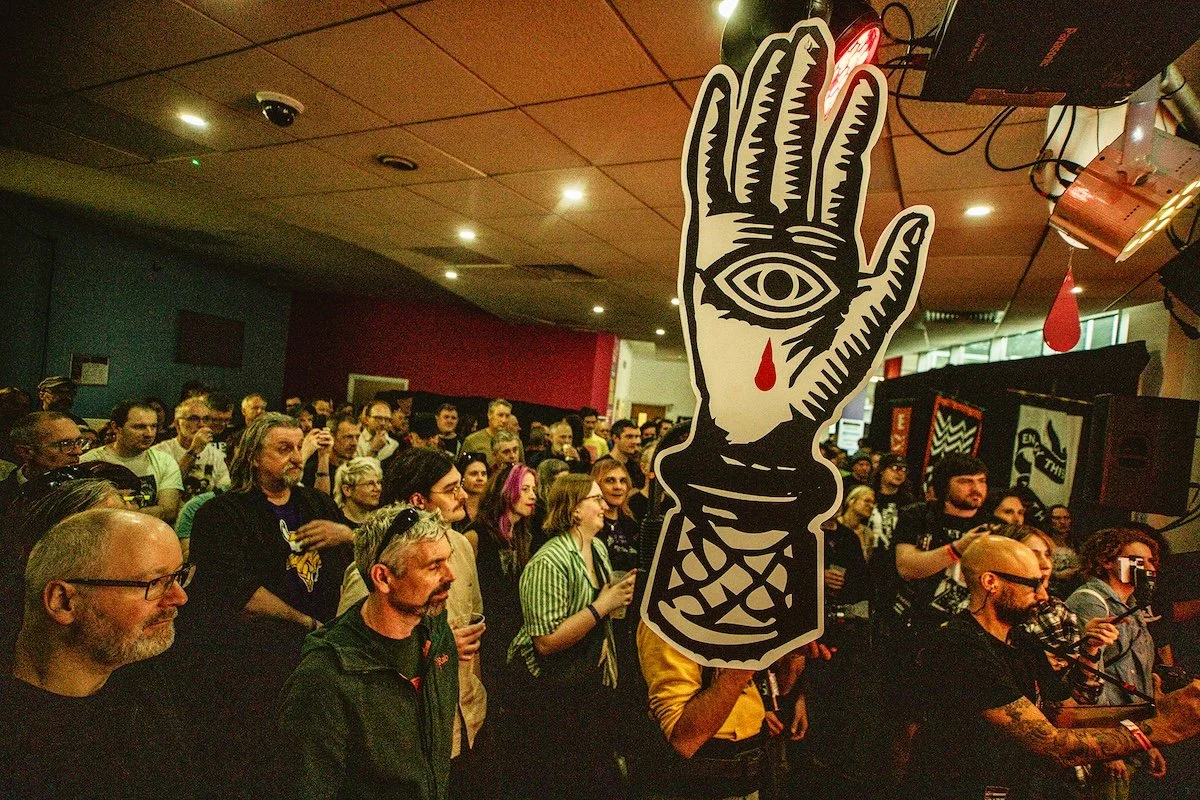
Supersonic ‘26. © Robert Barrett
In the minutes leading up to their performance, the members of Milkweed were performing a soundcheck. At one point, a Walkman-style tape player was held up, with the request to the engineer that its level be adjusted to ensure, “the possibility of the tapes being crushingly loud”. Knowing chuckles filled the gathered audience. Because the possibility of being crushingly loud might well be the raison d’être of Supersonic Festival, seeking to promote the work of experimental, firmly underground sculptors of sound and song. Loathed to take a fallow year in the face of financial hardships, they instead chose to reduce capacity and billing for 2026, creating a more intimate, but no less special weekend of noise at The Crossing, the venue of Birmingham University’s student union.
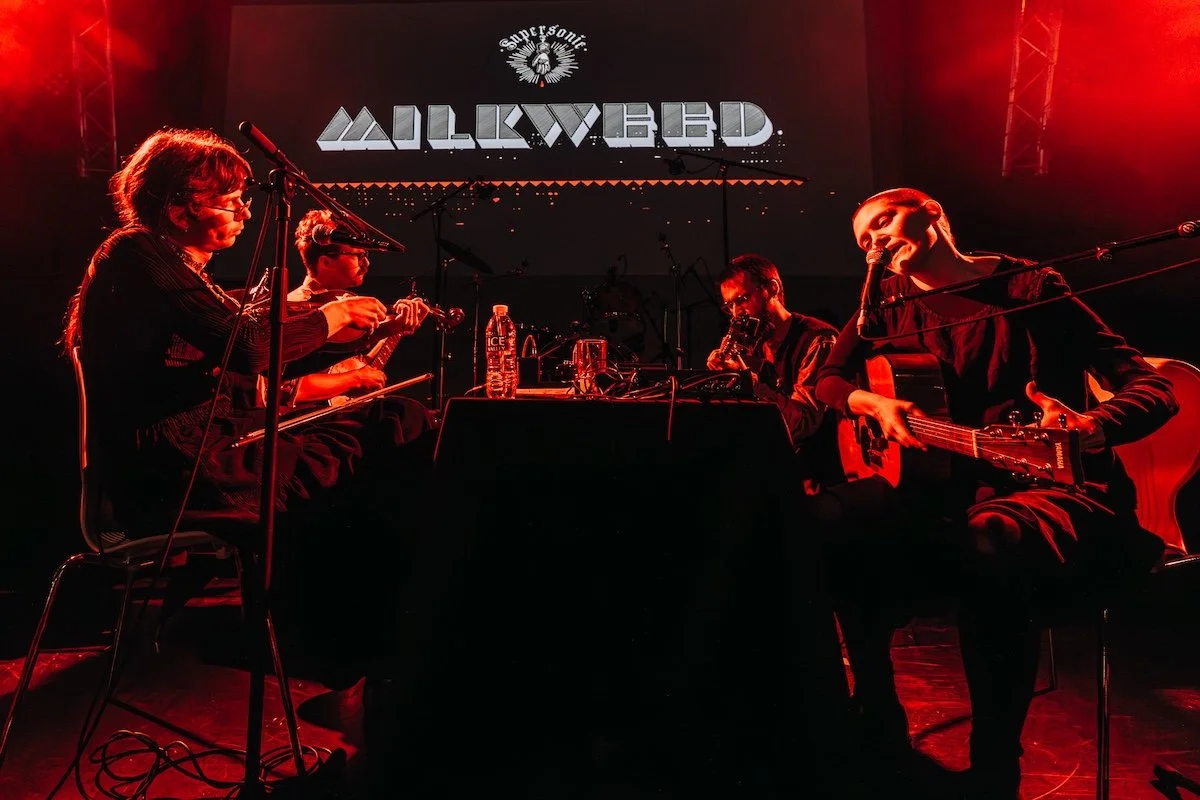
Milkweed at Supersonic ‘26. © Joe Singh
Having previously greatly enjoyed Milkweed’s lo-fi blend of folk and hip-hop, I was expecting more of the same from the semi-anonymous duo. I was, however, wrong. For a start, there were 4 folks on stage, all sat around a dining table carrying banjoes, guitars, violins, and the aforementioned Walkman. An overture of string-based noodling gave way to a 2-part piece of epic storytelling, in which spoken word, singing, physical performance, and musical performance all served a double-bill of tales translated from the Ulster Cycle Of Irish Mythology, telling stories of Ulster warriors, and the threats they unexpectedly found at sea. By the end of this heroic set, my breath entirely taken by extraordinary vocal performances and tempestuous use of folk instrumentation, I realised that my points of reference were closer to theatre than live music. In my never-ending quest to find art and culture that is truly unique, this was an ecstatic experience.
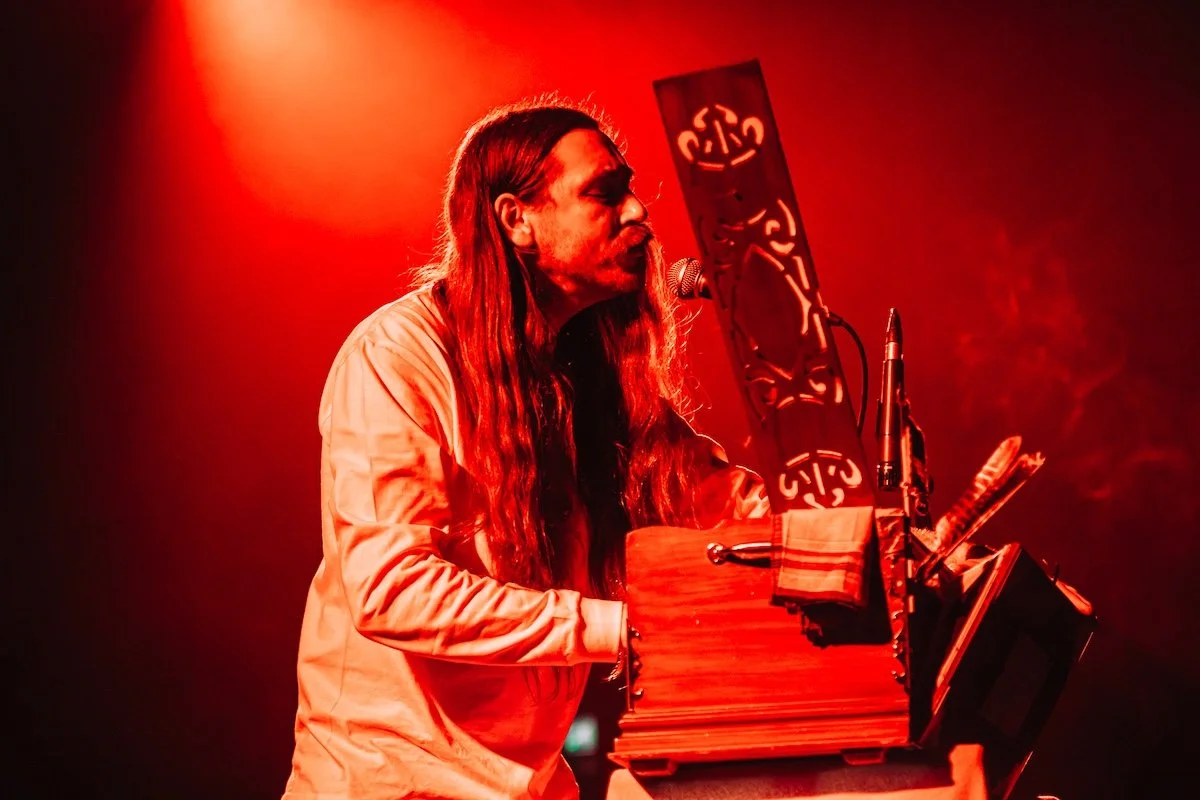
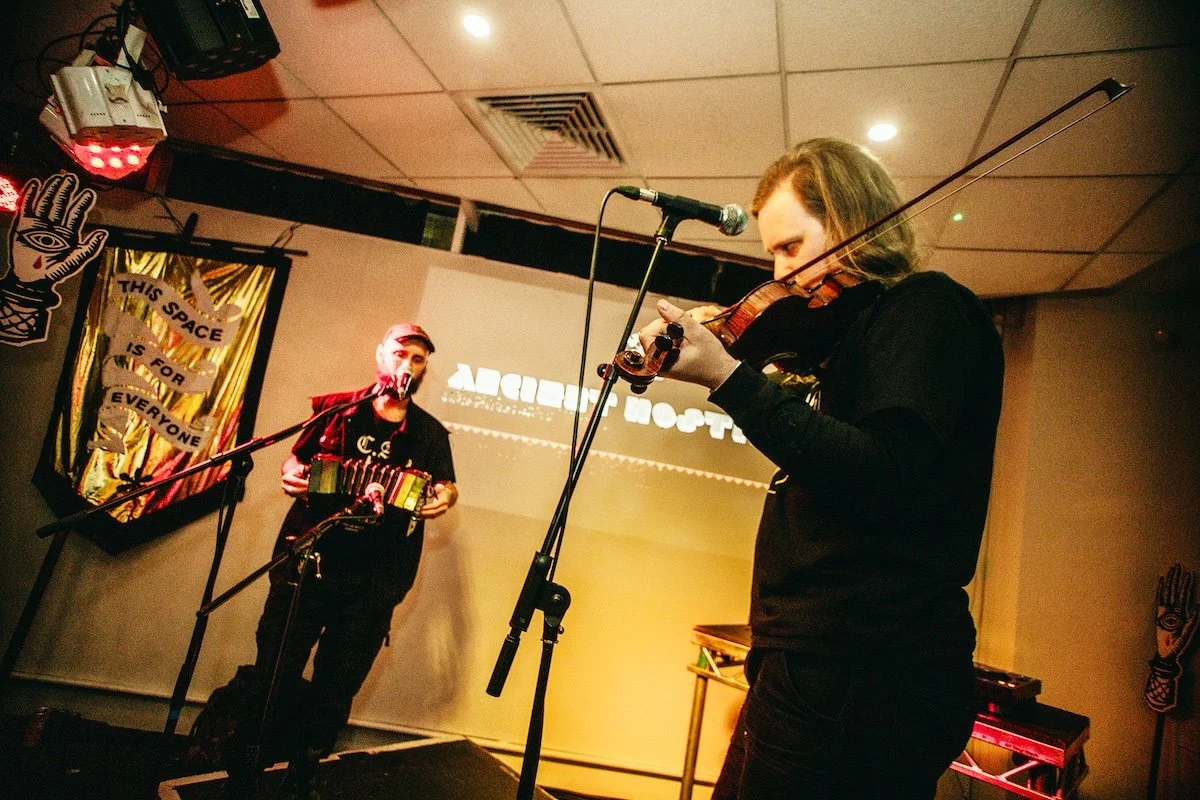
Milkweed might have been a highlight, but they were not the only ones pushing the traditions of folk music to breaking point. Formerly of antifascist black metal group Dawn Ray’d, Matthew Broadley, performing as Greet, and Simon Barr and Ash Ludd, of the duo Ancient Hostility, tackled this in equally intriguing manners. The latter, their politics firmly on their sleeves, sought to bring their slick though rustic stylings to the present day, tackling class warfare, immigration raids, toxic friendships, and a Bob Davenport cover expressing what they call, “fuck the police sentiments,” all in stunning close harmonies, culminating in a choral performance led by Debbie Armour (formerly of “revenant ballads” workshopping). While they chose the fiddle and squeezebox for their instrumentation, Greet restricted himself to the harmonium. Following in the footsteps of the likes of Nico, he used this to haunting dark-folk effect, channelling the profoundly imposing Yorkshire landscape he calls home, into a beautiful 40-minute nonstop set of brooding folk tales. Anyone invoking Nico in such a way is absolutely fine with me, and Broadley provided a real unexpected highlight of the festival.
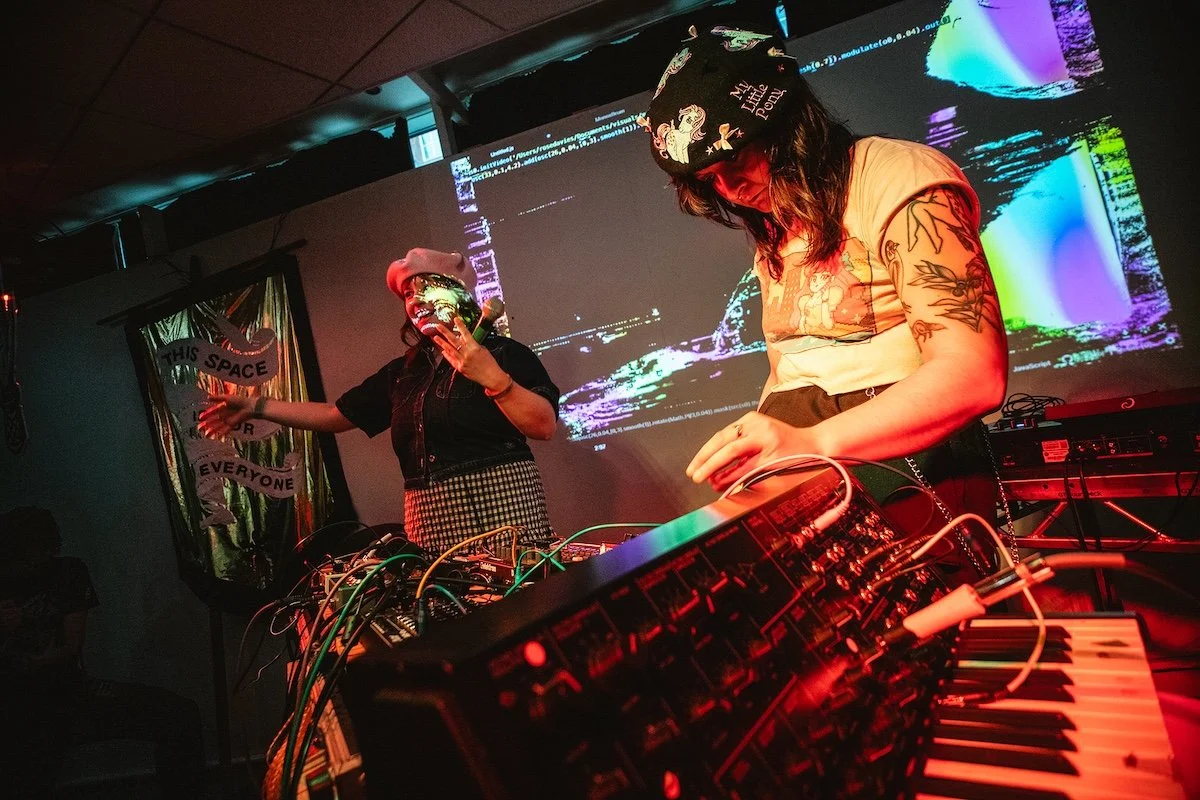
Politics are baked into the foundation of the festival, and its platforming of minority ethnic and LGBTQ+ artists, and those unabashedly of the left-leaning persuasion, is testament to this. At the hyper-local level, Digbeth’s Monoxide Brothers (actually musicians Emily Doyle and the brilliantly named vocalist Sophie Hack) conveyed their deeply unimpressed view of an unjust, misogynist society through infectiously hard, minimalist electroclash, though without ever taking themselves too seriously. If Chicks On Speed were from Birmingham, they might have sounded like this. Note to men at concerts: find their EP ‘Manic Pixie Dream Pop’, listen to ‘Horses’, and check yourselves.
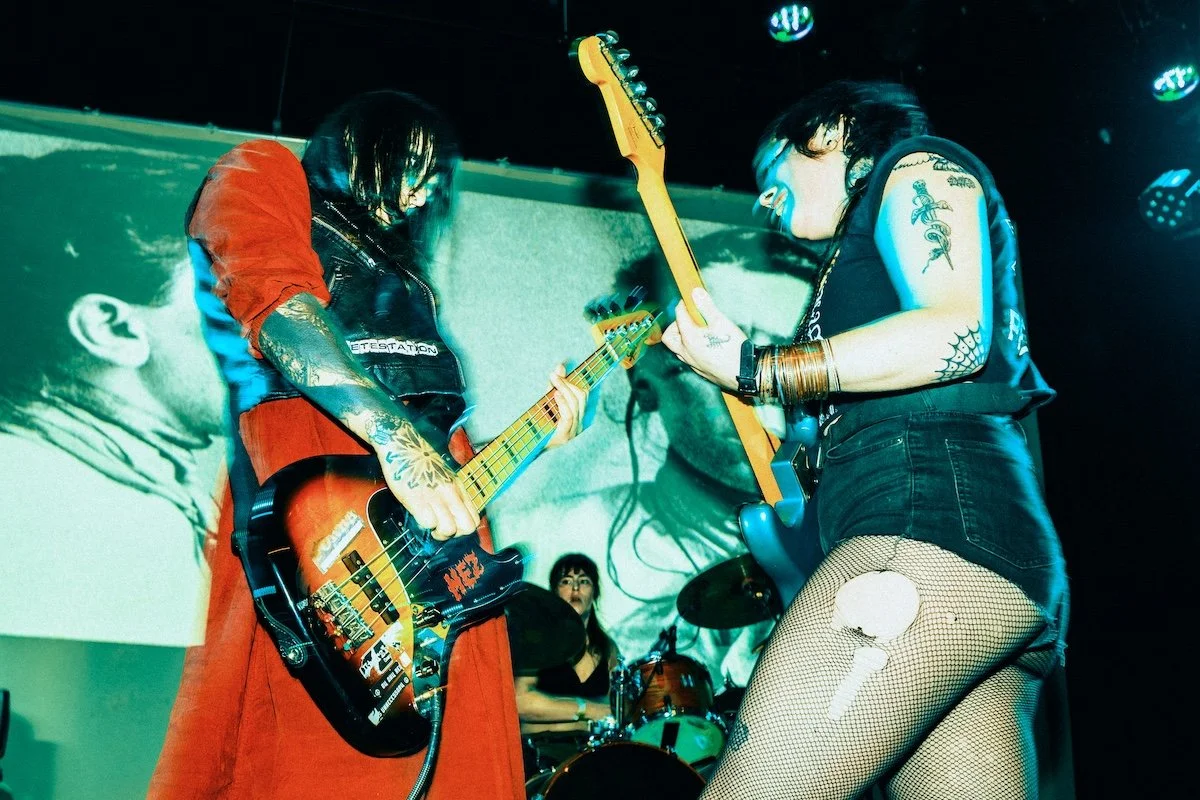
From further afield, Venezuela’s Eva Leblanc (previously seen with Eve Libertine at Rebellion ‘25), now relocated in London, brought her previously one-woman band Traidora, now with a perpetually evolving lineup, to Birmingham. More used to playing in tiny pub basements than the giant stage of The Crossing, the physicality of the trio’s performance felt a little lacking compared to some of the footage I’ve previously seen. But the substance of their set, a breakneck selection of Spanish-language, LA-style hardcore punk, more than made up for this. Though liberal use of Google Translate is required for this monolingual philistine to understand the lyrics, describing in devastating detail the hardships leading to Leblanc finding her trans identity, it is clear from hearing her speak between the numbers how much it means to her to present this work to an audience that doesn’t merely accept her, but embraces her. That said, when the music is as sonically powerful as that played by the trio on stage, even those without language cannot help but be overpowered.
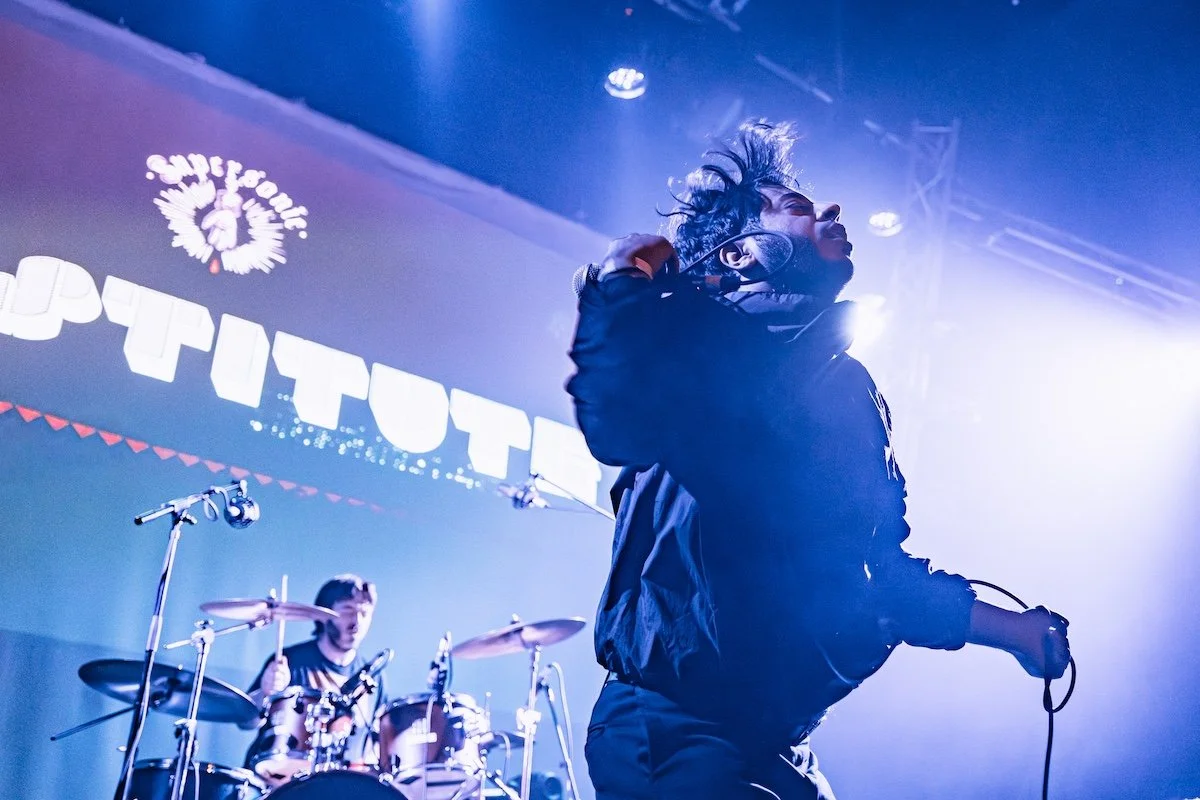
Prostitute at Supersonic '26. © Joe Singh
Though lacking the grindcore speeds of Traidora, Sunday’s headlining act, Prostitute, were similarly fierce. A real one-to-watch act, the Michigan 5-piece arrived midway through their first European tour, marking the rerelease of their 2024 album ‘Attempted Martyr’, a brutal piece of post-hardcore Arab noise rock. The band cite Death Grips as an inspiration; this seems apt, because despite frontman Moe Kazra’s one insistence that he has, “come to dance… so let’s dance,” this was a tight 40 minutes of dark, confrontational music that did not so much lead to dancing as it did to the closest Supersonic came to a mosh pit. Only Kazra’s rhythmic breathing provided any solace to a savage musical backdrop, which met lyrics that oscillate between fear, grandstanding, and rage. For an American Muslim group promoting an album that is somehow both post- and pre-Trump, this is quite understandable. I saw them in a 600-capacity venue. I’ve no doubt they’ll soon be too big to trouble venues this small. Catch them at your nearest independent venue while you can.
Bonus points can be awarded to Prostitute for the title of their debut album’s closing number, ‘Harem Induction Hour’, obviously a reference to The Fall’s legendary LP. Such references were also a feature of the annual Supersonic pub quiz which, remarkably, had never occurred in a pub until now. The Old Crown, standing since 1368, was an ideal place for Stuart Maconie to challenge the most brave and foolhardy minds of the festival. The host of BBC Radio’s Freak Zone, a weekly exploration of the kinds of sounds Supersonic audiences know and love, he and his producers came up with a fun though fiendish contest, including a selection of songs about sports (if you’ve heard ‘Stock Car Racing Is Magic’ by Vroom, you’re obviously more cultured than I), sound effects in pop songs (I correctly identified the reversed toilet flush from the opening of ‘Telstar’), and the aforementioned Fall round. Experts on the life and work of Mark E Smith beware though – allow me to quote a typical question:
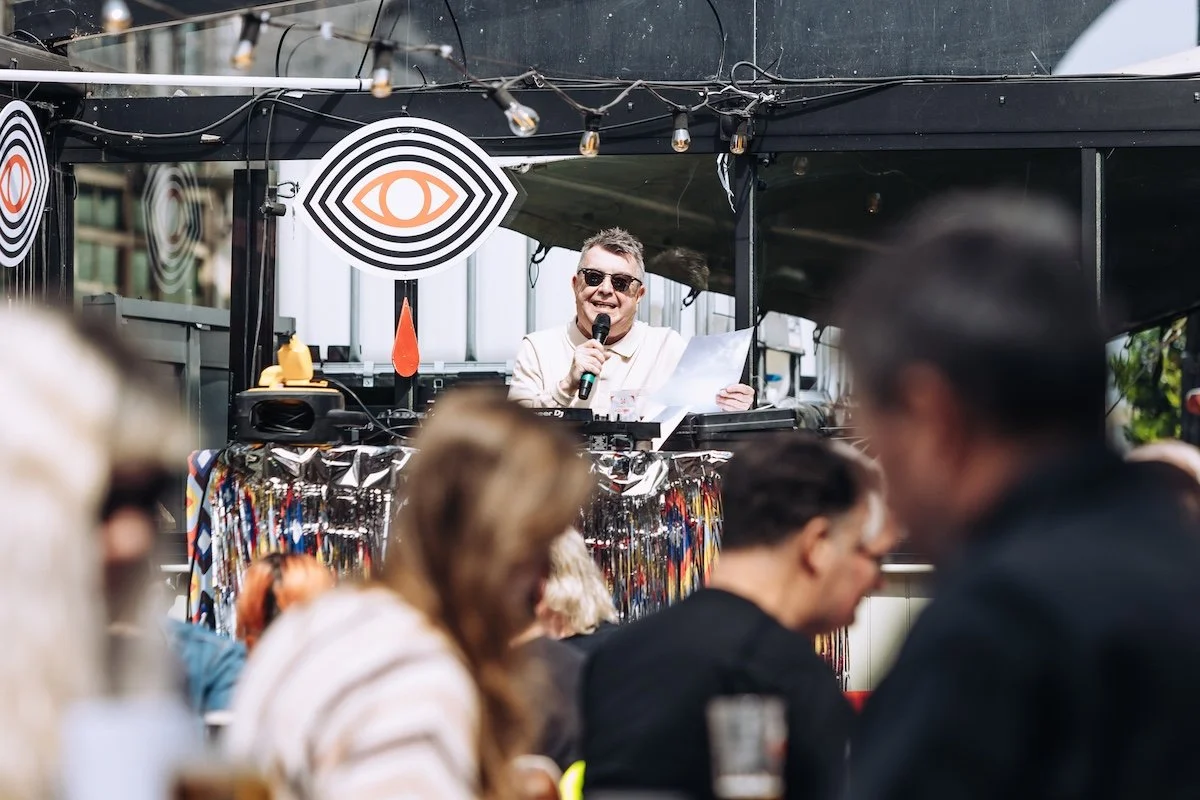
Stuart Maconie hosts the Freak Zone Quiz at Supersonic '26. © Joe Singh
“‘The Fall Of The House Of Usher’ is a short story Edgar Allan Poe… but what is the first name of the American r’n’b singer Usher?”*
And on that ridiculous note, I feel, dear reader, like that’s a good place to pause. Look out for Part 2 of my review soon.
1MU ONLINE
* The answer, by the way, is Usher. Bloody trick questions.