
Shoulder to Shoulder: What Punk Houses Give Us
In a moment when large punk festivals are unraveling, cancellations tied to allegations, unsavory promoters, and the same old power structures, it's got me thinking about this:
Where Can Punk truly take root and thrive?
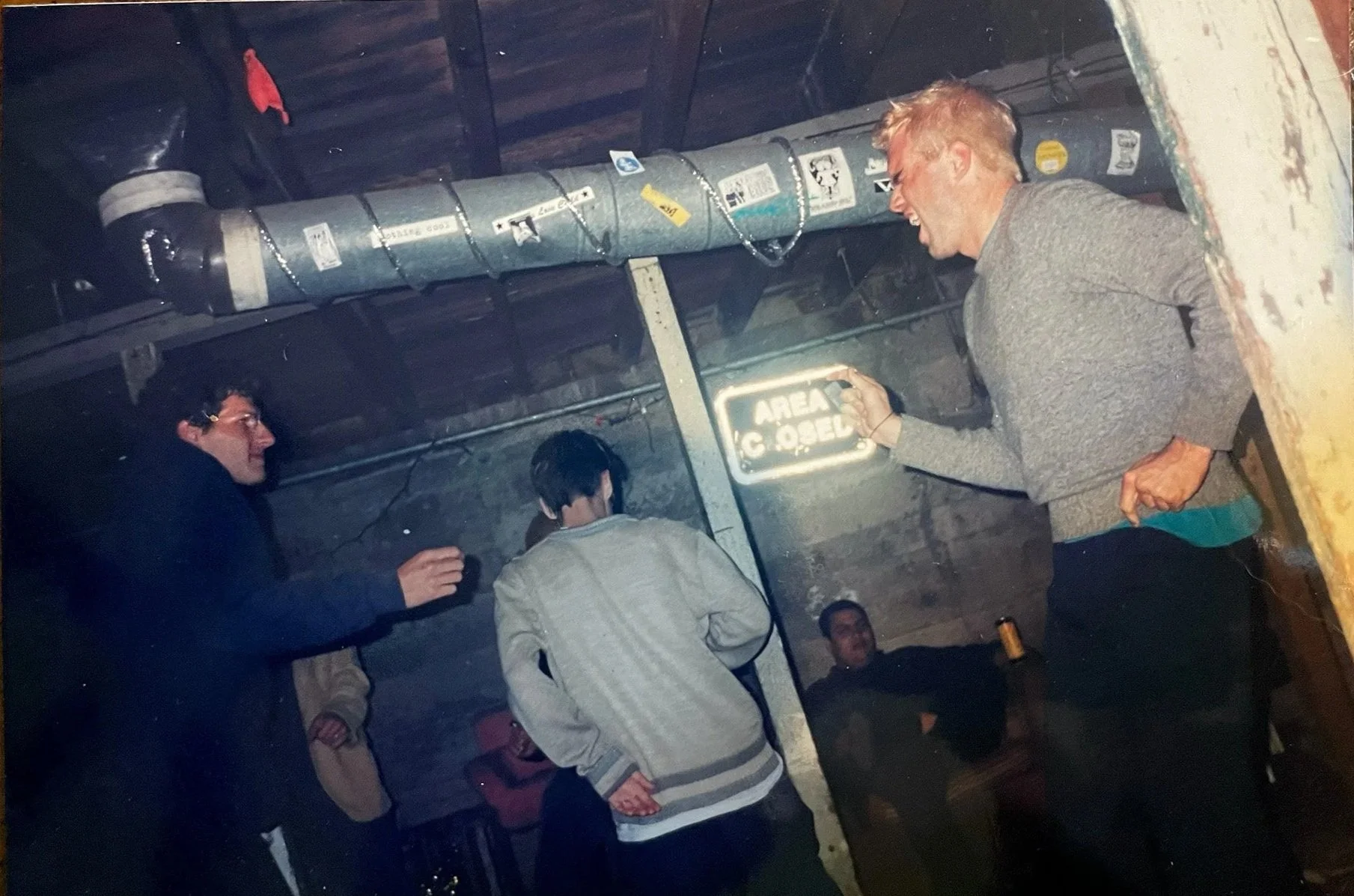
From the Third St Archives
In the early days (we’re talking late 1990s), the answer was Third St., also known as “The Basement,” a space truly underground; pipes from the ceiling adorned the space, and cement walls with little to distinguish the interior from any other basement…but the renters, Cass, Holly & Kelly, saw the opportunity. I know this couldn’t have been the only “house venue” of its kind; I’m sure unassuming spaces like this dotted the country, or really, the globe! Places that could quietly incubate a scene: rooms with odd lighting and sketchy electrical situations, makeshift sound systems, and random chairs.
In high school, Cass and her friends were pulled into their first glimpse of DIY music through shows organized by Lee Homer at places like the Cupertino Library and the Sunnyvale Community Center. Bands played wherever someone would let them. The point was NOT the venue but that it was happening at all. Cass immediately spotted the difference between a great show vs a mediocre one. Arrogance was not going to create a welcoming environment, scenesters were of no interest to her, she wanted to create something that invited everyone in, and that’s what she was going to do.
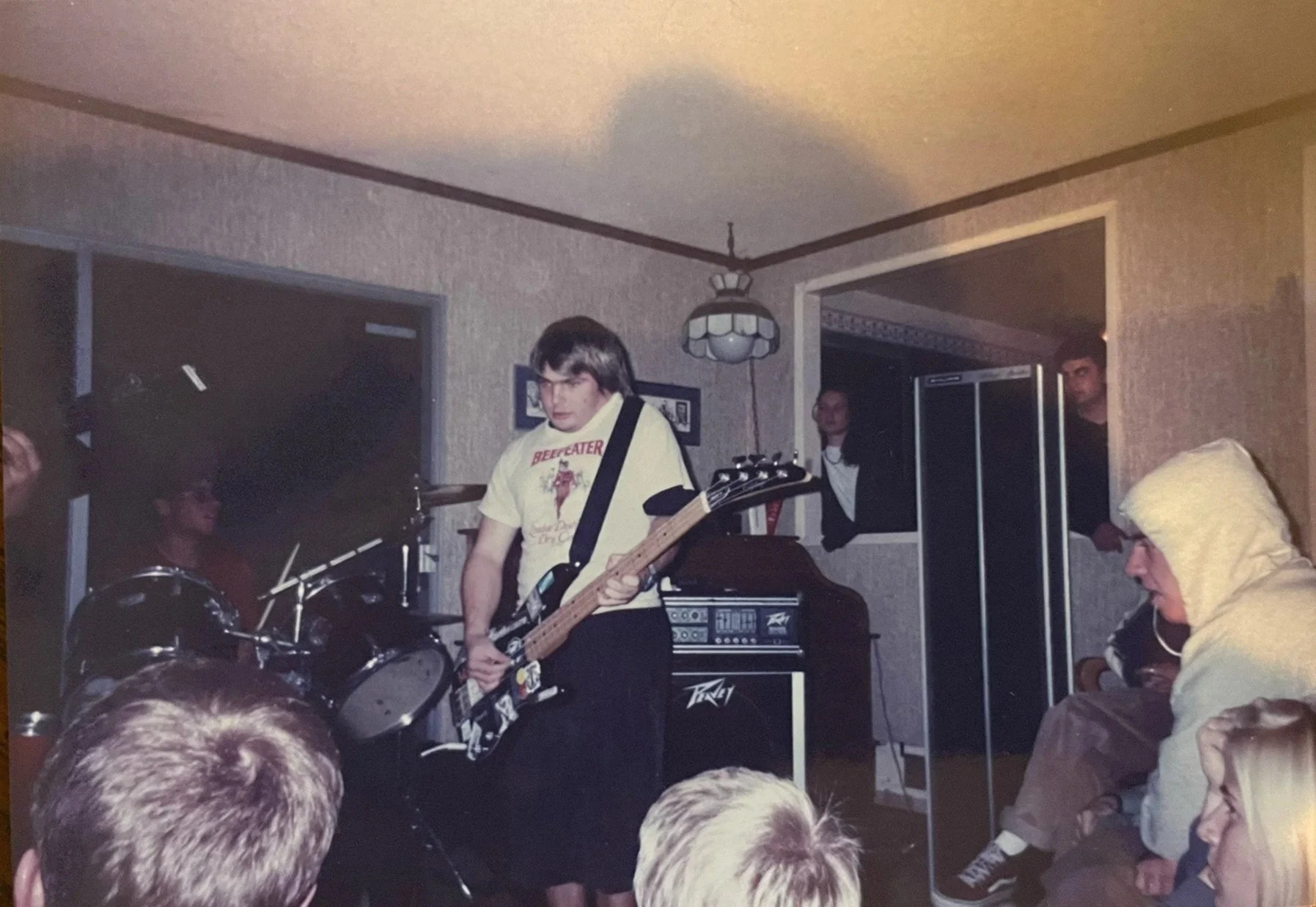
A show at Cass’s parents' house, before The Basement was created—From the Third St Archives
Those early shows planted a seed.
By the time Cass went to college, her friend Holly, Brian Z, and another friend had moved to Santa Cruz and secured the Third St. house. Holly shared, “We rented a house that had one of the few basements in Northern California, which was an obvious sign that we needed it to be converted into a music space. We went up to UCSC and took every dorm mattress they were throwing out, and lined the walls of the basement with them for soundproofing. It worked pretty well, but also it didn’t matter that much since the neighbor to the east was the San Lorenzo River, to the south was no one, and next door…they had their own reasons for not wanting the cops to show up…”
By the time Kelly moved in, the house was already in motion.
“I’d been visiting Cass and Holly in Santa Cruz,” she says. “Eventually, Cass offered to share her room with me if I moved in to help run the shows. I figured, ‘Why not?’”
What she walked into was something between a home and a machine.
“The basement was the heart of the house,” Kelly remembers. “We usually had two or three shows happening every week.”
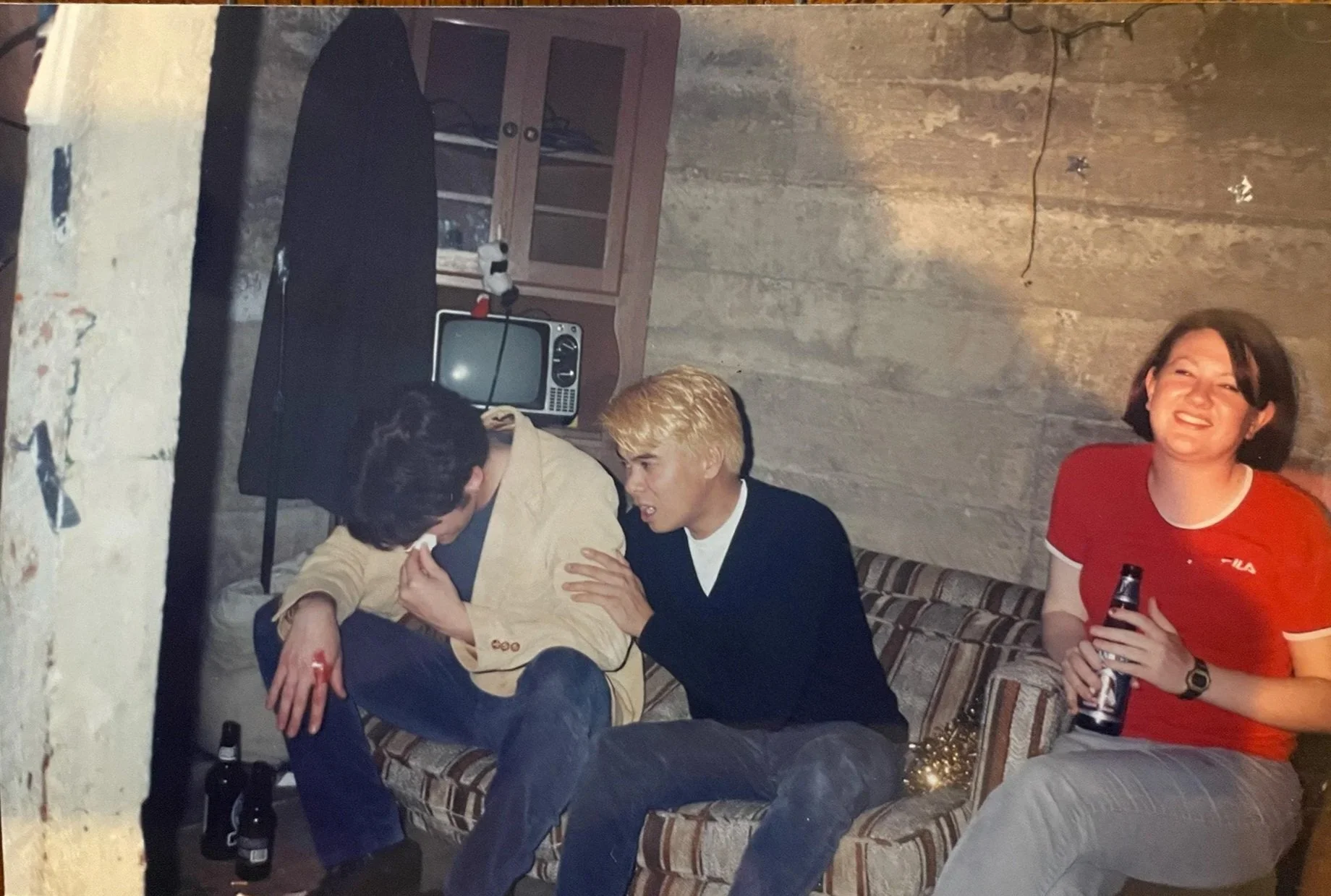
Cass pictured on the right—From the Third St. Archives
Bands practiced there during the day; Portraits of Past, later known as The Audience, would leave gear piled next to surfboards. At night, the same space transformed. People packed into the room, shoulder to shoulder, inches from the band. That closeness wasn’t a flaw. It was a benefit. Nuzzle was a mainstay; Cass knew they always drew a crowd, and they were friends she could count on.
“House shows were almost always more comfortable than being in a venue,” Nuzzle shared. “You felt and fed off of the energy in that cramped space.” And for the band, Third St. stood out. For Cass, she knew pairing good, but lesser-known bands, with Nuzzle would always provide a little more exposure.
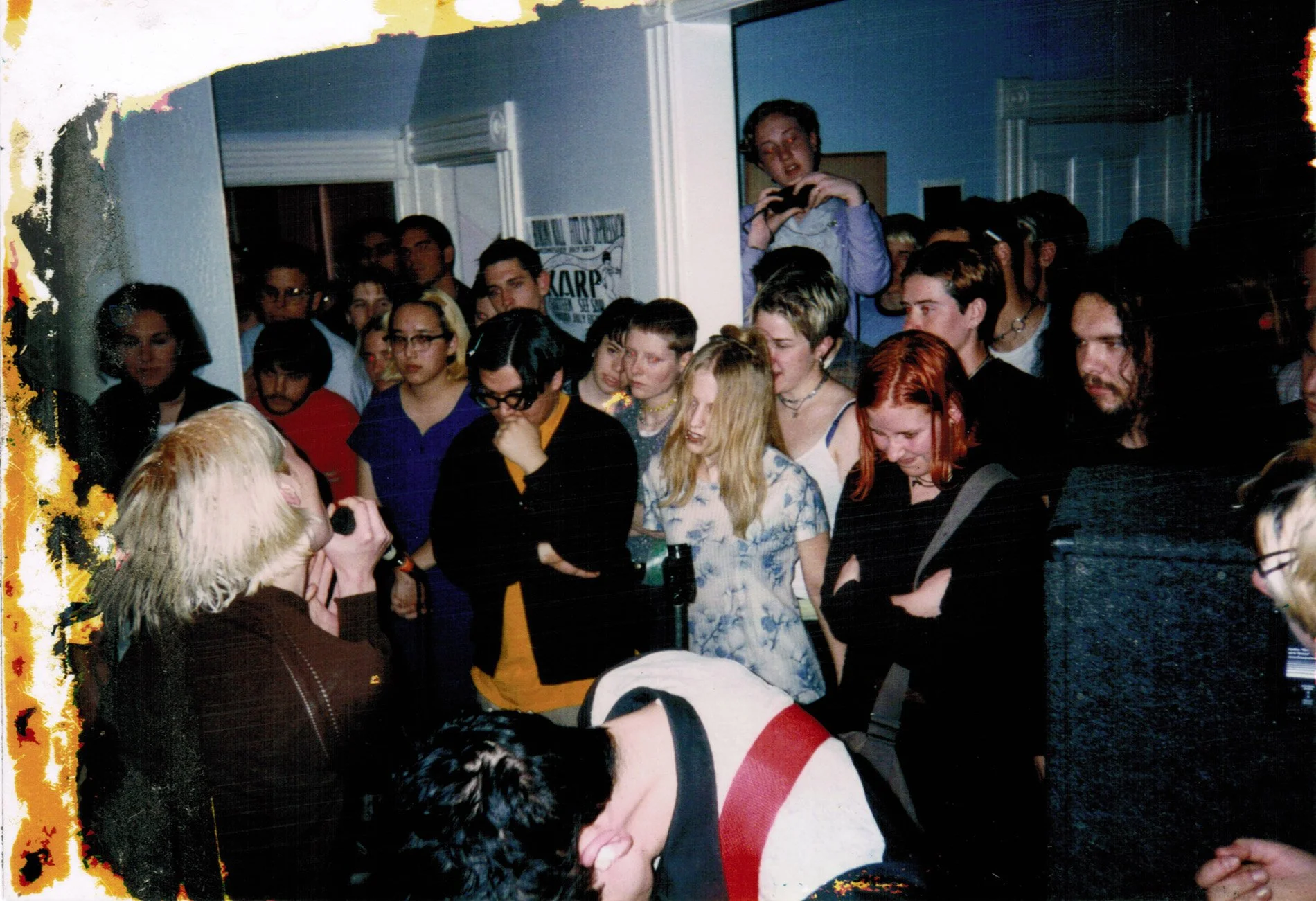
Packed live show at Bixby house, Santa Cruz—From the Third St Archives
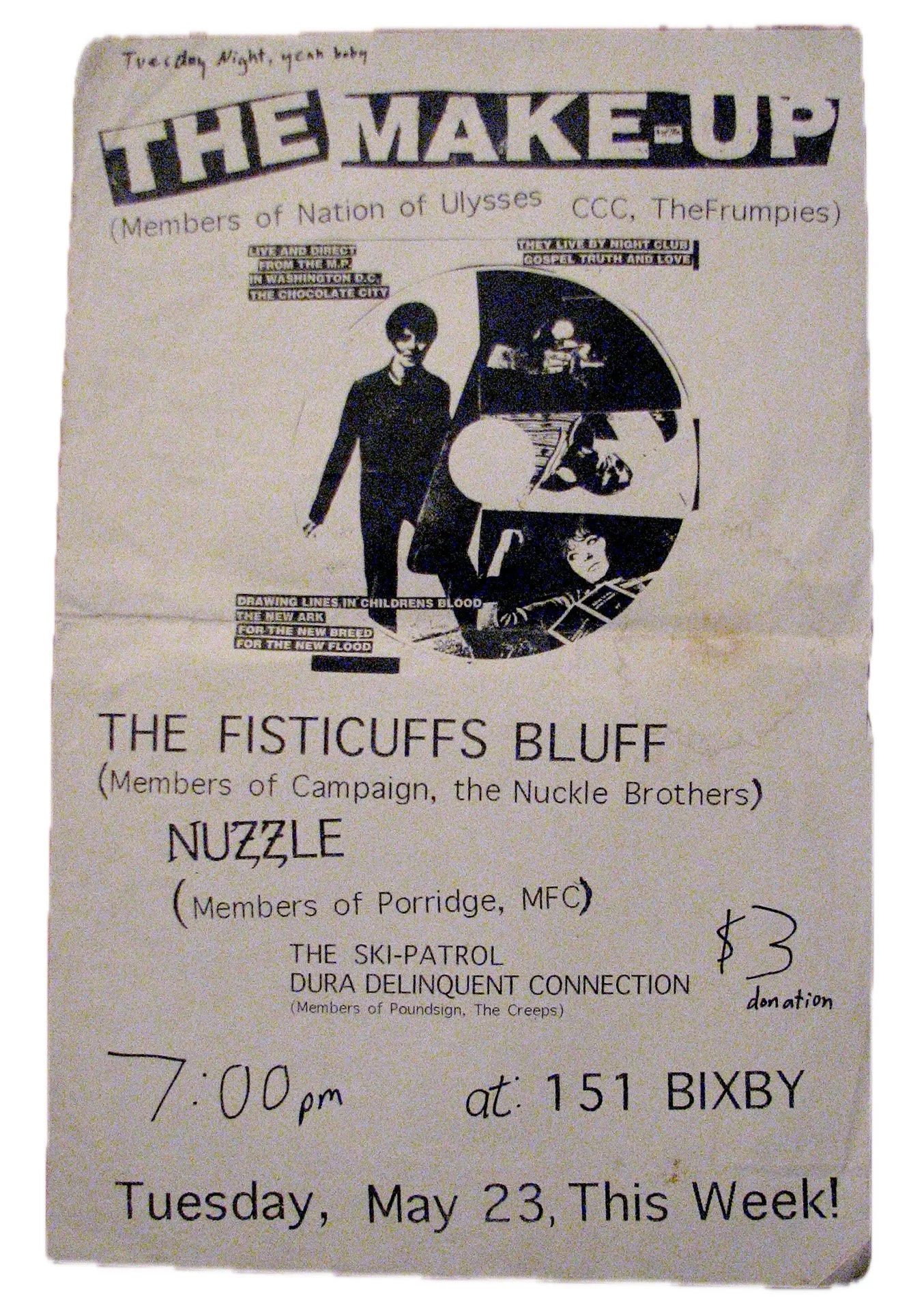
The Basement wasn’t a standalone. “There were already other houses doing shows,” Cass remembers. “Bean was doing Bixby shows, and there was Gault Street. The Basement just sort of naturally emerged.”
It was the informal ecosystem of an era pre-social media. These houses weren’t polished, there weren’t bouncers, and it wasn’t 21+. They were spaces for everyone, beautifully welcoming if not sprinkled with bedazzled scenesters taking up space in their top-notch vintage attire. Word about shows was disseminated through old-school analog flyers, literal cut & paste before it was a keyboard command. Glued together and copied at any Xerox a young punk could get access to (thank you, Kinko's). House venues sprouted naturally from a want for the space and a desire to invite your favorite band to play. What they provided was connection, a community of misfits that felt comfortable expressing themselves. Beyond the bands, photographers could hone their chops, performance artists could wreak havoc, spoken word, a kid with a homemade instrument—it was wide open.
It blossomed more than anyone expected.
Holly, Cass, & Kelly started to evolve into real venue managers as demo tapes began arriving in the mail from across the country. Touring bands often operating on the same DIY circuits would hear about the house and reach out. Before long, Cass found herself loosely connected to a network of show organizers: record store employees, house hosts, friends of friends, anyone willing to clear space on a floor and let a band plug in.
“It was never meant to be a massive gathering place,” she says. “But people came.”
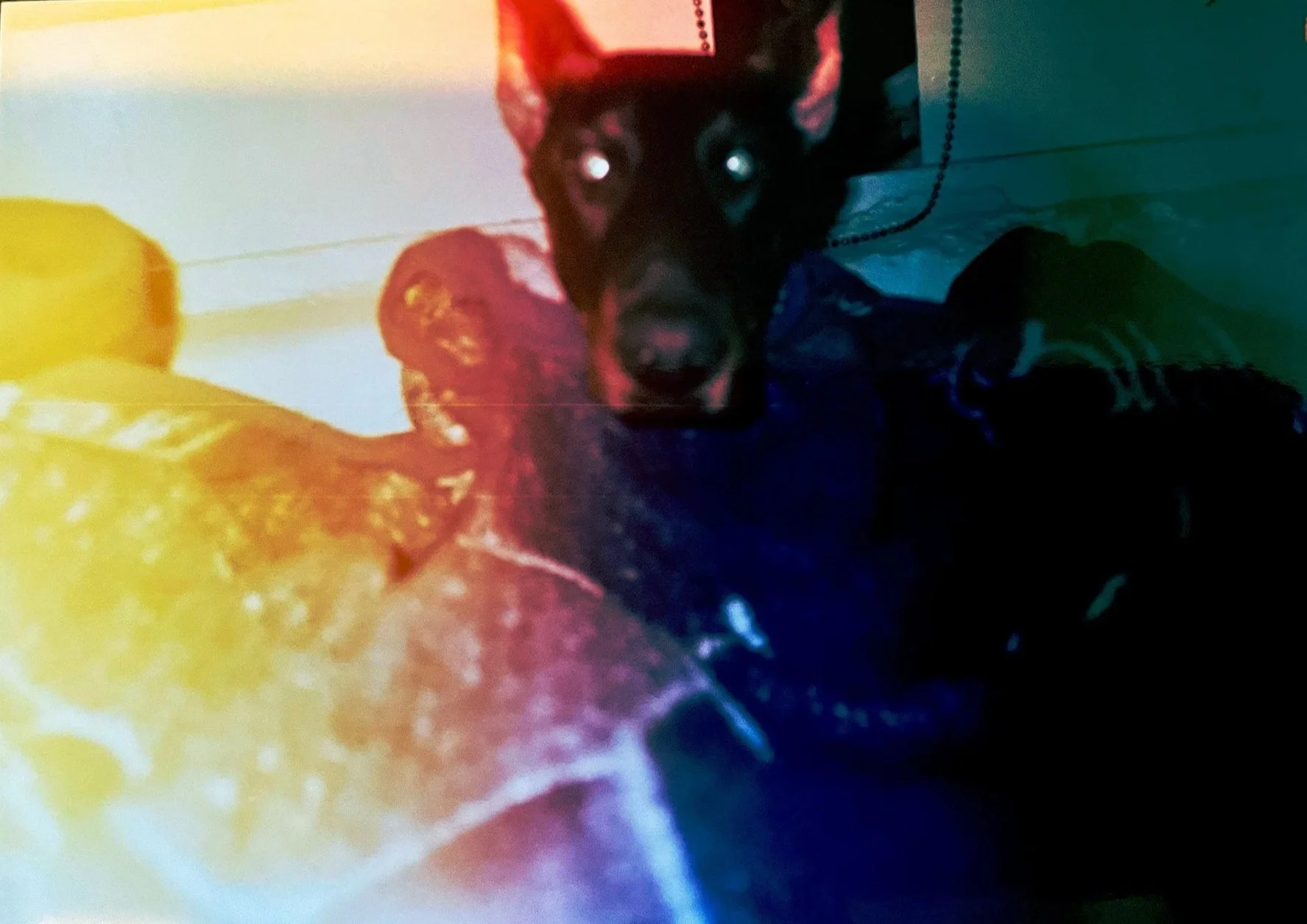
One of Holly’s Dobbies guarding the upstairs at the Third St house — From the Third St Archives
The audiences spilled into every corner of the building and out into the yard. They came for touring acts who seemed almost too big to be there, like The Make-Up, Unwound, and The Dandy Warhols. The Brian Jonestown Massacre once showed up and paid NO attention to the warnings to not go upstairs. Holly was beginning to explore her interest in dog training (a skill she’s continued to hone to this day). The housemates weren’t just human at this venue, and the result of surprising several Dobermans did not have the best outcome for the band's companions. At one point, one of the dogs bit the band’s frontman.
Obviously not too much damage was done so we can laugh about it, “Everyone freaked out,” Cass laughs. “But they hung out anyway.”
For the people who experienced the Third St. basement, the house was a lot more than just a place where bands played. It was a vibrant space for expression where anyone could share anything creative, a community built around open participation and less so status.
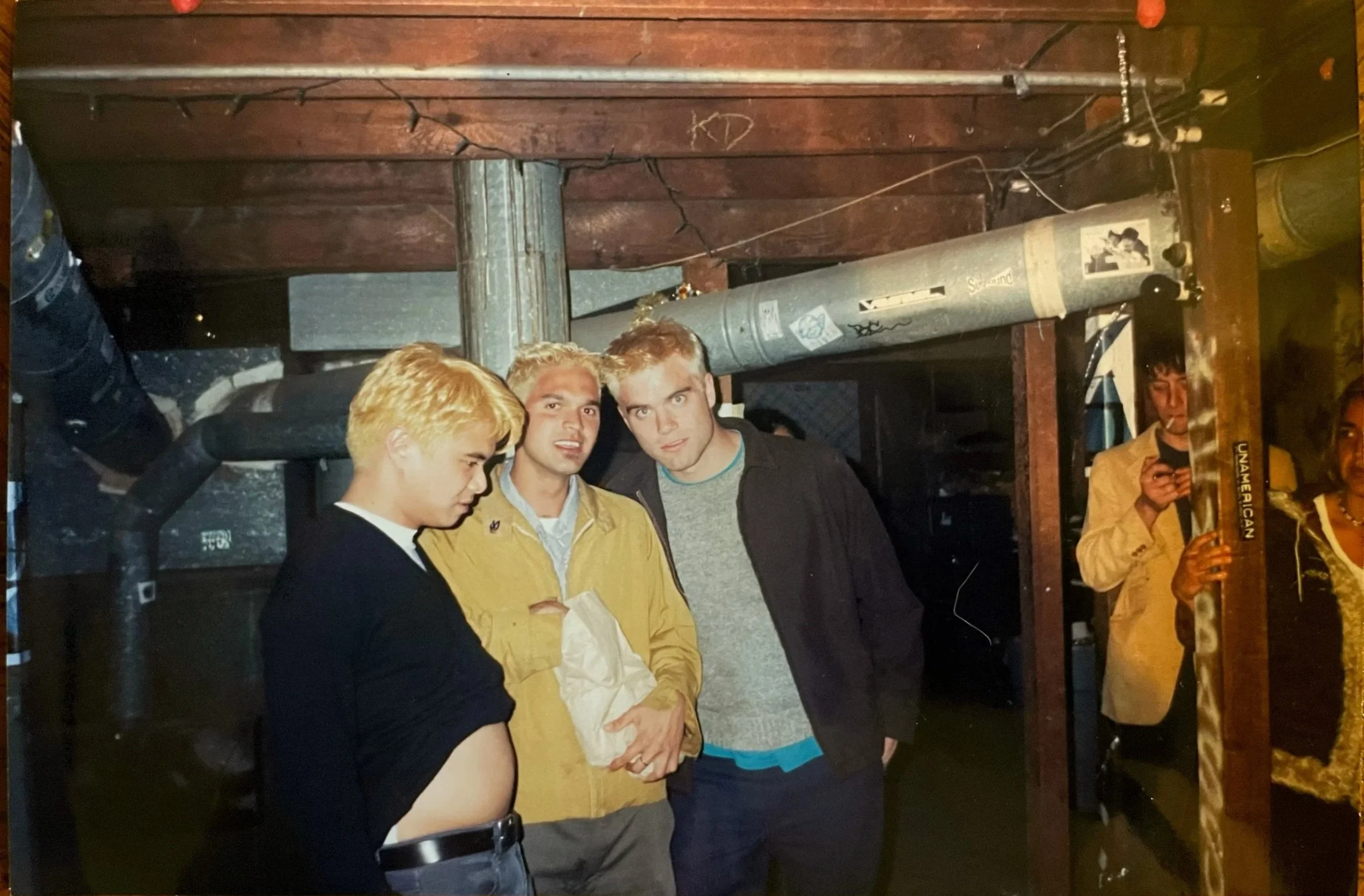
The Basement — From the Third St Archives
Cass herself embodied that spirit. Where scenes can be territorial or snobbish, she was the person who made it a point to welcome everyone. She stood out to me, as a uniquely friendly, extroverted delight. She hosted an array of talented bands in her humble rental, yet she wasn’t pretentious or arrogant, and I found that so refreshing as an introvert that wanted to hear music but felt uncertain by the scene. Cass’s welcoming attitude shaped the house.
Her openness sometimes meant booking bands that might not have found space elsewhere. While Holly was all-in at first, her own introverted nature meant pulling away as the enthusiasm for the space expanded. Luckily for Cass, Kelly eventually stepped in to help organize shows, bringing in girl-fronted pop-punk bands and broadening the range of who played. Sometimes it meant simply letting the night unfold. Cass recalls her favorite night wasn’t a band that wowed everyone, but the legendary 80s-themed party where guests arrived in on-theme costumes and the usual scene hierarchies completely evaporated.
“There was no pretentiousness,” Cass says. “Just silliness and fun.”
For a while, The Basement existed in that fragile balance: chaotic, imperfect, but thriving.
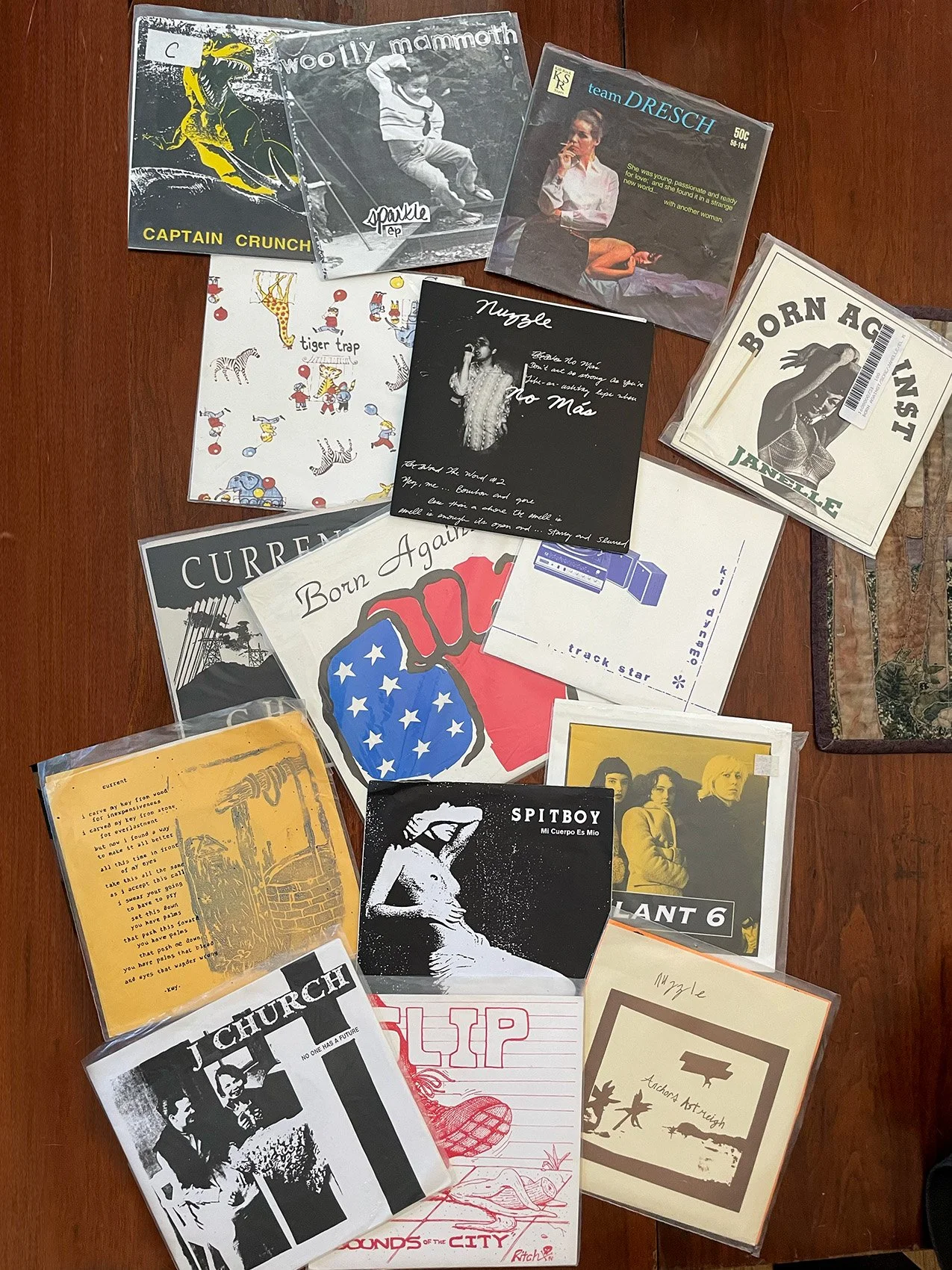
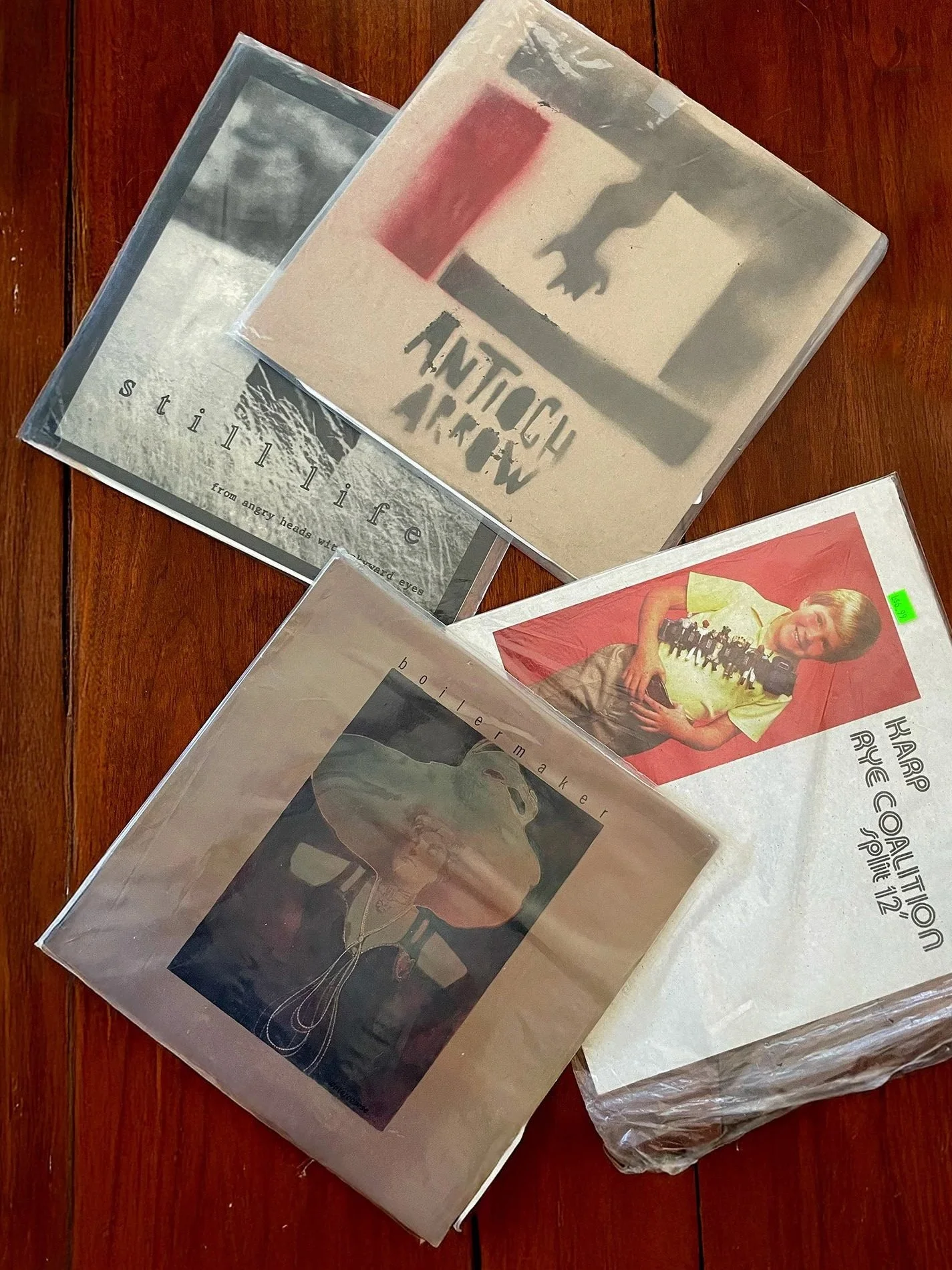
Like any DIY house venue, it embodied something being both incredibly specific and strangely universal.
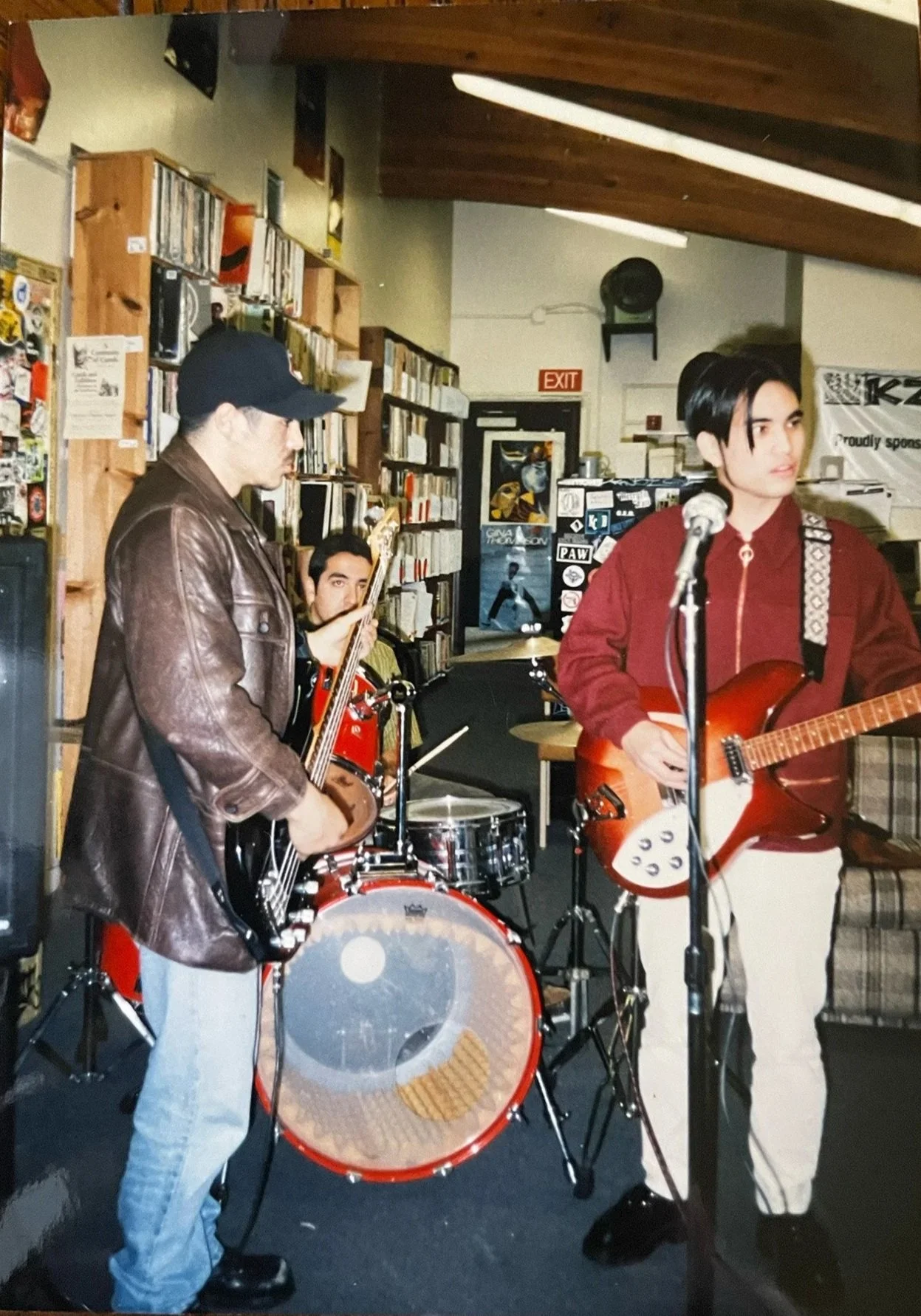
(UCSC college radio station, pictured left)
In the 1990s, houses like this sprouted up in cities and college towns around the world: living rooms in Olympia, basements in Chicago, collective houses in Berlin, and cramped apartments in Tokyo.
They were not advertised broadly, rarely profitable, and almost never legal. A manifestation that punk music forged into being with its need to be absorbed in a physical space. These spaces gave local and touring bands somewhere to play when traditional venues wouldn’t book them.
Who knows how many young musicians found their first stages in these offerings. What they gave to audiences was a place where art and noise could exist without the usual filters of marketing or commerce.
For Cass, hosting eventually became exhausting. Running a house venue means fielding calls, managing bands, dealing with neighbors, cleaning up after disasters, and constantly worrying about whether the next show might be the one that gets the house shut down.
“It gets stressful,” she admits. “You can’t just sit back and enjoy the show anymore.”
That tension is part of why spaces like Third St. are so fragile. They depend on a handful of people willing to sacrifice their living rooms, their sleep, and sometimes their leases.
Yet for the brief time they exist, they can shape an entire community and provide fertile ground for artists to find their voice.
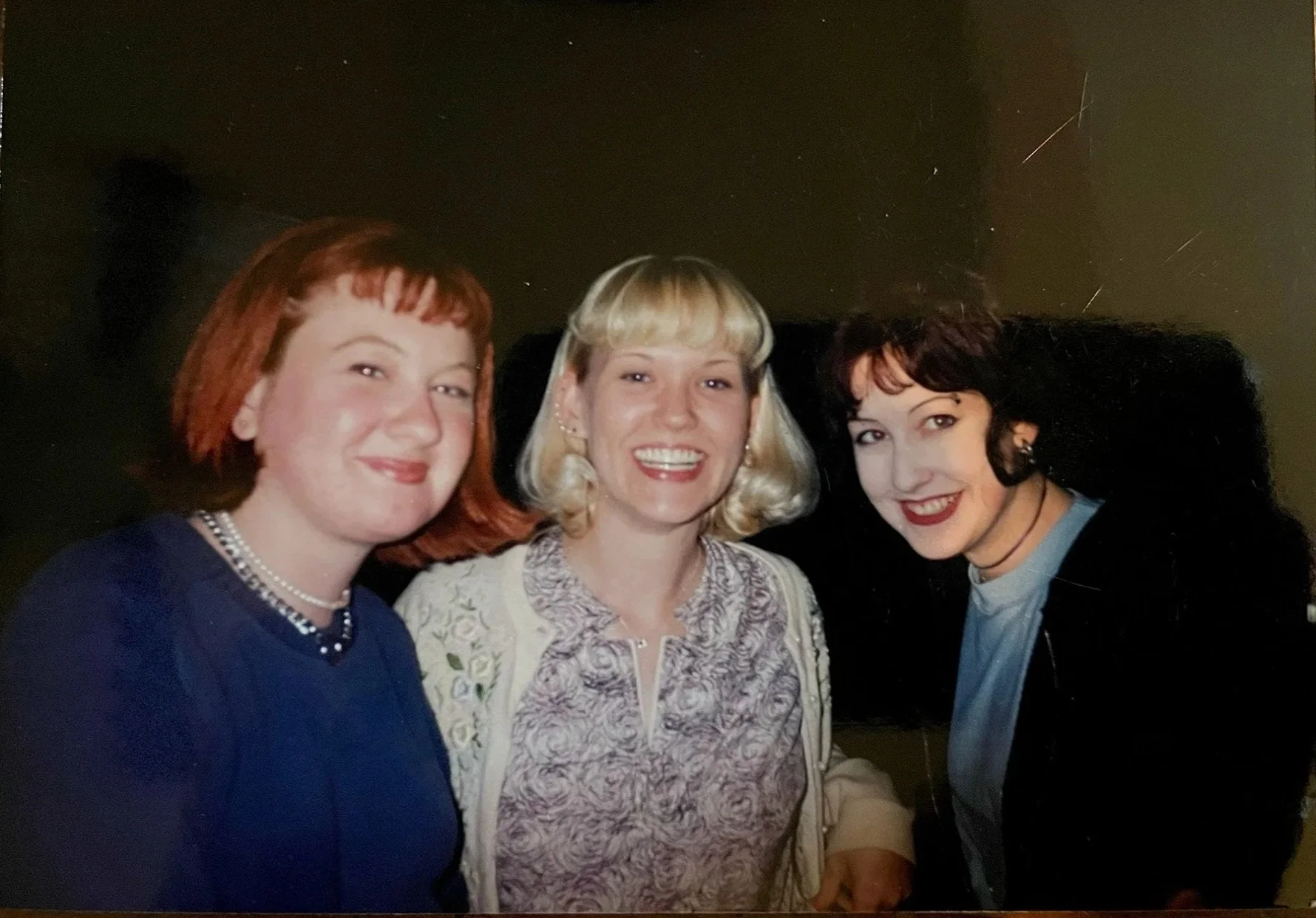
Cass, TaggyLee, and Kelly — from the Third St Archives
House venues were ephemeral by design, rare and beautiful: tiny corners where anyone could walk through the door and find music, chaos, and a temporary home.
You would think the cops were called often, but in the early days a magical blend of a property owner that loved music and some neighbors who had their own questionable thing going on created a tacit agreement that allowed things to continue unperturbed for a good chunk of time. Cass said plainly, “The neighbors were making crack, so nobody snitched on anybody.”
When those neighbors moved out, and the block began to gentrify, so did the tolerance for ruckus. Police visits became more frequent. Eventually, a new property management company took over and announced plans to renovate the building. The shows had to stop.
Punk can thrive in these environments in a way that it was meant to in its DIY heart. It's the shirking of a capitalist structure; there's no “Ticketmaster” selling out a thousand seats with special fees added on and $17 beers. We need these now, maybe more than ever. In a world that keeps insisting connection exists on our phones, these were the places where you actually bumped into each other, made room on a wobbly bench, stood shoulder to shoulder, felt the music in your soul. Nothing virtual can replace that reality. There is no festival equivalent and as we watch large promoters come under fire, just remember that the intimate shows put on by local music enthusiasts offer something deeply meaningful that we can still capture by showing up, and supporting art - for ourselves and for the artists that are out there putting their souls into it.
