
Get Off the Internet and Into the Pit with Mr. Dinkles
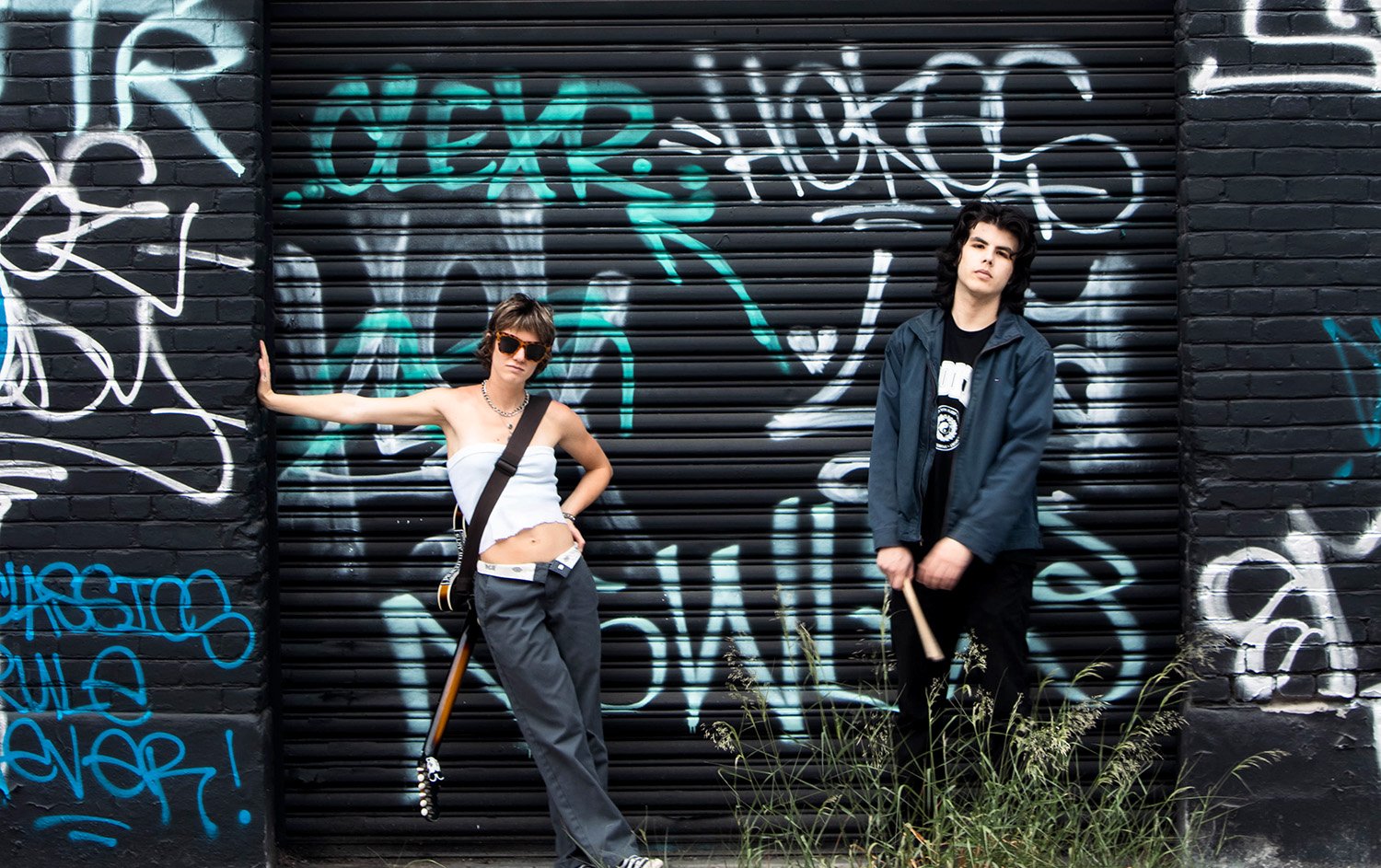
Photo credit: Rick Perez
I’m not about to define “punk” and open that conversation up to the rabid gatekeepers. I will just say that, in the simplest terms, it has never been about fitting into a sound. It’s more about authenticity with a dash of freaking out the normies. When I first listened to “A Letter to Elon,” I was as pleased with the song as I was with the message—are we going to see more of this generation calling shit out? Because the time is RIPE for punk to thrive in the hearts of young people. So it was great to sit down with Mac, lead singer and guitarist from Mr. Dinkles, and understand more about what drives her to make the kind of music she’s making and how it feels to be slinging her grunge/punk stylings at the tech multi-billionaire.
But first things first, I wanted to find out whether rebellion still means the same thing to her as it did in the era of Dead Kennedys; the answer wasn’t nostalgic, it was clarifying. What’s truly tragic and perhaps unsurprising is that it’s changed by way of internet impact; it's getting reduced to something visual, performative, something easier to define than to live. Mac knows better, but there’s an undeniable fact: social media has an impact.
“Punk should be an attitude and a mindset. Rebellion is punk. Questioning the norm is punk.”
Yes! So Mac gets it. There’s a difference between replicating a sound and carrying a spirit. Early punk wasn’t polished; it was experimental, political, and often came with consequences. That willingness to say something, even when it costs you, is the thread that still matters. What feels more fractured now isn’t the absence of rebellion, but where it’s directed. Mac shared another sentiment that I’ve heard before:
“Everyone’s focused on trying to cancel each other rather than trying to focus on the bigger issue.”
What we’re lacking is real-world interactions; the online one is so fraught with keyboard warriors who are trolling and may not even mean what they say. You get out to a show and stand with old punks and new, and have a fully different experience. That’s key. So how did this individual from a generation that’s fully immersed online find her way here?
Where It Started
For Mac, the path into punk didn’t begin with distortion or speed. It started with something quieter.
A house filled with instruments. A father playing southern rock, then later church music, after finding sobriety. A mother who was steady and supportive. Time split between California and Seattle. Early influences rooted in country and folk, Bob Dylan, Crosby, Stills & Nash, guided by teachers who recognized potential early on. Music was always present, but it wasn’t always loud.
Singing in church became a first training ground, learning phrasing and mimicking what was heard. She shared that she started working on replicating her dad’s licks when he would sing, and she started finding control in her voice. There’s something foundational in that: discipline before disruption. Alongside it, something else, dyslexia, a learning difference that made traditional expression harder to access. She attended a small school, and because her musical interests were supported, she also found community at the School of Rock.
“Music gave me a voice.”
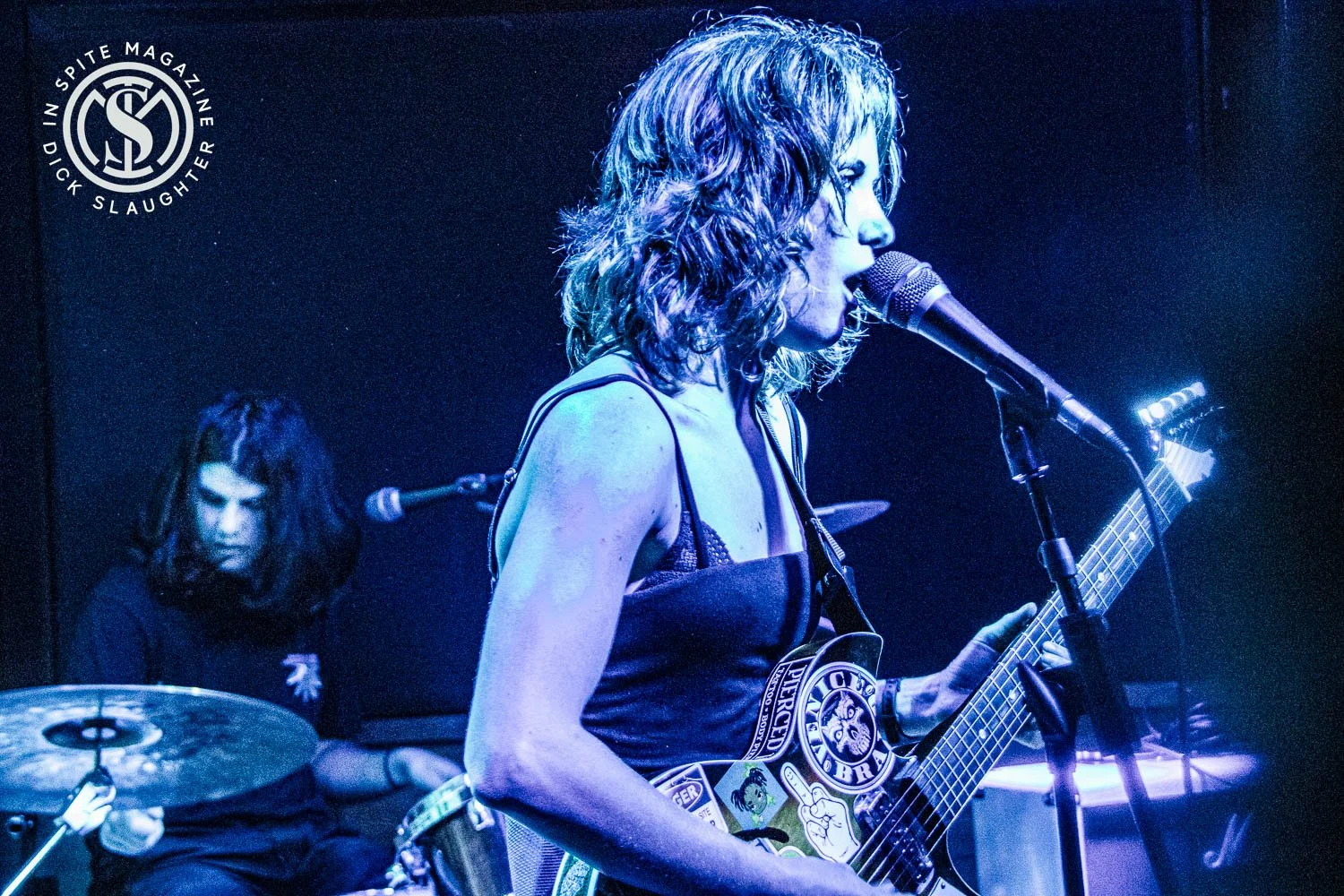
Mr. Dinkles at Goldiggers, LA. Photo credit: ©dickslaughter.com
That voice didn’t arrive fully formed. It evolved. Her older sister was also into music and introduced her to Lydia Night and The Regrettes, which threw open a door, not just musically, but physically. The movement, the presence, the ability to create a shared moment. She knew then:
“I want to do that.”
From there, it became a process of building something from scratch, as so many scrappy young punks do. She started calling venues, playing wherever possible, shaping something that eventually became Mr. Dinkles. Seattle’s scene, in particular, offered space to grow. “Seattle just adopted us.”
“So many new bands sound like old bands without the spirit.” The aesthetics are easy to replicate. The authenticity is not. What continues to resonate from earlier bands isn’t just their sound but their willingness to stand for something. To speak directly, risk backlash, to actually have and hold a point of view. At the same time, the landscape surrounding music has changed. There’s pressure to define, categorize, and optimize. To be legible in an environment that rewards quick recognition. And yet, the response here is to resist that narrowing.
“To me, punk is the attitude of what my music is.”
There’s an ongoing negotiation between personal truth and shared resonance.
The third album, shaped by a breakup, leaned more inward, less about crafting something for an audience, more about working through something real. “It felt more like me getting stuff out instead of just making stuff for everyone.”
There’s also an understanding that connection matters. That making something relatable doesn’t dilute it, it can expand it. That same instinct carries into political expression. “It feels like no one’s talking about where we are in this country… not enough.”
In “A Letter to Elon,” a line like “I know you get lonely, but that’s what good friends are for” becomes more than a lyric; it becomes something that can hold a room together. She’s both digging at him and being compassionate.
“It’s so much more about community and love… rather than just saying ‘fuck you.’”
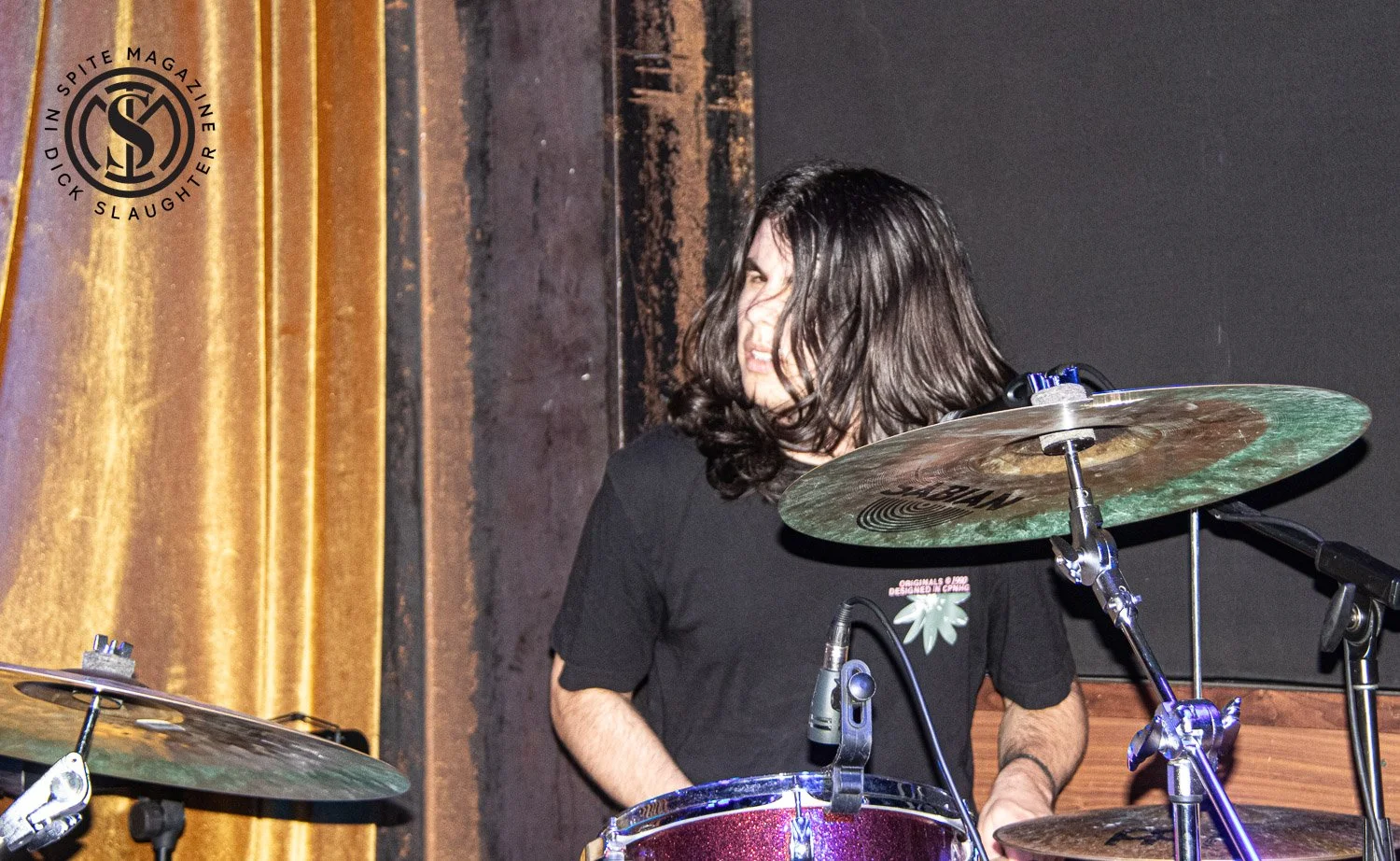
Mr. Dinkles at Goldiggers, LA. Photo credit: ©dickslaughter.com
Trusting Instinct
Confidence isn’t static. It builds, it wavers, it recalibrates. Some songs feel uncertain at first and land anyway. Others feel obvious but incomplete. There’s input from producers, managers, and collaborators, but the throughline is learning to recognize what feels true.
“The bigger we get, the more important it is to trust myself.”
That trust becomes especially important when outside definitions start to creep in. Holding onto identity, rather than adapting to it, becomes part of the work.
The Live Exchange
If there’s a place where everything aligns, it’s in a live setting. A house show. A college crowd. People who may not have a name for what they’re experiencing but recognize the feeling immediately. After one particularly raucous college show where the kids moshed in puddles of sweat while thrashing with abandon, the booker was sincerely thankful.
“They needed that.”
Movement becomes release. The energy of the performance and all its intentions are shared. Cathartic.
“It almost feels spiritual when you’re in the pit… all of your heartbeats are in that rhythm.”
In a culture where so much interaction is mediated through screens, physical convergence carries weight. It’s immediate, collective, and unfiltered.
“Getting back together in the real world gets you re-humanized.”
What Doesn’t Go Away
People can argue all day about the definition of punk, but most would agree there's a commitment to expression, to questioning the status quo, and to a community by and for misfits. The value of coming together to push the envelope doesn’t go away, and right now, with all that’s going on in the world, we need to ditch the devices that force-feed us an algorithm full of depression and jump into real-world experiences, the mosh pit is waiting for you.
