
What You Readin’ For?
The late, great comedian Bill Hicks had a bit wherein, while reading a book at a breakfast food establishment—whose name I will omit—is asked by a server, “What you readin’ for?” This baffled him; “Not what am I reading, but what am I reading for?” he responded. “Gee, I don’t know, I’ve never been asked that question before. I guess I read for a lot of reasons, but the main one is so I don’t end up working as a fucking waffle (server).”
I’ll be the first to jump to the defense of food service workers; having worked many years in the industry, I still read (often), but it was the only job(s) I could get at the time and I knew many smart, well-read people who worked with me at various establishments.
Hicks’ point, however, can be transferred to almost any situation or career in the years since his untimely death and it still rings true. Many people, especially in the United States, simply do not read anymore and are almost proud of it.
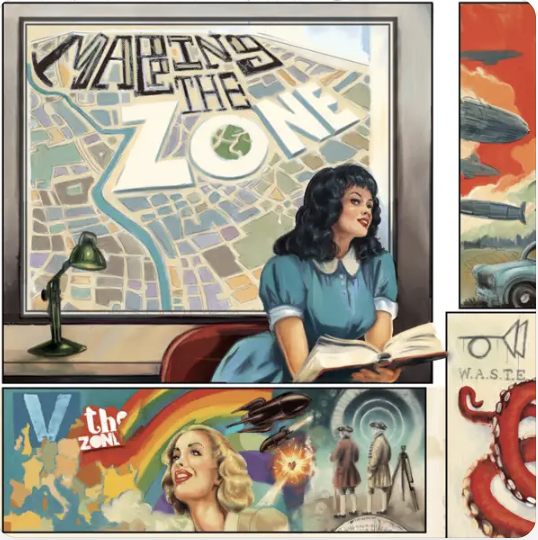
When I worked for a major bank, I spent most of my downtime reading and was often asked by colleagues and peers why I chose to do so as much as I did—why didn’t I opt to scroll TikTok or Instagram for the latest comedy and viral videos? These situations always brought Hicks’ routine back to mind and I thought, “at some point, I should explain why I love reading so damn much.” Now that I’m in a different career (education) and a different state, I don’t hear it as much, but I still see the evidence of it from time to time. I figure, if I can encourage more people to pick up books, it’s worth the time to sit and write an article about it (hell, I can even shamelessly self-promote my book-centric podcast, Mapping the Zone, while I’m here).
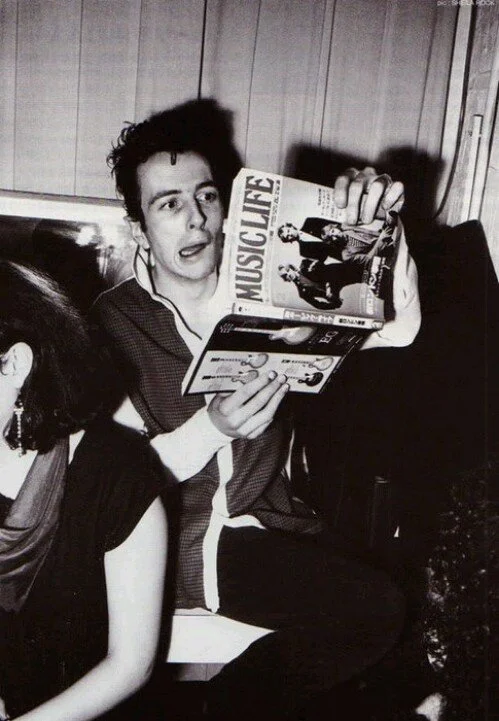
Much like Bill Hicks, I read for a multitude of reasons, but the primary one for me is the simple pleasure of it—reading just makes me feel good.
Reading fiction can take me out of the chaos and tumult of the modern world (especially Science Fiction and Fantasy) and, in the case of some of the more dense, literary books I love, it can teach me something or send me down a rabbit hole of learning about something I previously had no knowledge of. I can live in a world full of magic and unknown wonders or see an America that could have been; I can meet characters who look, sound, and act totally different than anything I’ve seen before, or travel with historical figures as they make their mark in history without knowing their impact on the world at the time. Non-fiction keeps me informed and educated—a dangerous skillset to posses in 2026. Poetry keeps me connected to the rhythm and lyrical nature of humanity and the world itself. I often go back to books I read when I was a kid, just to be able to live in those worlds again (looking at you, Chronicles of Prydain).
At the beginning of this year, the first book I read was If On A Winter’s Night, A Traveller by Italo Calvino; a book about the joy of reading books (and one I highly recommend). There are often two viewpoints on “how” to read—deeply and broadly—and all too often, people only do one of the two rather than both. I will read anything that piques my interest; from the pulpy, sordid lives of private detectives to the brave, adventurous tales of fantasy heroes.
I’ve devoured almost everything written by Stephen King—an author I return to any time I am in a reading slump—and J.R.R. Tolkien, whose ability to build intricate and detailed worlds remains unparalleled. I have read complex historical fiction novels written by some of the most verbose authors out there (Cryptonomicon and Ulysses) and am currently reading both the Dungeon Crawler Carl and One Piece series.
My podcast is currently covering both Thomas Pynchon’s Against the Day and David Foster Wallace’s Infinite Jest in a book club format, spending upwards of four hours discussing the events of 20-30 pages of the book. I’ve read some incredible and memorable short stories by some of my favorite writers (N.K. Jemisin, Kurt Vonnegut, Ray Bradbury) and long series that kept me absorbed over years (The Stormlight Archive, The Indian Lake Trilogy, The Dark Tower).
I almost always have a book on me somewhere. I tend to keep one in my car and I carry one in my backpack when I go to work—as an educator, I want kids to see that I’m more interested in reading a book than scrolling mindlessly on my phone. When I read, I narrate and voice characters while imagining the scene play out in my mind. I have several playlists made which I listen to while reading, ensuring that whatever I am listening to fits the mood of what I am reading. I read in between the action of baseball games, on the bus, and during my lunch break. I have an in-progress series of book-related tattoos on my arm which I refer to as my book sleeve (currently occupied with pieces featuring homages to The Lord of the Rings, The Crying of Lot 49, Calvin & Hobbes, and The Monster At the End of This Book, with a Hitchhiker’s Guide to the Galaxy piece coming soon).
I draw pictures for several of my students which are almost always pulled from Sesame Street a The Muppet Show.
Books are a conversation starter and a topic on which I can talk almost endlessly on (hence…a book podcast of my own). I’ve gone to several book festivals and been honored to meet and talk with some of my favorite current authors (Stephen Graham Jones, Gabino Iglesias, Paul Tremblay just to name a few) who have continued to inspire me to keep writing. Authors are great to follow on social media and are really good about responding to inquiries about books, because they love reading so much they give the world more stories to keep us reading
I suppose the point of this article—since there ought to be some purpose in writing all this other than bloviating self-satisfaction about my love of books—is to get you, reader, to more of this. .
Pick up a book, download an e-book, listen to an audiobook (yes, they count), do something to engage your mind without engaging the algorithm of social media. Go to a local bookstore and, if you don’t know where to start, ask for recommendations; they love talking about books as much, if not more than I do. Go to book festivals and listen to author talks. Read the novels that inspired a movie you love. Reading leads to knowledge, knowledge leads to understanding, understanding leads to questioning what we know, and the people in power hate that. So let’s build a world in which we are smarter, well-read, and proud to be intelligent. Let’s build it one book at a time.
