On Punk, Hip-Hop, and Independent Art in a Late-Stage Capitalist Society
In a world of social uncertainty and unrest, a concert can become the unplanned center of indecision.
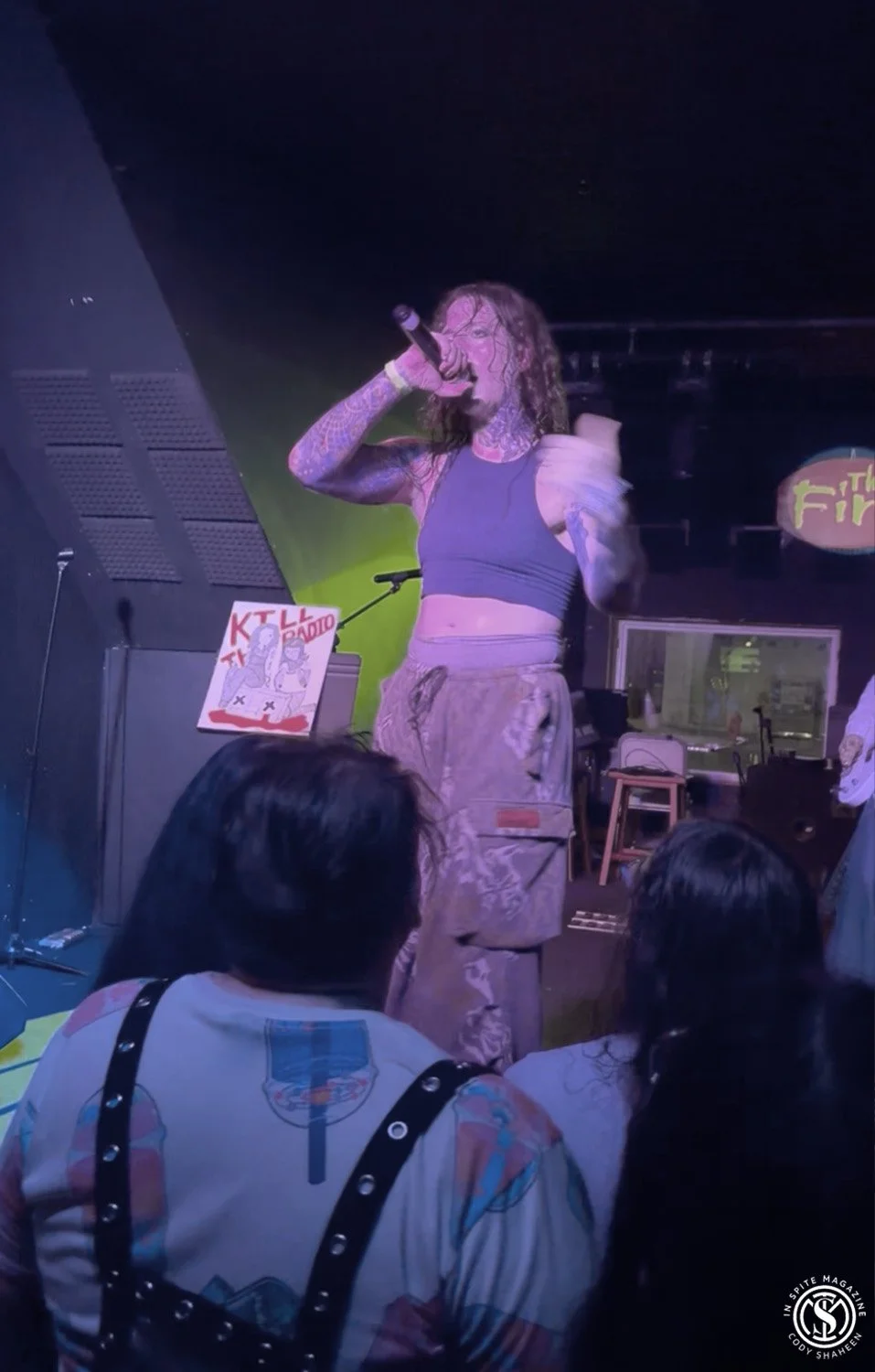
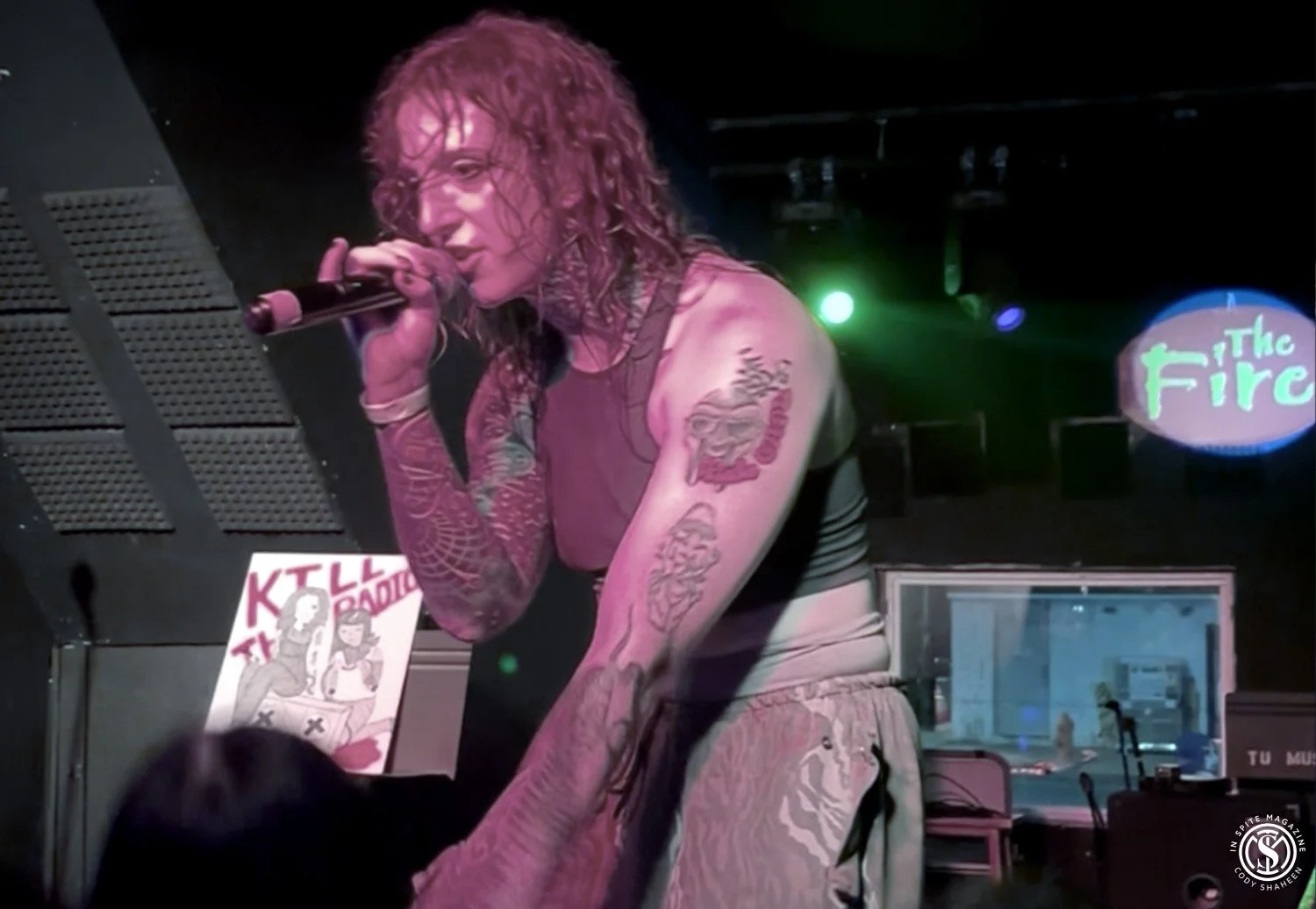
DAMAG3 @ The Fire, Philadelphia—Photo by Cody Shaheen
Beyond the obvious adult constraints of time and money, putting oneself into an incredibly vulnerable situation by surrounding yourself with a crowd of strangers, in an unfamiliar (or entirely new) place is an intimidating and, sometimes, panic-inducing choice to make. This becomes further complicated for those within the LGBTQ+ community who already struggle every day to find places in which they can feel safe while expressing their identity. Fortunately, there are a plethora of artists and musicians, established and independent, who are making sure their fans are feeling safe, represented, and having fun at their shows.
One of those musicians is Damag3—a trans-female hip-hop artist whose music is equal parts socio-political, anti-capitalism, pro-trans rights, and pro-self love. Her recent show in Philadelphia (02 May 2026 at The Fire) was just one stop on the “Kill the Radio” tour. Aside from the music itself, a main focus of the show was to ensure that everyone in attendance felt safe, included, and free to fully express themselves; a move which allowed the fans to enjoy the concert free from the anxiety all too common in many public settings within the U.S.
Punk, while often seen by many as a style of music (or, more reductively, attire) has always been an ethos; a way of being.
Minimalism and stripped-down stage production with an emphasis on DIY culture are at the forefront of punk. Too often, artists are excluded or shunned from the scene for not meeting some arbitrary set of criteria that is made to seem like the end-all, be-all definition of what it means to be punk. This isn’t something new; it’s been going on since the early days of the term being used in conjunction with its associated art. This division does nothing but act as a disservice to those involved in the scene—it does nothing more than create rifts which lead to anger, resentment, and distrust. For a scene that is meant to be inclusive and non-judgmental (the concept of the punk ethos has always been one of “make the art you want to make changes in the world”), the various cliques and sub-circles existing within it seem laughably contradictory.
Damag3 emphasizes the DIY culture, the “fight the patriarchy/capitalist system” ideology, the “fuck AI, support art made by humans” movement; all of which are foundational to the concept of punk, whether it’s music, film, or any other art form. She encourages fans through her online platforms (YouTube and Instagram, mostly) to move away from digital media, which has become horrifically pervasive, and support physical media again. The argument for this, she says, is rooted in a desire to support artists financially (the astonishingly small percentage of revenue artists see from streaming media is common knowledge now, but if you are unaware, this video from PBS sums it up quite succinctly [LINK], and to keep listeners from being tracked by the algorithm which works to keep us in a constant loop of mindless consumption.
Furthermore, someone listening to music is much more likely to fully engage with physical media than streaming something while doomscrolling.
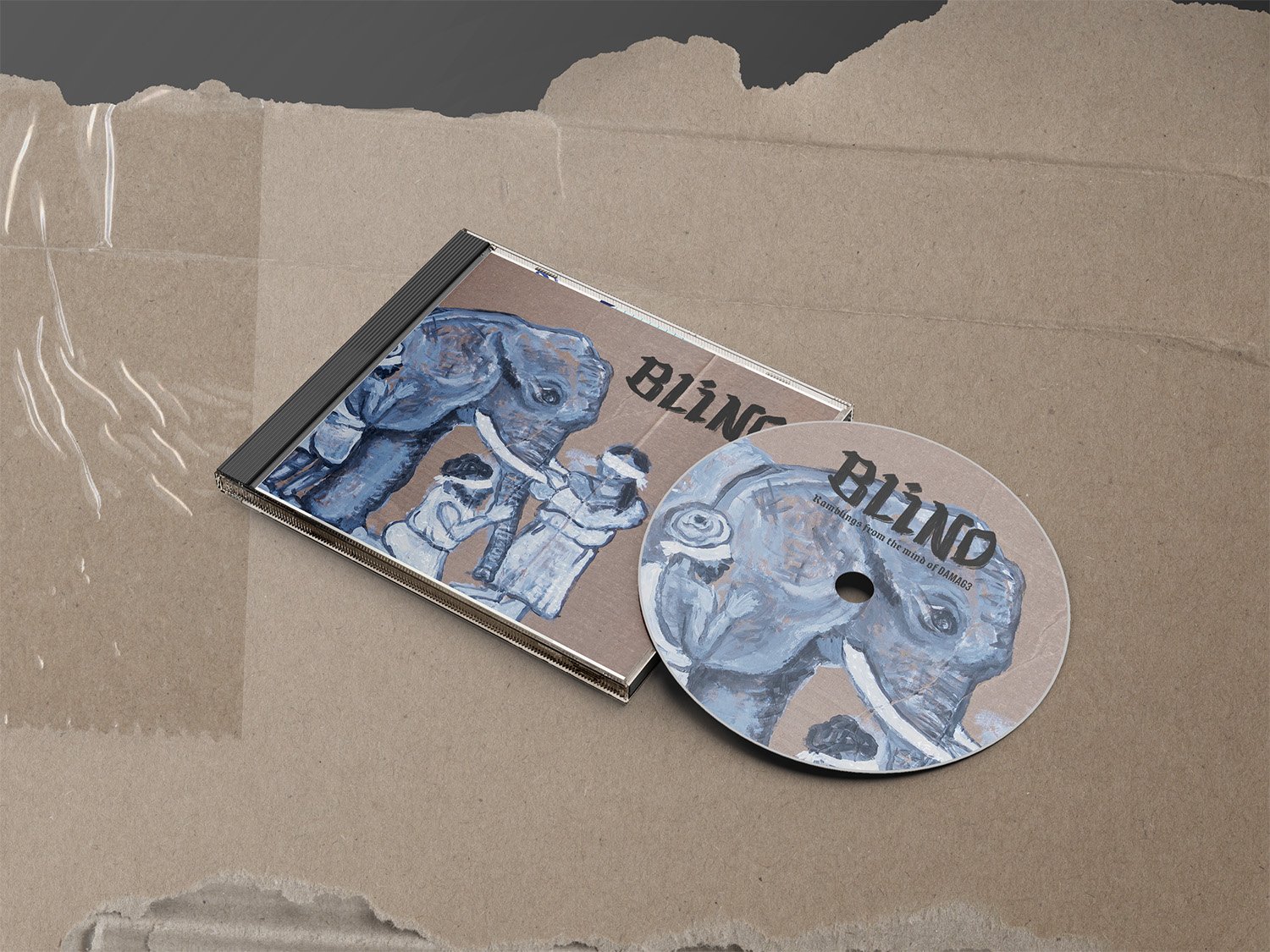
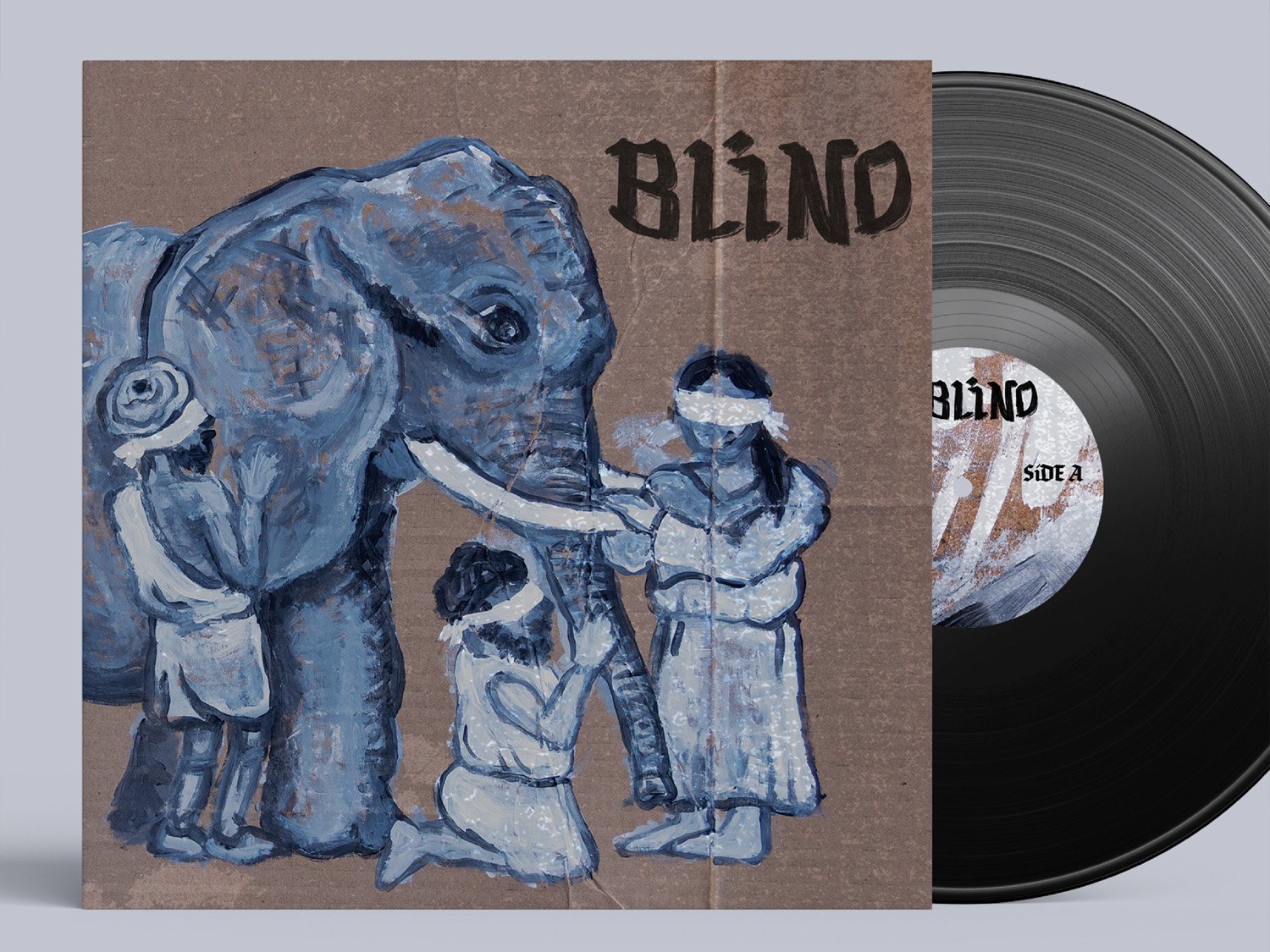
When we break away from the algorithm, we free ourselves from being targeted with what that algorithm thinks we should listen to. While it can provide some useful suggestions (I’d be lying if I said it never delivered something to me that I ended up enjoying), the fact is we can have much more meaningful engagement and discovery when we stick to physical media and independent shows. With the former, we are not only taking in the music, but also the art on the front and back covers, inside the liner notes, and on the disc (or vinyl) itself. We can see who worked on the album and seek out other bands they have produced. The art connects to itself and allows for more discovery.
With the latter, we find openers and supporting acts we might not otherwise have landed on; artists who were hand-picked by the artist, and who likely share similar viewpoints, ideologies, and artistic expression. Independent artists selling their merch at a show are seeing more profit from the purchase of their art and we, as listeners, are not as likely to be lining the pockets of corporate entities who couldn’t care less about the music or art itself. When we are at these shows, we are with people who, though we don’t know them prior to (or even after) the show, form with us an unbreakable bond for the duration of that performance.
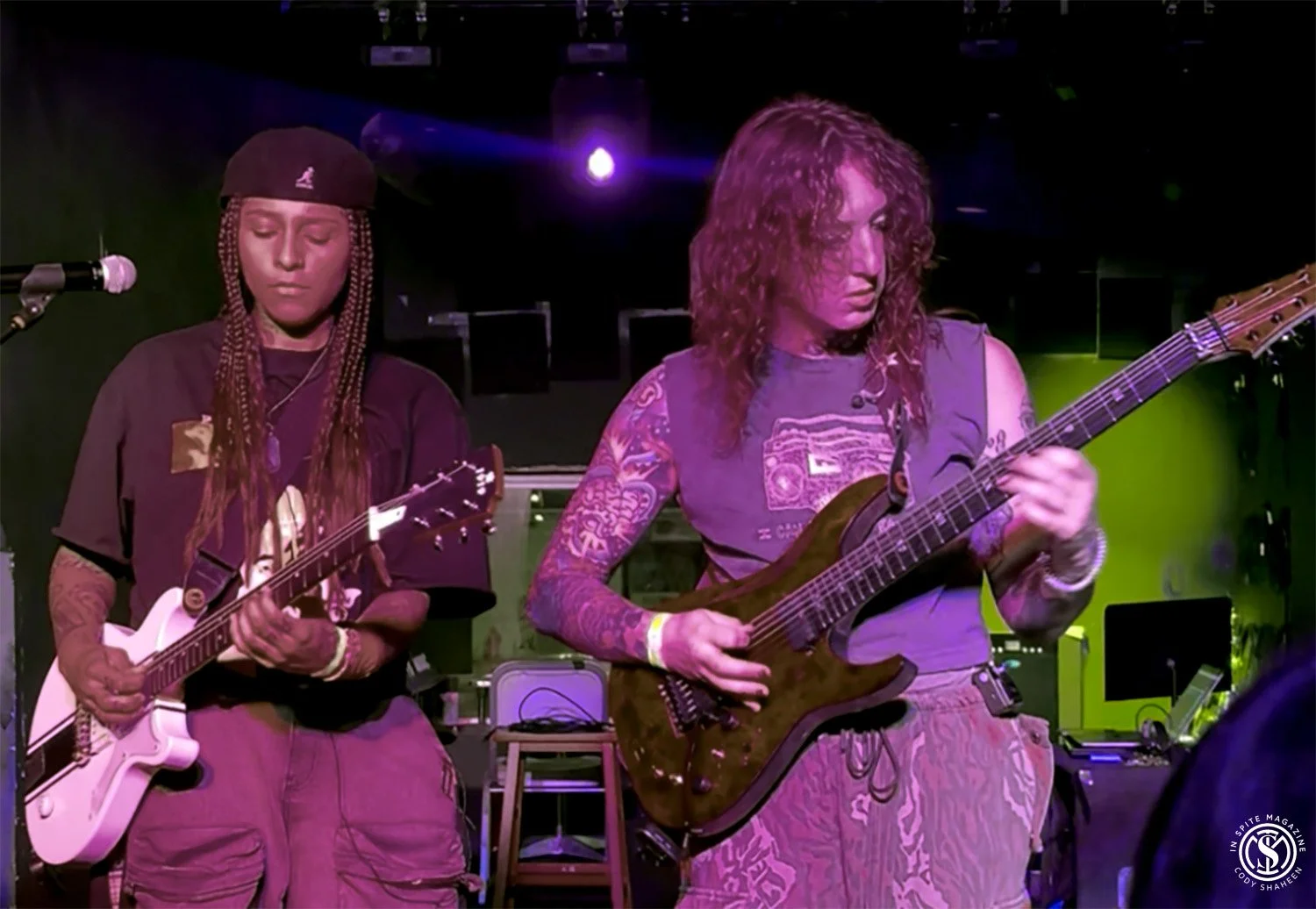
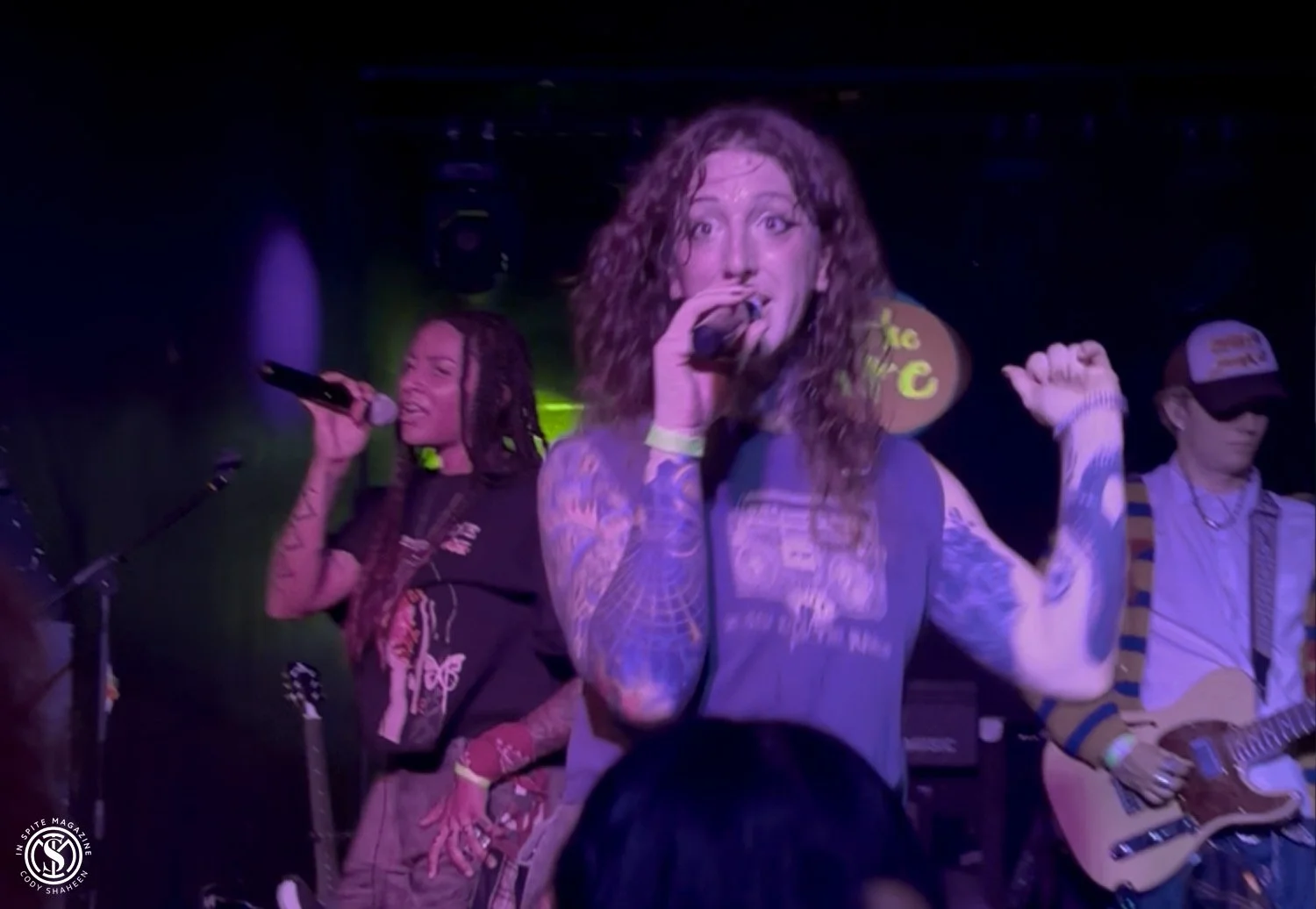
For the better part of three hours, the crowd enjoyed music from Paolé, Connor Christi, Amber Ryann, and Damag3 herself. Through all of it, there was a feeling of camaraderie, companionship, and bonding; a group of individuals (the vast of majority of whom identify as trans) who did not know each other prior to that night came together, bonded by their love of an artist who pushes them to be comfortable within their own skin. The common pitfalls of punk shows (fighting, yelling at fans or the artist, and other immature behavior) was a non-factor. What was present throughout the entirety of the show was a feeling of love, respect, and security—even when you got jarred by someone dancing or bumped into by an errant mosher.
When Damag3 (who had been in the crowd for every opener’s performance) finally took the stage, you could feel the momentum of the evening’s energy approaching its vertex. “I wanna play some fucking music”, she said from the back of the crowd before running to the stage after Amber Ryann’s set had ended. Damag3 started her set with several songs from her recent collaboration album with Amber Ryann (Kill the Radio) and culminated with her verse from “START A FIRE”, a collaboration with The Neighborhood Kids; the song that arguably exposed Damag3 to a wider audience thanks to word-of-mouth throughout social media. Interspersed within were songs from her most recent album, Blind, such as “hi_BODY_COUNT”, “SHOULD i STAY?”, “GOD IMAG3”, and non-album singles “PUT A LANDLORD iN A LANDFiLL”, “RUN”, and “BOOM”. Early into her set, a fan handed up a painting they had made—which was met with more applause when Damag3 mentioned it had not been made by AI—which was made all the more heartwarming due to the overwhelming emotional reaction that fan had (their picture became the centerpiece of the stage once a suitable stand for it was found). During the song “GOD iMAG3”, the crowd was engaged in a series of call-and-response prompts including “Fuck ICE”, “Fuck Donald Trump”, “Fuck Charlie Kirk”, and “I can kill the radio”.
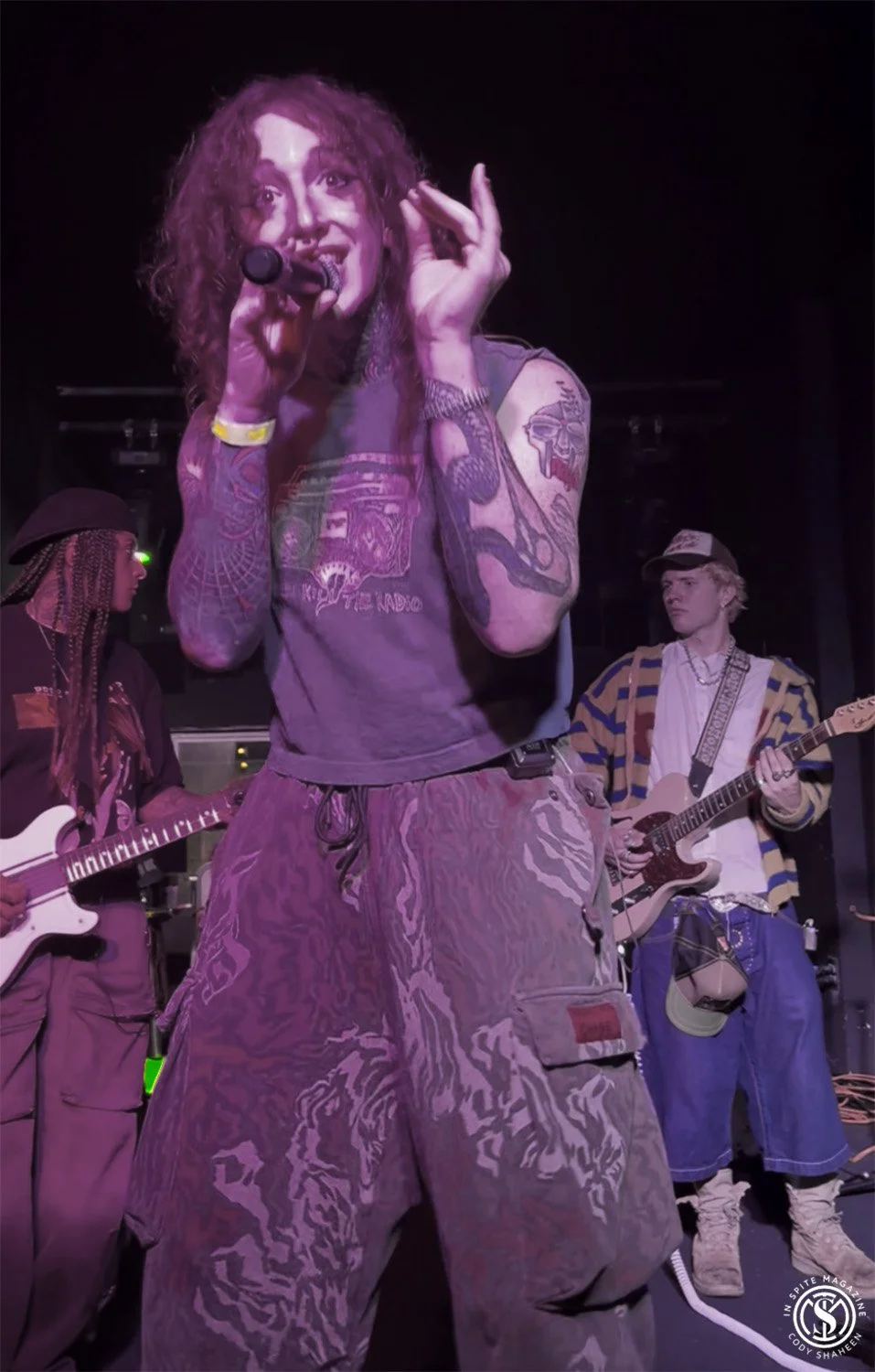
By the end of the set, every person in the crowd was sweaty, out of breath, and full of love (for each other, Damag3 and the other performers, and for a place they could freely express themselves, if only for a few hours. Damag3 ended her performance with a plea to the crowd, one which hearkened back to the Riot Grrrl movement.
We need to embrace physical art and media again.
We need to break away from the screens and apps and algorithms which are just used to keep us in a cycle of complacency and ignorance.
We need, perhaps most importantly, to connect as humans; as people.
Before she departed the stage to tend to the merch booth, Damag3 instructed everyone in the crowd (“fuck your social anxiety for right now”) to find someone they didn’t know in the audience and connect with them—get a phone number, social media handle, some form of communication—and stay in touch with them. Form a bond. Be more connected in person. Get to know the people in your community.
In a time in which we are constantly made to feel divided, having an artist like Damag3 utilize their platform to bring people together rather than pushing them apart makes for an encouraging experience. Being at a show like this helps fuel creativity—people share their art with the artist and vice versa—which can lead to a perpetual motion machine of creative endeavors. When the focal point of a show takes art from a fan and proudly displays it onstage, that artist (who may never have shown their art prior to the show) gets a platform at the same time as the musician they adore. When we wear a shirt from the concert, we can draw attention to the artist to the eyes that may never have heard of them before. When we listen to their records, we can share them with ears that may never have discovered them otherwise. When we push back on a system that seeks to divide and quantify us in the most inhuman of ways, we make a statement about the world in which we want to live, the art which we want to consume, and the people we want to share that world with. It’s a small voice, but combined with others, it becomes one that cannot be silenced, no matter how much those in power wish to keep it drowned and muted.