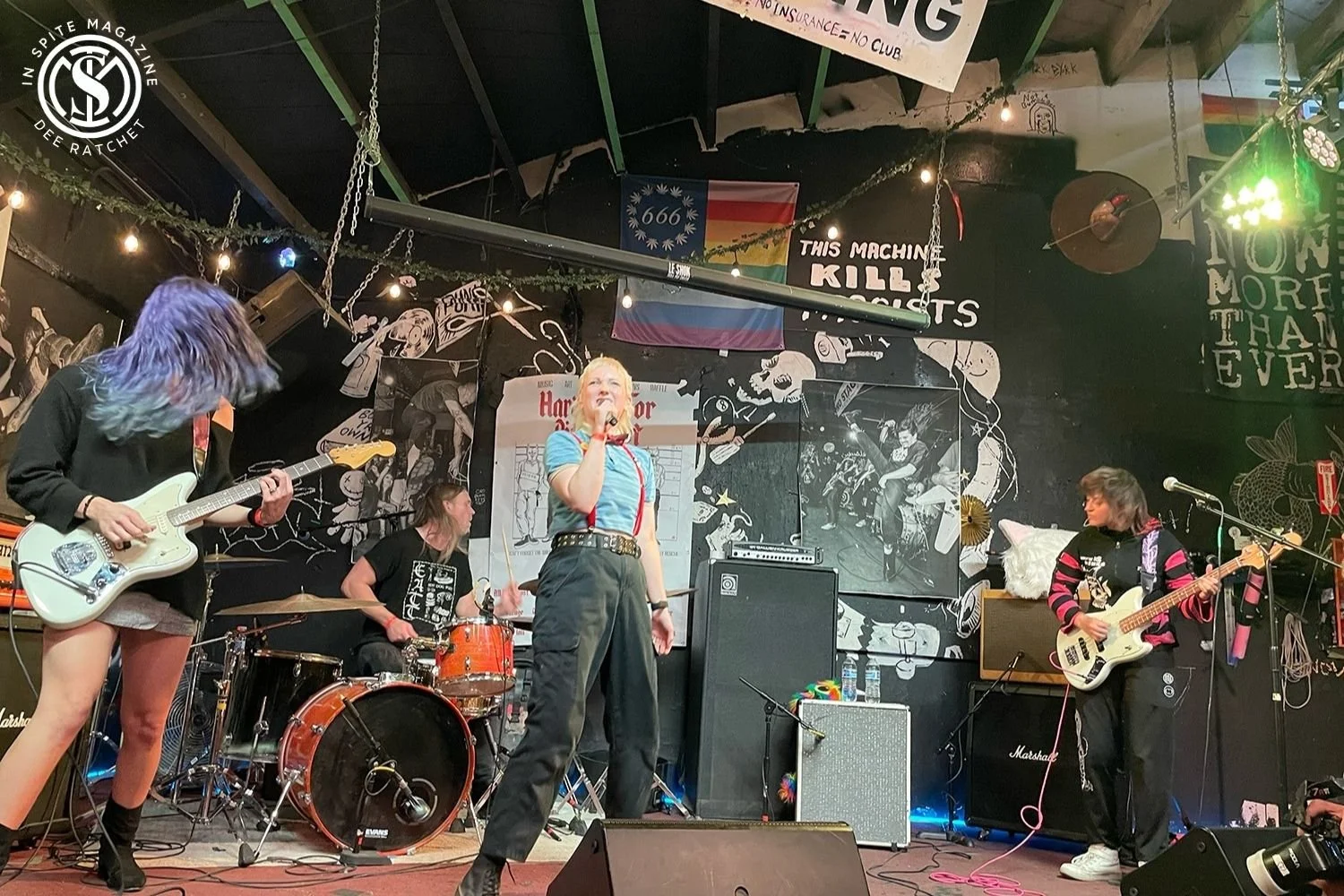
CorMae @ 924 Gilman St — Photo by Dee Ratchet
There are a lot of reasons to love a punk show. The music, the collective middle finger to whatever fresh hell the world has cooked up this week, the fact that a room full of people who might otherwise feel like aliens find each other and realize they’re not alone at all.
That’s what makes CorMae a damn good time.
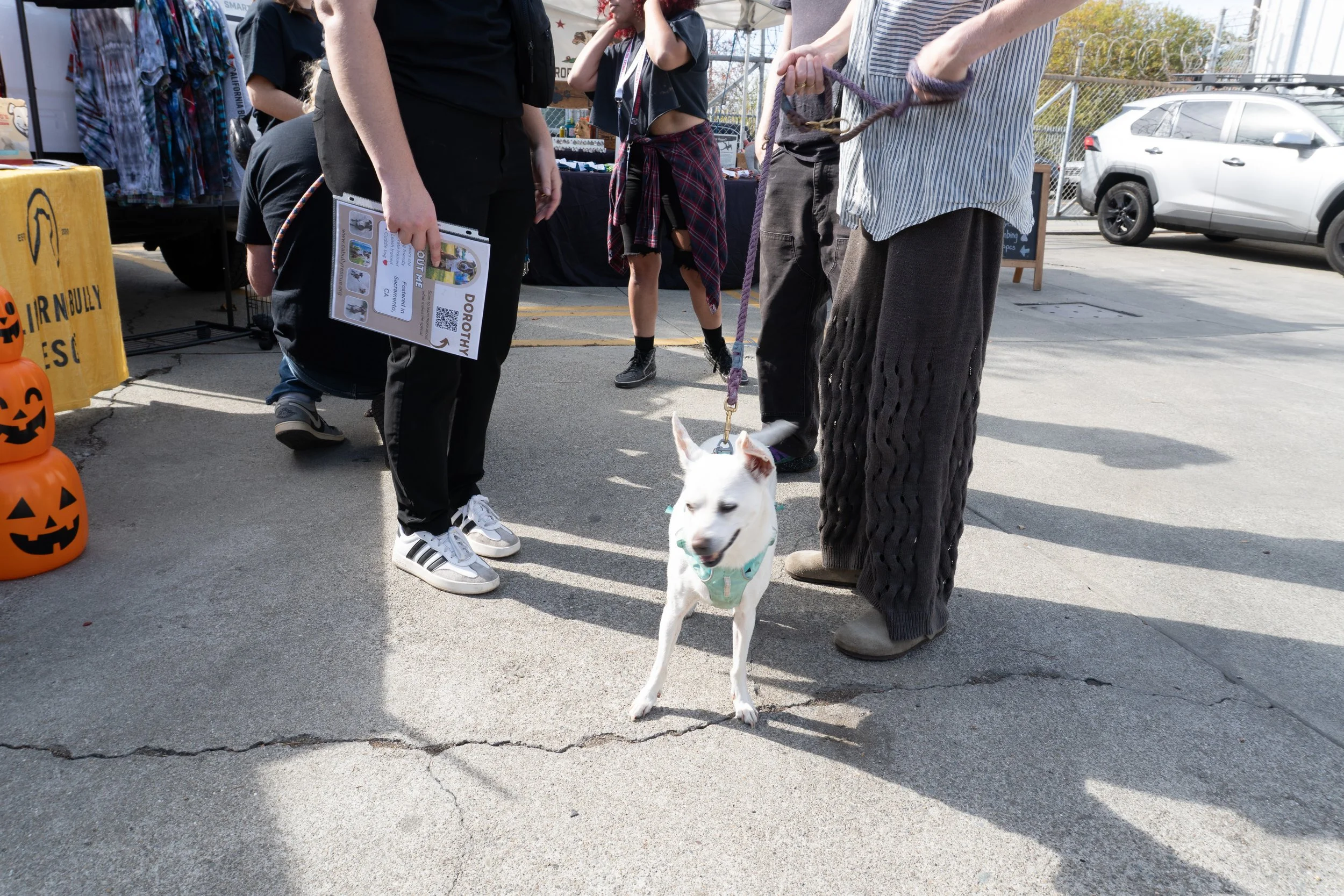
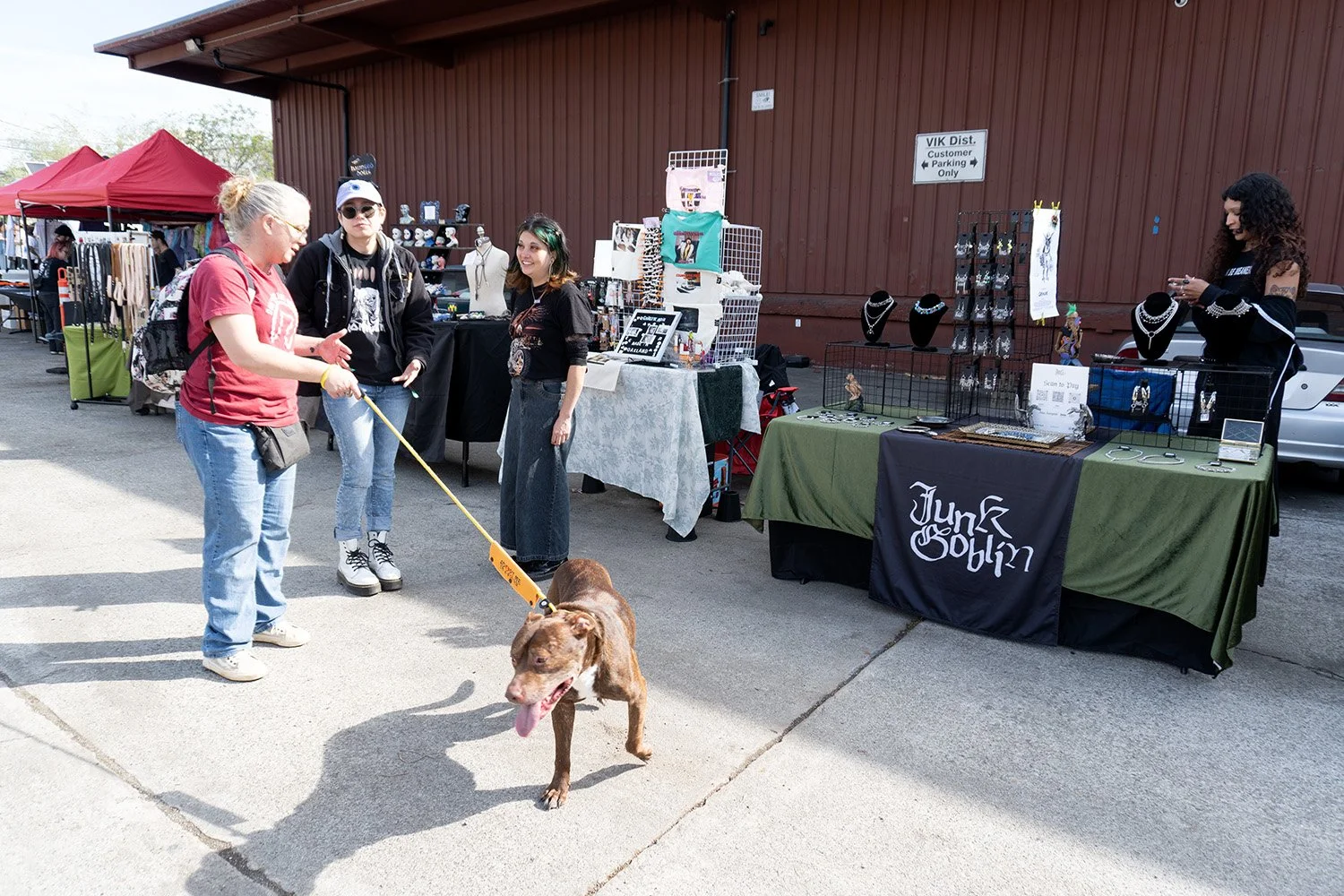
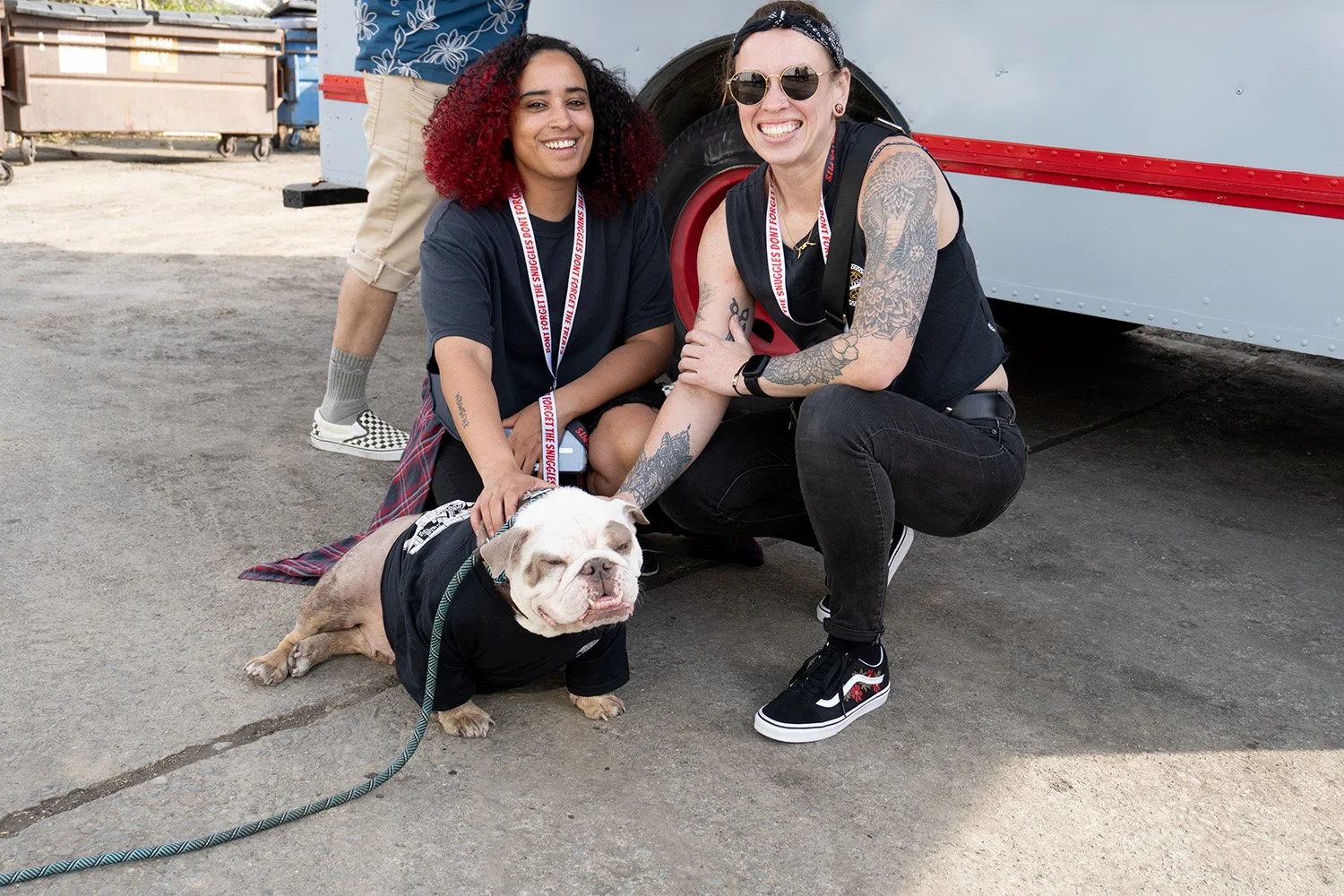
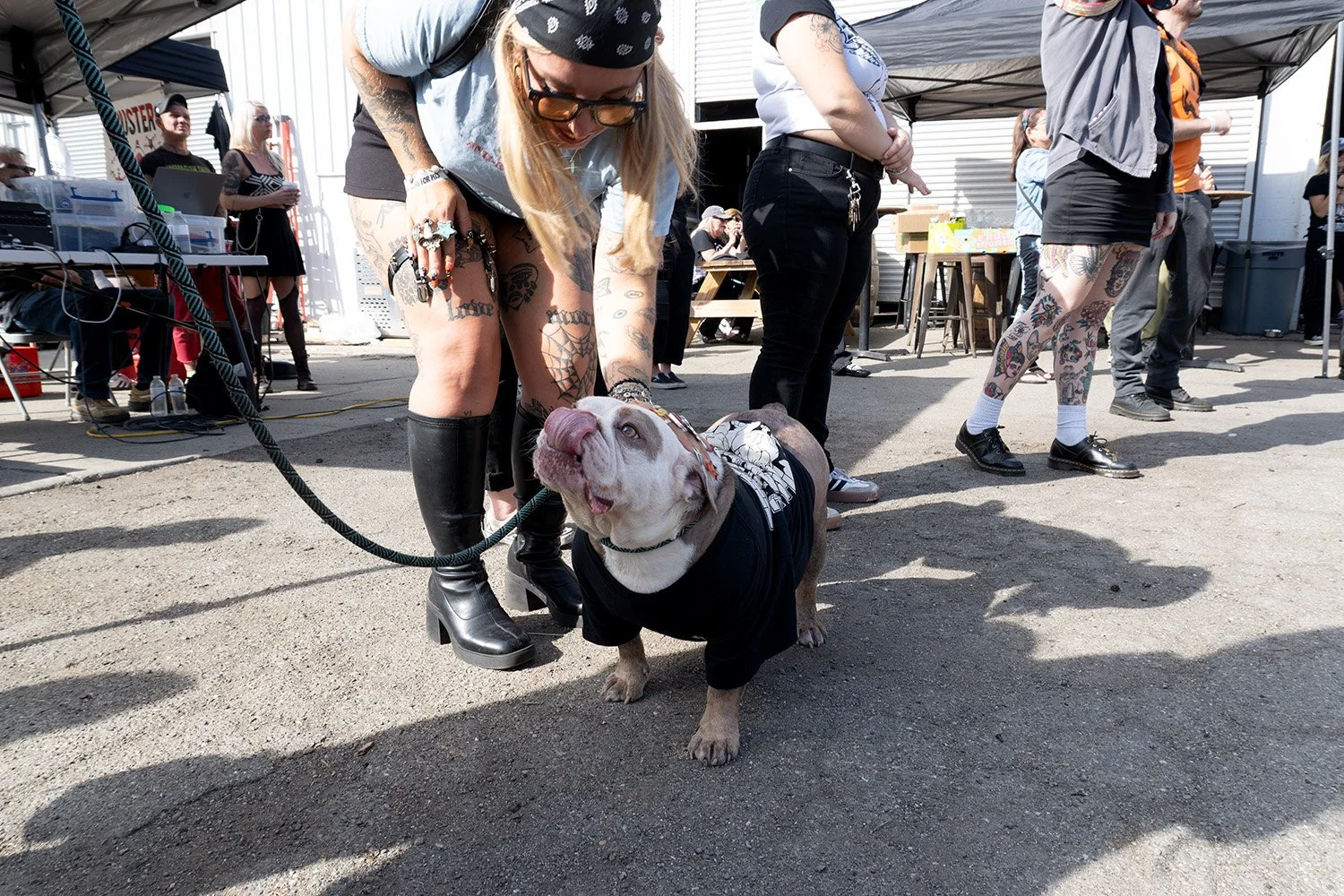
I caught the Austin band at 924 Gilman St for a benefit concert supporting California Bully Rescue, organized by Punks for Pits West. They'd made the trip up from Bakersfield to play the show, and it felt like one of those nights when punk and animal rescue just make sense together. Same basic impulse: show up for the ones who need somebody in their corner.
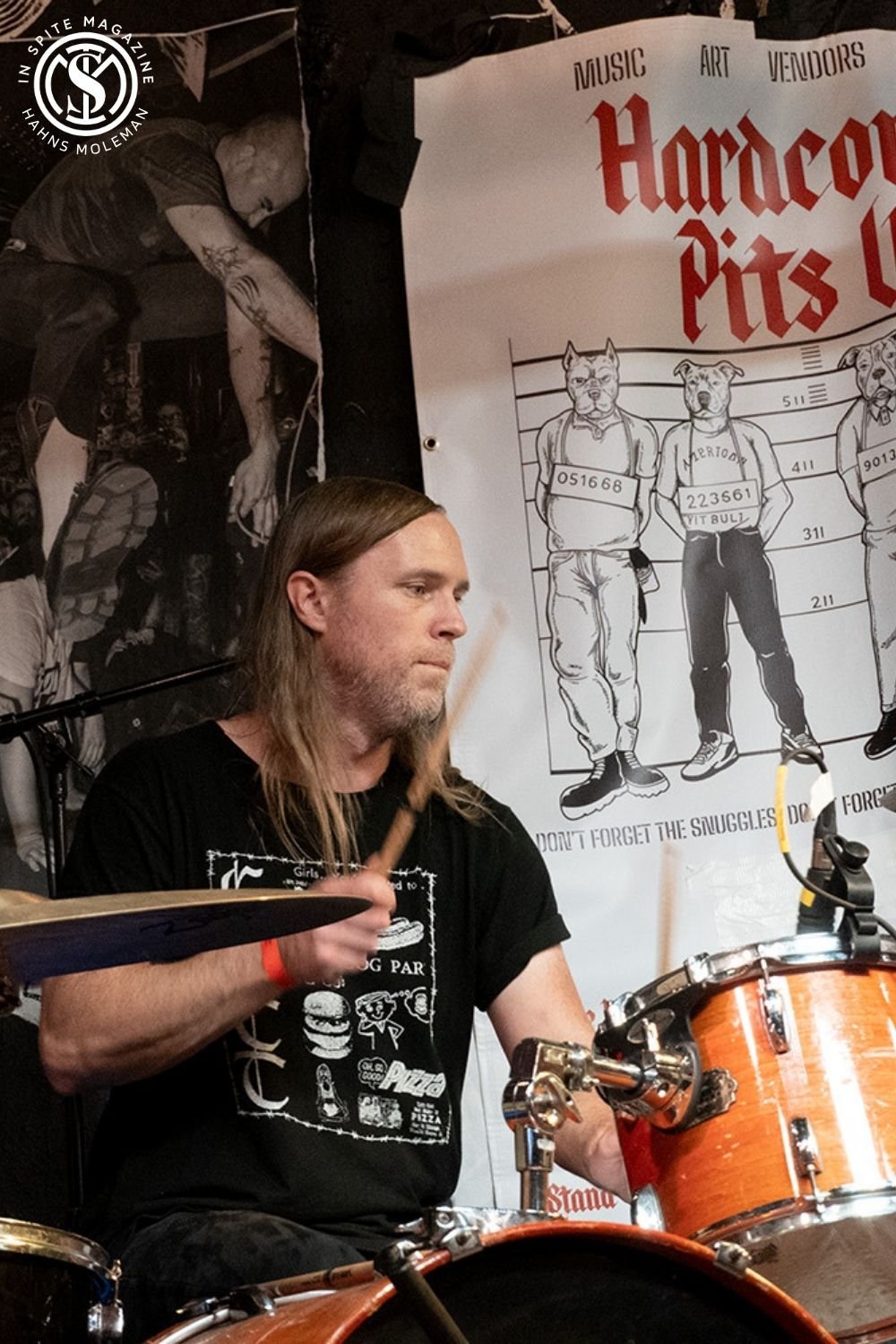
After their set, I sat down with vocalist Amber Appleton, drummer Aaron Gilligan, bassist Meryl Mabin, and guitarist Tessa Cayton. I remarked that I couldn't believe they'd driven all that way, played a set, and were now sitting down with me for an interview. They were entirely game, earning themselves the title of a delightful bunch of maniacs. I mean that affectionately. Either they're unusually generous people or they have a very different understanding of a reasonable evening than I do. Possibly both.
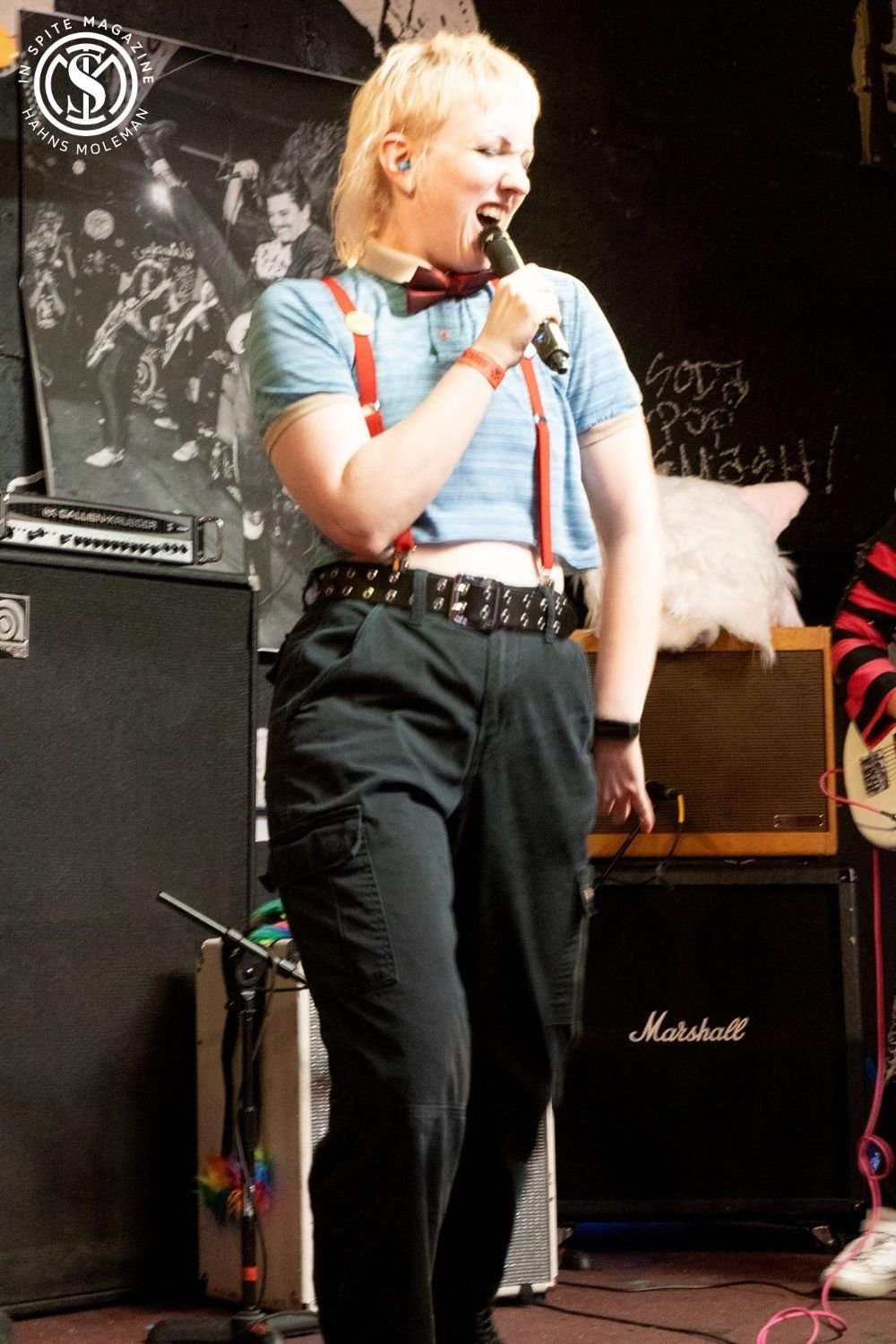
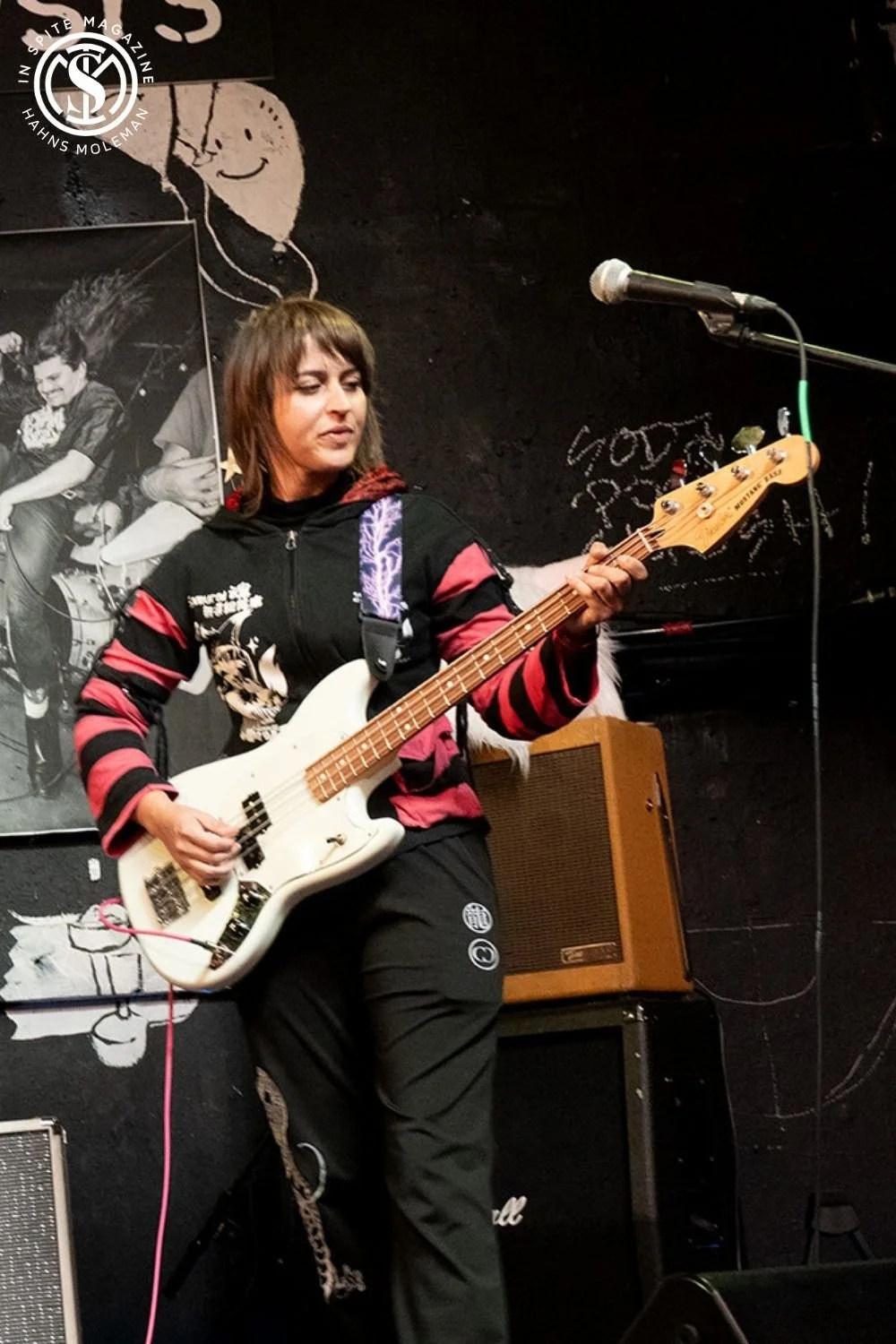
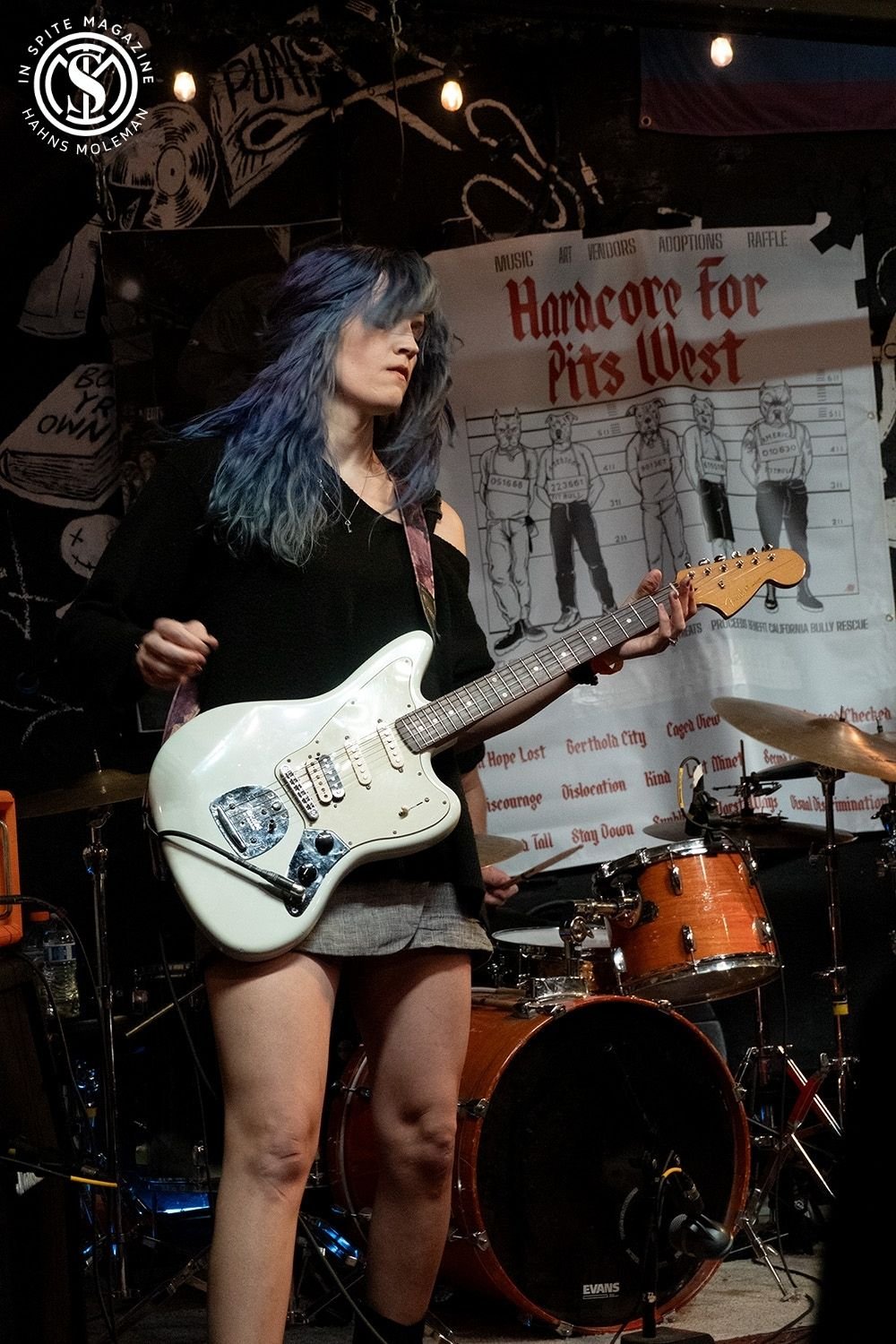
CorMae has been described as a collision of riot grrrl and egg punk, which is a pretty good starting point if you like your music loud, twitchy, and resistant to normalcy. But genre labels only tell you so much, particularly when the people making the music bring such different influences to the table.
For Amber, the Yeah Yeah Yeahs were a revelation as a teenager, alongside Karen O, PJ Harvey, and Bikini Kill. Then they found egg punk and realized there was still more weirdness to explore. Aaron's influences run from At the Drive-In and The Mars Volta to the UK post-punk scene, including IDLES and Crows. Tessa grew up listening to emo and hardcore, with Japanese music influencing her chord choices after a trip to Japan. She also loves Metric. Meryl brings her own style to the array with influences like AFI, RHCP, and Nobuo Uematsu.
Different ingredients, one gloriously odd musical universe.
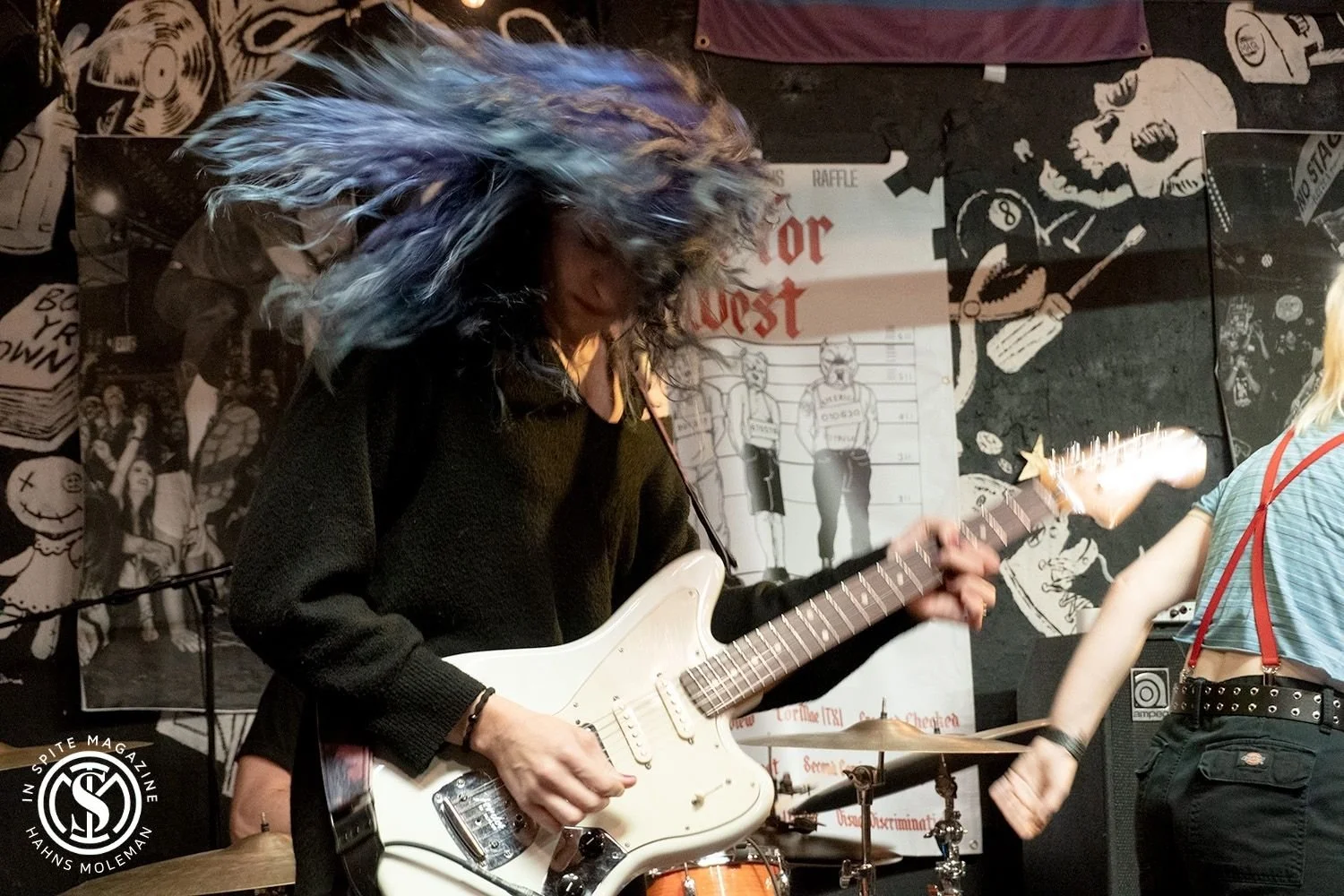
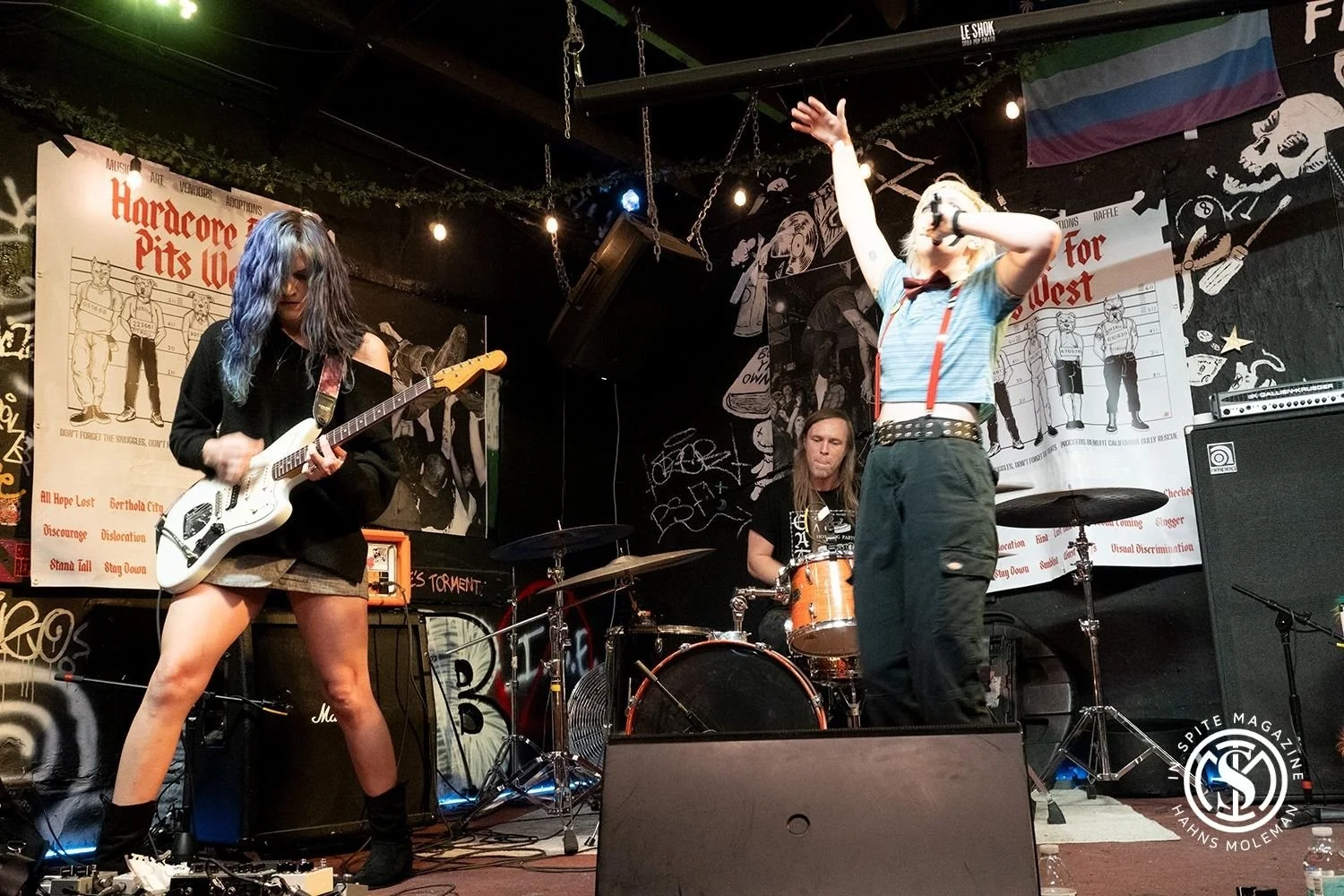
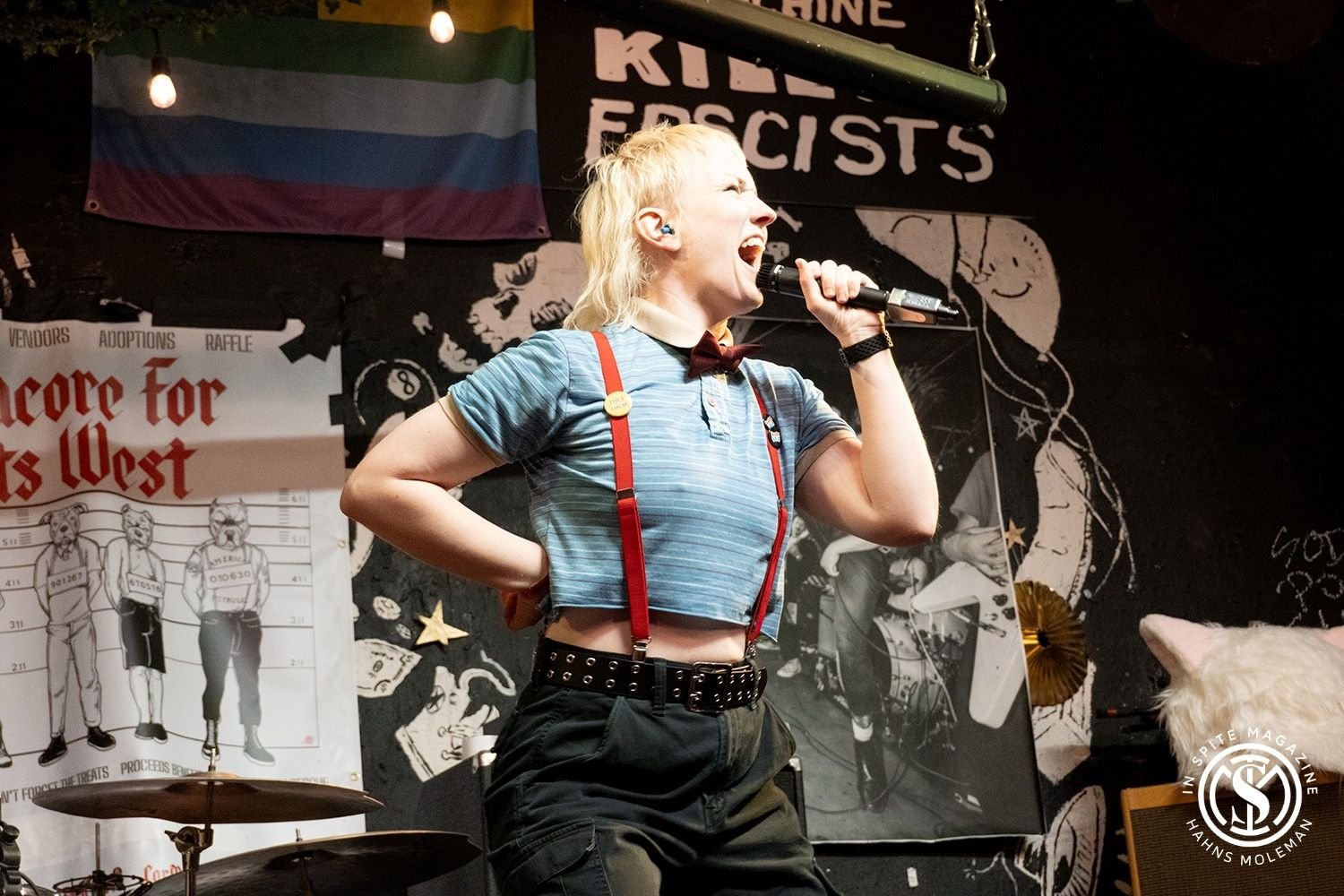
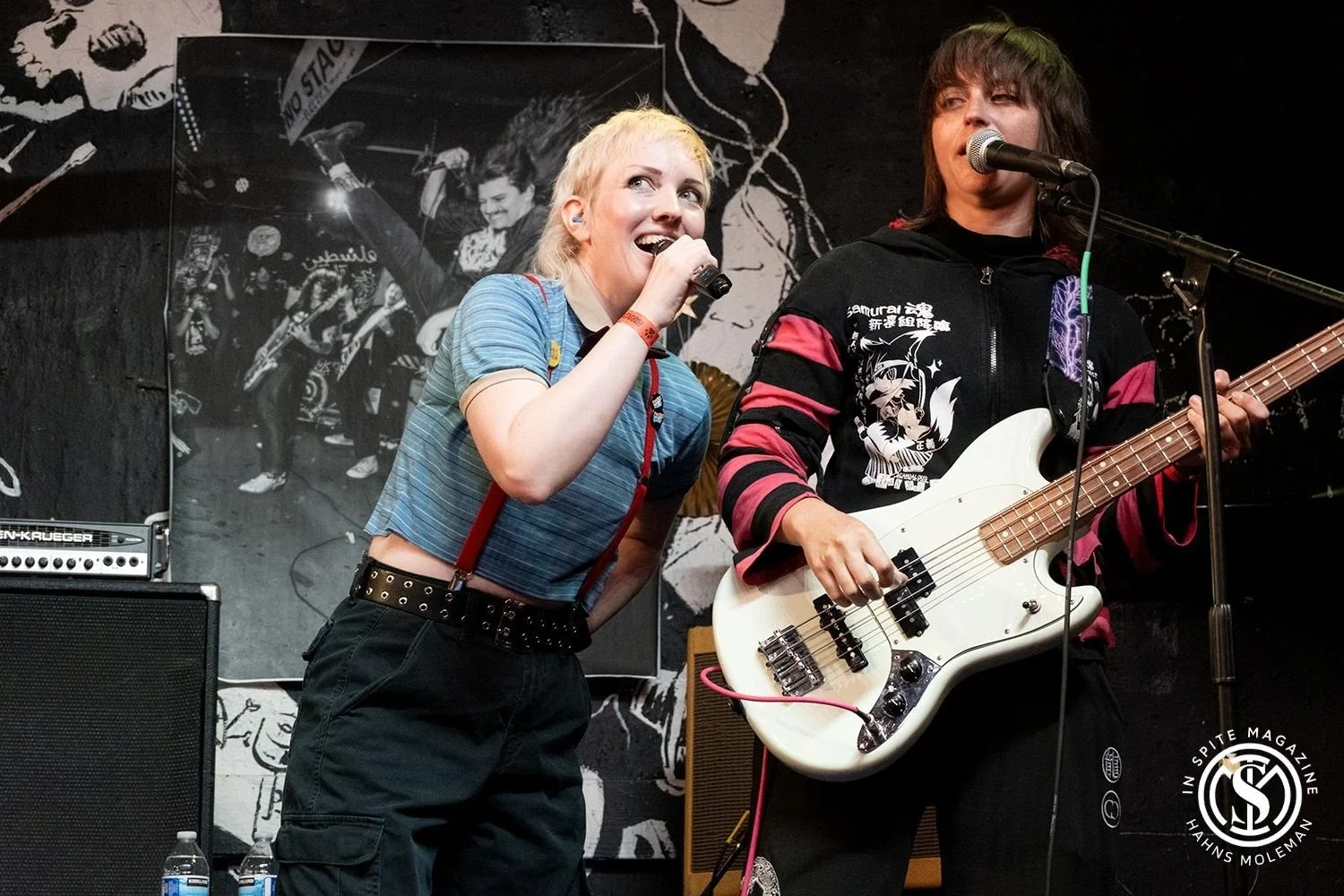
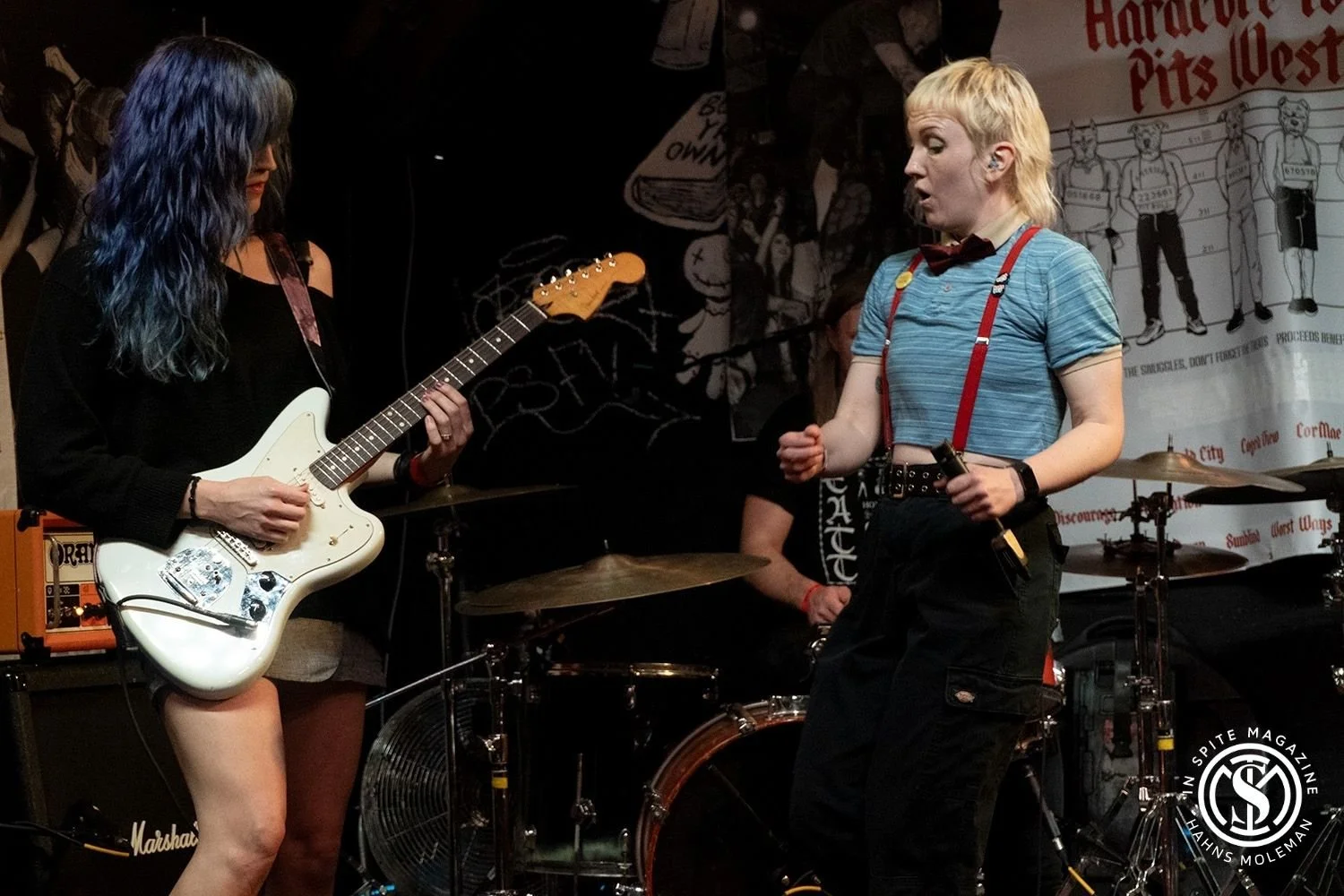
The band's commitment to weirdness extends beyond the music. CorMae makes its own flyers and builds its own visual identity. There's a Purple People Eater in the mix, complete with a custom rainbow-fur hat. When I asked whether anyone ever tries to rein in an objectively ridiculous idea, the answer was a resounding no.
"We promote it and encourage it!" Amber said.
Aaron explained that the same philosophy applies to songwriting and stage antics. When somebody proposes something strange, the instinct isn't to question whether it's a good idea. It's to ask how much weirder it could get. Tessa offered a practical example: bringing carrots to a music video and throwing them into the mix.
I didn't ask what the carrots represented. Sometimes a carrot is just a carrot, and sometimes it's evidence that you've found your people.
Please stop telling people to fix their feelings
For all the color and chaos, CorMae isn't afraid to tackle the difficult stuff. Their song "Mindst8" takes a sarcastic swipe at the idea that a sufficiently positive attitude can fix whatever is wrong with your life. Who doesn't love a dollop of toxic positivity?
I asked the band about the most useless unsolicited advice they'd received during a genuinely terrible day, and Aaron made a distinction worth remembering. “Fake it till you make it” can be useful when you're working toward a goal, he explained. But telling somebody who's struggling with depression to pretend to be happy until they feel happy is another matter entirely. Sometimes that advice is more about making other people comfortable with your pain than actually helping you through it.
"A lot of advice really comes down to how the other person feels about what you're going through," he said, rather than offering tangible ways to find your way up.
Amber's least favorite variation? "You don't have it that tough."
Ah, yes. The competitive suffering Olympics. Just when you're having a hard time, someone helpfully reminds you that other people have it worse. Congratulations, you've been issued a complimentary side of guilt with your existing sadness. Tessa pointed out another problem: knowing something logically doesn't mean your feelings will immediately fall in line. You can understand that a situation will eventually improve and still be miserable right now. It's an invitation to reason your way out of something you didn't reason your way into. Sometimes a song doesn't solve anything. Sometimes it just makes you feel less alone, and that's huge.
Music as a way out of your own head
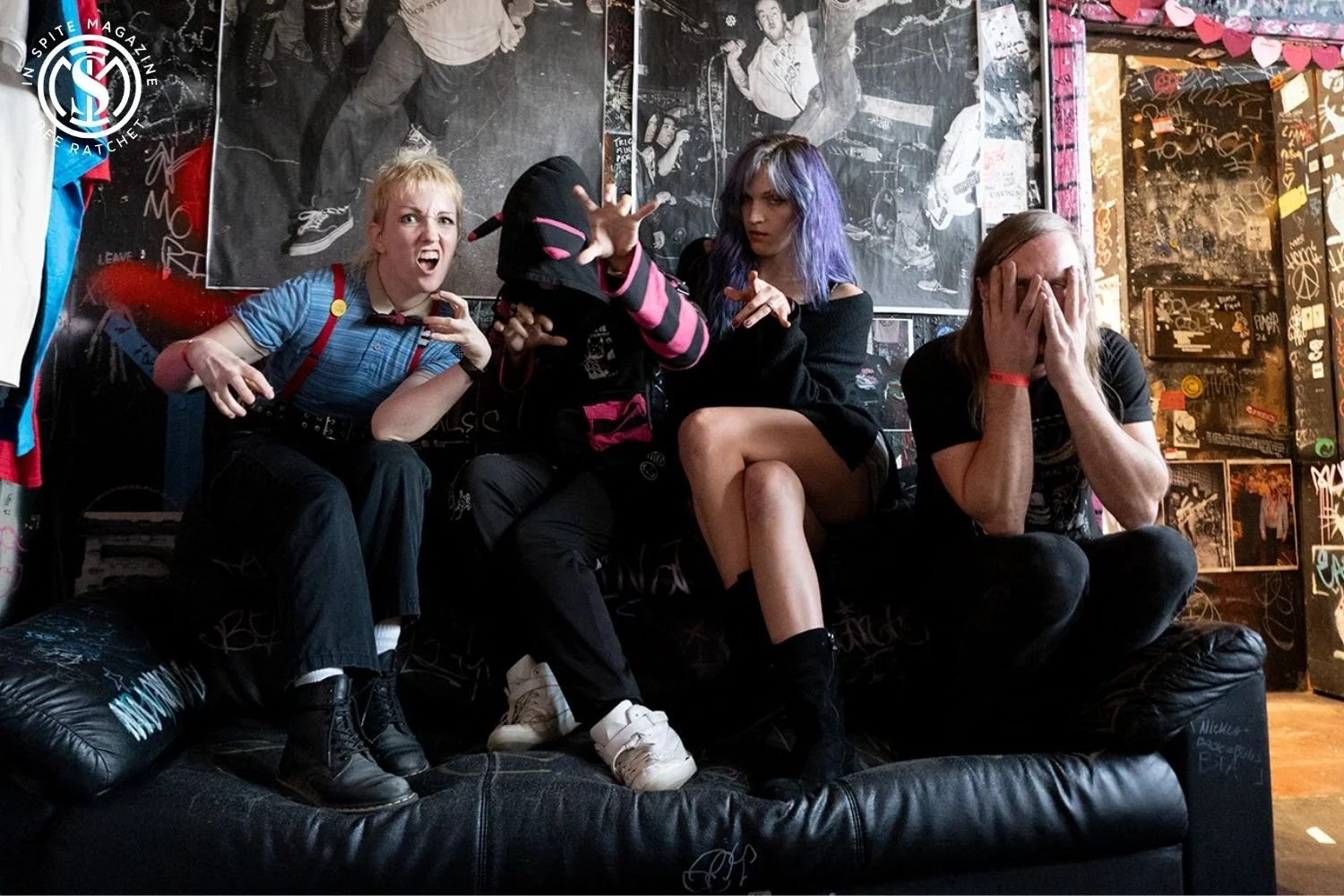
CorMae @ 924 Gilman St — Photo by Dee Ratchet
One of the loveliest moments in our conversation came when I asked whether playing music had taught the band anything about themselves they might not have discovered otherwise.
Meryl's answer was honest. For a long time, she hadn't thought performing was something she could do. She described feeling that being autistic made it difficult to imagine herself onstage, in front of people, doing something that demanded so much visibility.
She wanted it, though. She dreamed about it. She just hadn't believed it was meant for her.
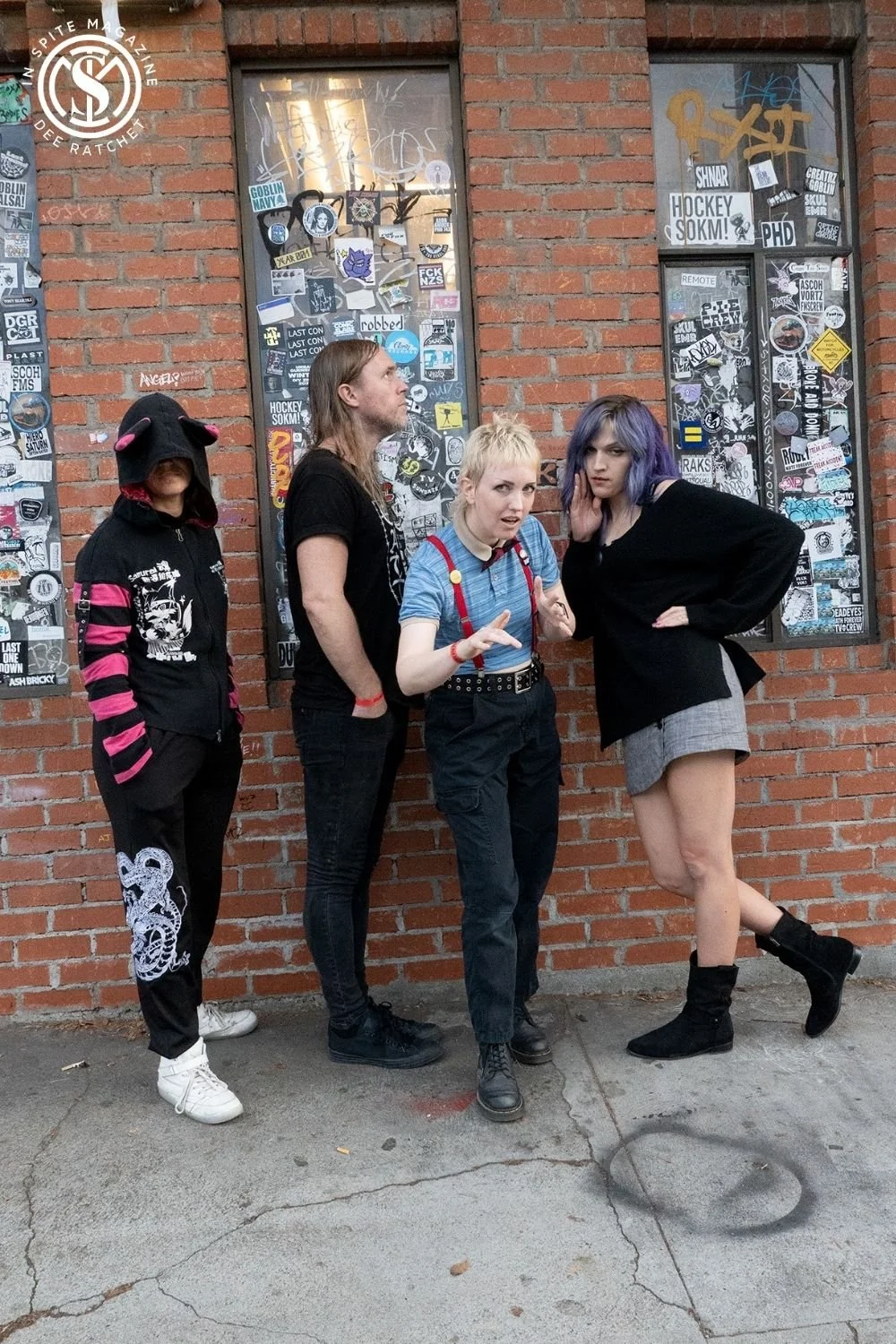
CorMae @ 924 Gilman St — Photo by Dee Ratchet
Even during our conversation, Meryl described feeling intensely anxious when people were watching. Her instinct was to pull up her hood and retreat from the attention. The desire to perform and the discomfort of being seen existed side by side.
Amber was quick to remind her that she is doing great.
It was a small exchange, but it said a lot. You don't have to arrive fully confident, completely comfortable, or convinced that you belong. Sometimes you get to figure that out with other people cheering you on.
Amber knows something about that transformation themself. They’ve been playing music for more than 20 years, starting in Bakersfield with folk, country covers, and what they called sad-girl music, all while holding onto a lifelong love of punk rock. Their old AIM screen name was Punk Ain't Bunk 27, a detail I would like preserved for posterity.
With CorMae, they said, something unlocked. Putting down the guitar and connecting with the audience in a different way gave them a sense of freedom they hadn't experienced before. After years of playing music, they were finally seeing some long-held dreams come to life.
Tessa, meanwhile, discovered that a person who prefers to hover at the edges of a social gathering can actually enjoy having everyone's eyes on them. Performing brought out a side of herself she hadn't known was there.
Aaron talked about vulnerability and the band's willingness to put real experiences into their music, sometimes talking with people and sometimes, as he put it, at people. After shows, audience members approach Amber to share their struggles and explain how the songs have helped them through difficult moments.
For Aaron, that's part of the point. Being vulnerable onstage can change somebody else's life.
Amber put it simply: "It's about connection. It's about changing people's lives."
They recalled meeting a young person who described themselves as a weird kid. Their response was that they were a weird kid, too, and they are welcome.
"If you're not weird, you're boring!" they said.
Anyone else need to hear that? It’s true.
When the conversation turned to CorMae's audiences, Meryl offered a pointed observation: Anything that brings people together to express themselves outside controlled media systems is a threat to the status quo.
Tessa acknowledged that punk can become a costume, an aesthetic, or a dress code. But she hopes CorMae has attracted people who are authentic and comfortable being themselves. For her, punk is about self-expression in its most genuine form, and as long as people need a place to do that, it will retain its ability to challenge the powers that be.
This is a solid distinction. Punk doesn't have to be a competition over who's got the most studs on their battle vest. It can be an invitation to stop performing normality for everybody else's benefit.
Make the weird music. Wear the ridiculous hat. Throw the carrots into the VOID. Talk about the hard stuff. Let People know they're not alone.
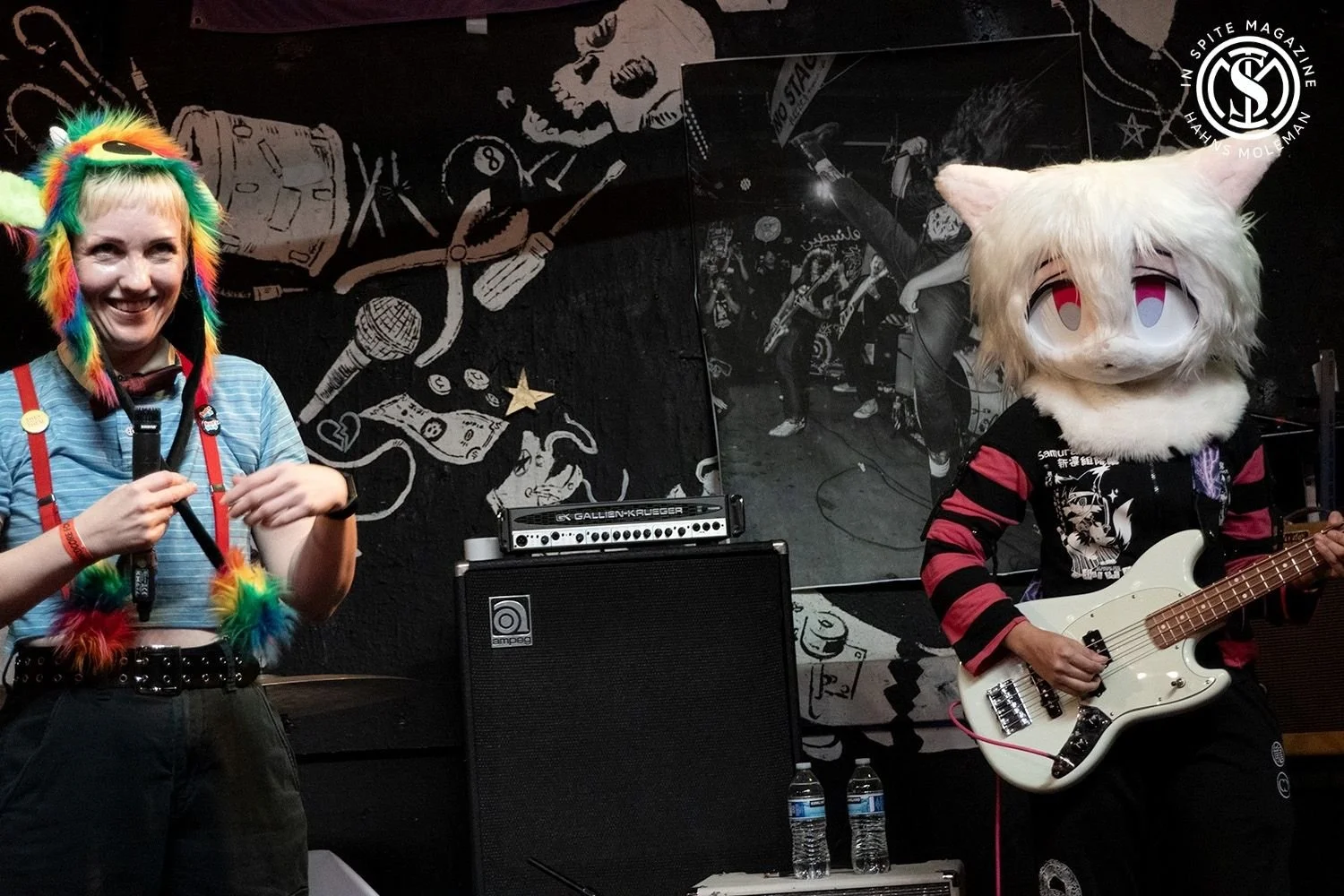
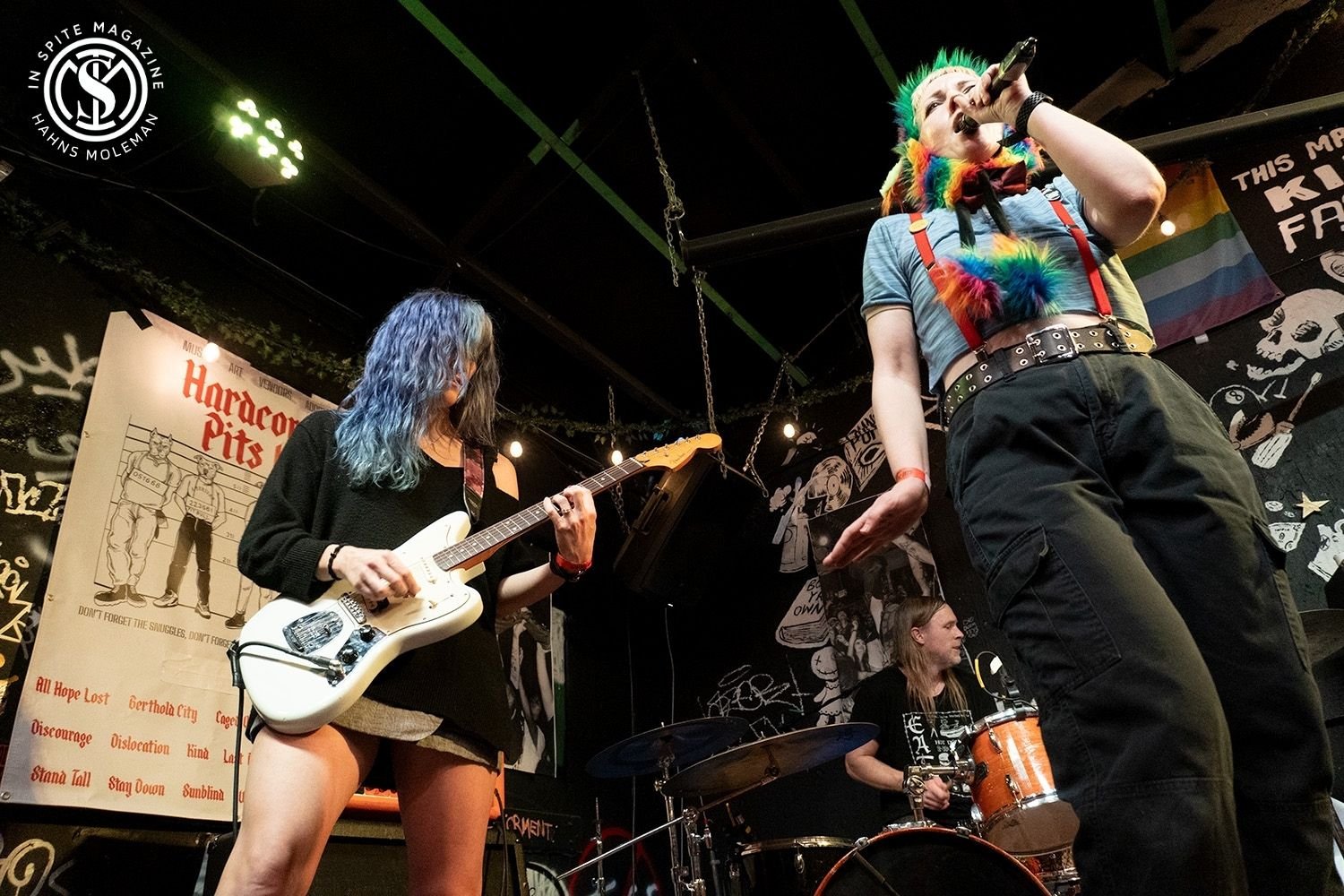
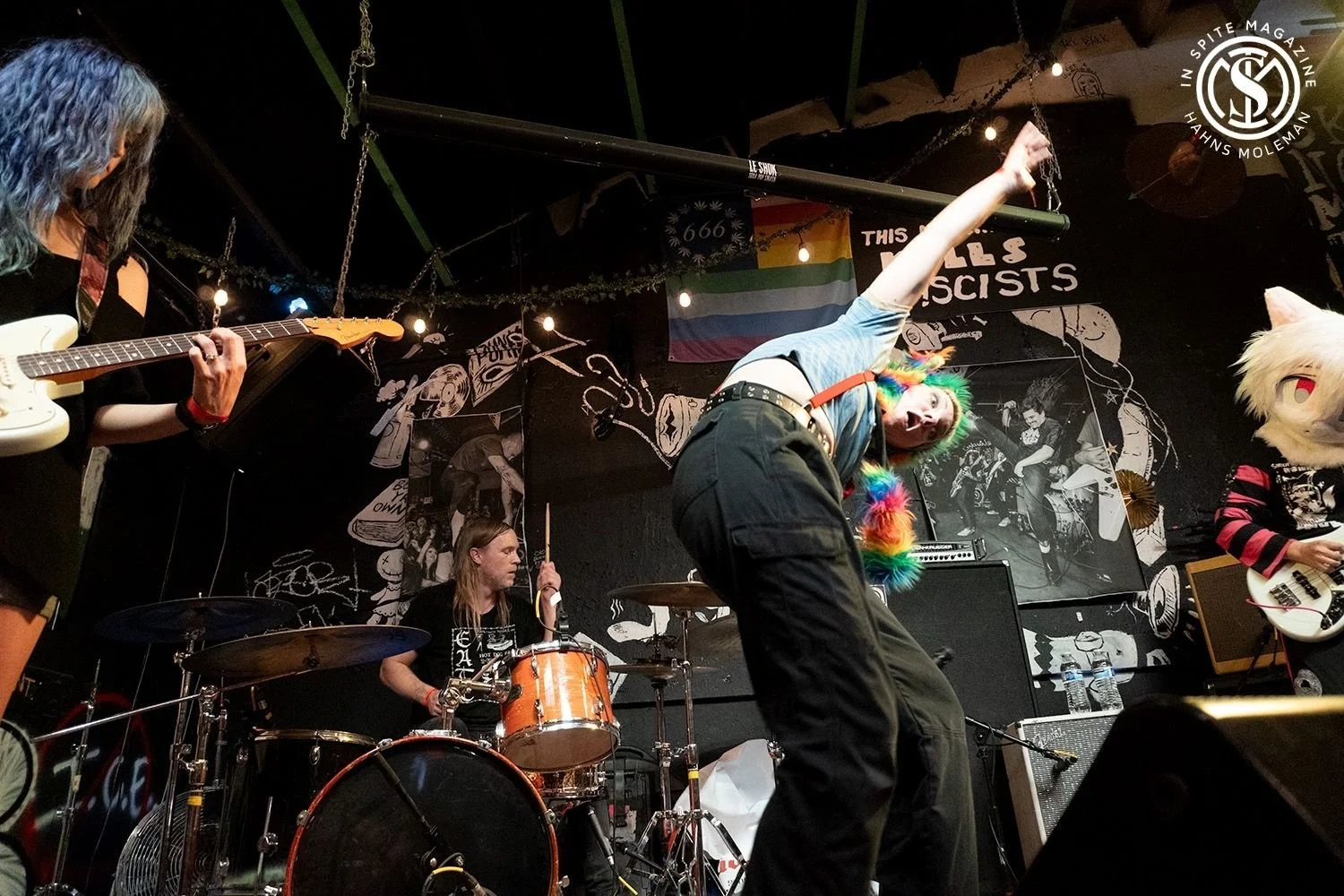
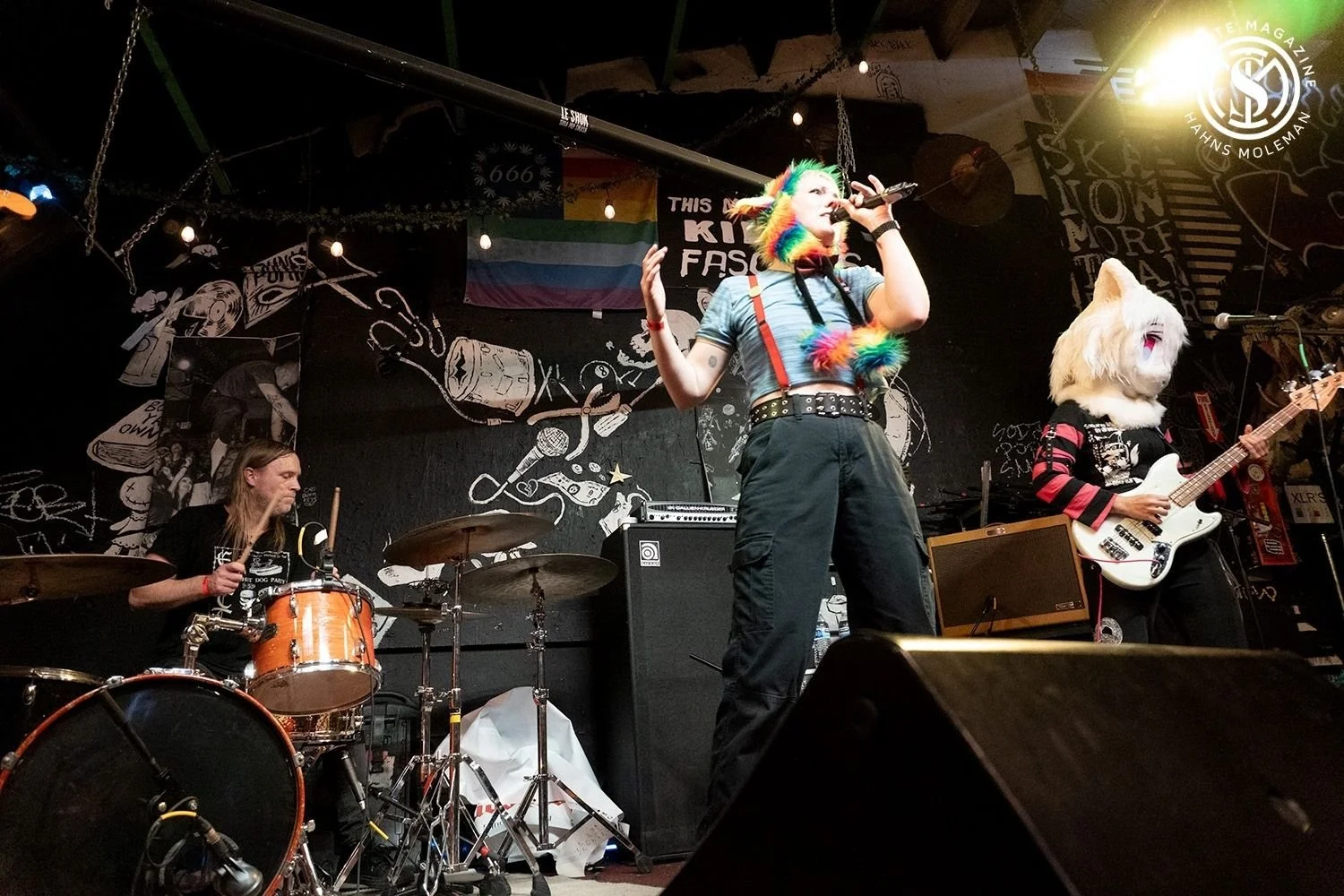
And please, for the love of all things, stop telling people to cheer up when what they need is someone to listen.
CorMae recently moved from doing everything independently to signing with DC-Jam/Virgin. The decision came just the week before the band headed out on tour, so there hadn't been much time to process the change.
What surprised Amber was how quickly the label got to work, lining up PR and college radio outreach almost immediately. Aaron appreciated that they were proactive in an industry where promises don't always translate into action. Tessa was happy to have someone else handle the less enjoyable, non-musical parts of being a musician. Amber also emphasized that the label owner was hands-on and genuinely interested in helping the band grow without asking them to stop being themselves.
DIY has always been about more than doing everything yourself. It's about retaining agency, building community, and deciding for yourself what your work should look and sound like. Getting help doesn't have to mean surrendering those things. Sometimes it means having more room to do the work you actually care about.
And if CorMae's approach to music is any indication, they're not about to become less strange just because somebody else is helping them get the word out.
A very large suitcase
CorMae came together through relationships, social media, and connections among musicians. Amber and Aaron started talking on the phone and eventually became partners. Amber met Tessa through a musicians' meetup, and Meryl joined CorMae after the band lost a member. Meryl and Tessa already knew each other.
It's the kind of formation that makes sense in a DIY music community. You meet somebody, you play together, something clicks, somebody leaves, somebody else joins, and before long you're driving up from Bakersfield to play a benefit show in Berkeley and talking to a stranger about mental health and the meaning of punk.
The band members bring their own histories, too. Aaron is originally from New Zealand, which prompted me to ask why anyone would leave what is objectively one of the most gorgeous places on the planet. He admitted he asks himself the same question every day.
Naturally, we moved on to the possibility of a collective marriage through which we could all become New Zealanders. Aaron offered to put everyone in his suitcase, although he acknowledged he'd need a very large one. I appreciated the practicality of this proposal.
Underneath the jokes, the musical influences, and the rainbow-fur hat is a band that seems to understand something important: connection doesn't require everyone to be the same. It requires enough openness to let people bring their differences into the room.
On a night when a punk community gathered at 924 Gilman St to support California Bully Rescue, that connection felt especially clear. Whether you're a misunderstood kid, an anxious musician, a person having a genuinely terrible day, or an animal waiting for someone to give you a chance, the world could use more people willing to open up.
Preferably with a few questionable ideas, a willingness to get loud, and absolutely no intention of telling anyone to just perk up because it could be worse.
Carrots optional.
-
10/27 - Roseburg, OR - Rosebud Theatre
10/28 - Portland, OR - Turn! Turn! Turn!
10/29 - Olympia, WA - Wild Child
10/30 - Seattle, WA - Lucky Liquor
10/31 - Tacoma, WA - Sweat Lodge
11/1 - Boise, ID - The Shredder
11/2 - SLC, UT - The International
11/4 - Colorado Springs, CO - Thrasher’s Bar
11/5 - Wichita, KS - Kirby’s Beer Store
11/6 - Arlington, TX - Growl
11/12 - Austin, TX - Chess Club (tour return)